
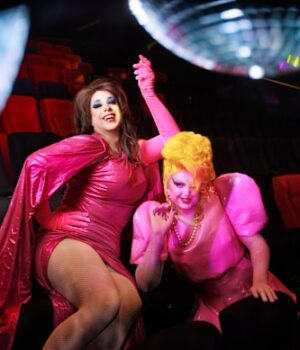
Source : the age
RuPaul’s Drag Race brought drag to the masses. Without the reality TV competition, few would know what tucking is, and “death drops” wouldn’t dominate dance floors. It brought drag queens to the Met Gala and even Saturday Night Live.
But what goes up must eventually come down. Melbourne drag performer Zelda Moon says Drag Race – which has spawned dozens of spin-off series, including a “Down Under” version – could be nearing saturation point.
“Drag Race offers such a specific projected formula for success in drag,” Zelda says. “When everyone does that, everything looks, sounds and feels the same. That’s kind of boring. I think we’re coming out of a big swell into this period of like, ‘We’ve seen it – now what else is there?’”
Drag gigs around the globe have dipped, Zelda says, and funding for Pride festivals continues to shrink. Meanwhile, the community is facing an alarming rise in hate, including protests against popular queer events like “drag story time”. In 2022 alone, GLAAD noted 161 incidents of anti-LGBTQ protests and threats targeting drag events.
But despite this tumultuous period, Zelda says drag won’t disappear; it will simply change. Drag has been evolving since the late 1800s, when men wore dresses that “dragged” along the floor at balls. Since then, it has taken on many iterations, from the “Pansy Craze” and Ballroom to the club kid era and RuPaul’s “Ru-volution”.
This rich legacy will be laid bare in Drag Week, a program at Melbourne’s ACMI (formerly the Australian Centre for the Moving Image) celebrating the history of drag on screen. Joseph Gardner, co-director of featured documentary Victorian Queens, says the event not only reminds audiences that drag performers are humans deserving of empathy, but also that there is more to drag beyond a reality TV show.
“It’s important to know where we’ve come from. It helps colour who we are today,” Gardner says. “Many queer people grow up with heterosexual parents, so there’s often a bit of a learning curve because they don’t have queer people around them telling stories about what affected those in the generation before. That’s what makes film really important, just to give that context of what we’re about.”
This includes timeless movies such as Paris is Burning and Some Like It Hot, as well as lesser-known “deep cuts” like the club kid classic Party Monster and Chinese queer documentary Be a Woman. Together, these help shape the diverse world of drag and queer art, Gardner says.
When it comes to Australian drag, however, few films feel as impactful as The Adventures of Priscilla, Queen of the Desert, a 1994 film starring Guy Pearce and Hugo Weaving that helped bring Australian drag to the world.
From pioneering LGBTQ performers including Carlotta and Leigh Bowery to films like XOS: A Cry for Help and Priscilla, Aussie drag has imbued the art form with a level of camp, theatricality and radicalism rarely seen elsewhere.
“Not only do they make us think, they can also really make us laugh,” Gardner says. “Melbourne queens often ask really important questions, whether they’re about colonisation, sovereignty and other political discourse. It’s not always just about looking fabulous – there’s usually an idea or concept behind it.”
Australian drag may seem more rough and raw – RuPaul himself described it lovingly as “ratchet” – but Lazy Susan, winner of Drag Race Down Under season four, says that’s born from the reality that Aussie queens must work any room. There are fewer gay clubs and bars Down Under compared with the US, meaning many performers must also entertain broader crowds in rural RSLs and local pubs.
“Australian drag is hearty drag,” Susan says. “It’s like the queer version of larrikinism, which is really distinct culturally from American drag, where it’s more about becoming the complete diva – becoming Beyoncé. Our position is taking the piss out of ourselves and not taking anything too seriously.”
This tradition continues, and films like those screened at Drag Week help preserve these legacies. But as important as it is to honour what came before, Zelda says it’s just as vital for emerging drag artists to blaze their own path. Only then can drag really evolve, and thus persist.
“We can’t all just pull from one reference point,” Zelda says. “We need to be free to develop our own references.”
Susan, meanwhile, suggests more drastic measures.
“It’s really nice being seen and understood, but at the same time, there are definitely complications to being understood at such a scale,” Susan says. “Being so out in the open and discussed has brought a lot of vitriol from people who have opinions about who we are and how we conduct ourselves.
“So, we need our mystery back. We need people to know less about drag so that we can be an enigma again.”
Drag Week will take place across ACMI from April 17 to 23.
Must-see movies, interviews and all the latest from the world of film delivered to your inbox. Sign up for our Screening Room newsletter.
 Nell Geraets is a Culture reporter at The Age and The Sydney Morning Herald.Connect via X or email.