
source : the age
It was a court battle that began in a small 12-sided building in Roebourne and ended up creating history – the largest figure ever handed down in Australia for Native Title compensation.
It is a story that began more than 1000km from where it finished, from the red dust of the Pilbara to the decision handed down by Justice Stephen Burley in the Federal Court of Western Australia in the middle of Perth.
In 2008, Fortescue founder Andrew Forrest and Yindjibarndi Aboriginal Corporation chief executive Michael Woodley began talks in the oddly shaped building that is often used as a youth centre.
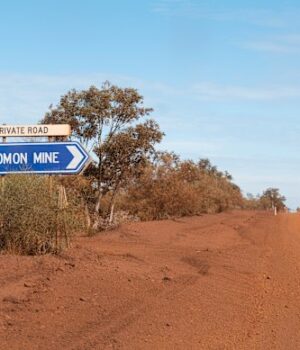
The mining magnate wanted an open-ended access agreement with the group so his company could develop its second set of Pilbara iron ore mines, the Solomon Hub.
The Yindjibarndi, who had their right to native title confirmed in 2003, sought a five per cent royalty.
Unfortunately, no agreement was reached.
On Tuesday, Burley awarded the Yindjibarndi people a record $150 million for cultural loss in their 18-year-long battle for compensation with Fortescue. The Federal judge also awarded the group $100,000 for economic loss.
The court’s research into the issues involved were exhaustive; Burley spent time in the region speaking to local Yindjibarndi people to get a more in-depth understanding of the impact the Solomon operation had on the group.
According to the summary of the court decision, Fortescue documents indicate 240 sites that it designates as “heritage places” have had artefacts removed from them and stored remotely.
It adds that the Yindjibarndi people have no access to those artefacts.
“The data indicates that 124 of those sites have been completely destroyed by the operation of the mine and many more substantially affected, being variously dug up, located under roads or other infrastructure or drowned by the tailings dam,” Burley said in his summation.
“All was duly approved under government processes.
“However, none was done with the approval of YNAC.”
Burley said the scale of the operation of the Solomon Hub Project was relevant to both economic and cultural loss.
“Over 135 km² of land has been fenced off and secured from entry, including by the Yindjibarndi people, because it is too dangerous to enter,” he said.
“Within that area are four large open-pit mines called Kings, Trinity, Firetail North and Firetail South.
“There is significant transport infrastructure for vehicles, a railway, a large tailings dam, waste dumps and a stockpile area. Water courses have been stopped and power infrastructure installed.”
Burley added that according to one witness, during a single shift the operation of a single excavator with a 75-tonne bucket had the capacity to load over 30,000 tonnes of iron ore.
“Mining operations continue 24 hours a day, seven-days a week, generating tremendous revenue for both FMG and the State,” he said.
During his summation, Burley quoted Middleton Cheedy, a Yindjibarndi witness who described the physical and emotional impact the mine had on him.
“When I wait at a railway crossing I see the trains carrying ore to the ports. They are up to 2.4 km long and carry up to 30,000 tonnes at a time. To me that is 30,000 tonnes of ngurra blasted up and taken off and moved to another country, like China, to be transformed into steel. It is a very distressing experience for me because it happens all the time when I travel about the Pilbara…
I have been traumatised throughout my life by racism, deaths in my family, alcohol coming into our community, watching the old people try to save the Harding River, but the Mine is like a death for me. It has killed all the things that are important to Yindjibarndi People.”
With all these issues to take into consideration, Burley made his final decision that $150 million should be paid in compensation for cultural loss, while $100,000 would be awarded to the Yindjibarndi for economic loss.
On the day the judgement was handed down, Forrest said he would “pay the money tomorrow if given the opportunity”.
“We maintain excellent relationships with Indigenous groups across the Pilbara, and our work with them is both productive and fruitful for their communities, including the state,” he said.
“After 20 years, I sincerely hope this money can now flow to the Yindjibarndi community and be used to support the elders and families and create future opportunities.”
Woodley said his people also acknowledge the efforts of the Federal Court in hearing the case and delivering its findings.
“In the summary determination, the Court demonstrated understanding of Yindjibarndi cultural losses, including quoting at length from Uncle Middleton Cheedy and my mother-in-law (Nyidi) on the devastating impact that the mining has had on them,” he said.
“The determination acknowledged significant damage has been done to Yindjibarndi songlines and other areas of cultural heritage, including the complete destruction of 124 Yindjibarndi cultural sites, damage to many other sites and impacts on ground and surface water systems.”
However, in regard to the $100,000 compensation awarded for economic losses, Woodley said the headline amount the court arrived at is unsatisfactory in context of what has been lost.
While stopping short of saying the Yindjibarndi people would appeal the decision, Woodley added that the group would be seeking legal advice on the next steps involving the judgement.
“We have asked our lawyers to examine the details of this determination, and the next steps for Yindjibarndi are to continue to support our self-determination aspirations,” he said.
Perhaps there is yet another chapter left to be written in the Yindjibarndi’s fight for economic and cultural loss.