
Source : the age
Catching Hollywood’s attention is a Herculean task. Some directors go years without turning heads, others never turn them at all. This hasn’t been the case for Curry Barker, who at 26 has not only caught Hollywood’s attention but commanded it.
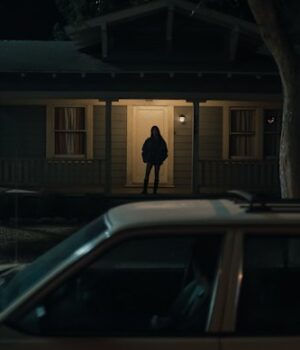
Barker’s debut feature Obsession, a psychological horror that landed in cinemas this week, took the Toronto International Film Festival by storm last year. Following a heated bidding war, Focus Features spent a cool $US15 million to acquire the film, making it the biggest deal of the festival.
Though TIFF was the Alabama director’s first time outside the US, it didn’t mark his first deal. Before Obsession’s acquisition, Jason Blum and Roy Lee – two of the biggest names in contemporary horror cinema – had signed on to produce his sophomore feature Anything But Ghosts. It’s thanks to this backing that they were able to get names like Aaron Paul (Breaking Bad) and Bryce Dallas Howard (Jurassic World) on the cast list.
And just when you think Barker’s trajectory couldn’t climb any higher, A24 calls. The indie studio, which has backed massively successful horror titles such as Hereditary, chose Barker to direct the reboot of The Texas Chainsaw Massacre, welcoming him into one of the most iconic horror franchises in history.
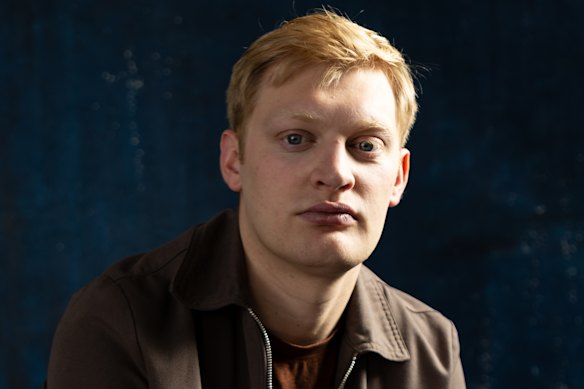
Barker achieved all this before any of his films had even landed in cinemas. How did a 26-year-old with no prior Hollywood connections manage this? One word: YouTube.
Before taking on Hollywood, Barker already had millions of followers. His comedy sketch YouTube channel “that’s a bad idea”, which he launched in 2021 with his creative partner Cooper Tomlinson, grew from a few hundred thousand subscribers to more than 1.12 million after expanding into horror in 2023.
This began with The Chair, a psychological horror short created for YouTube. The video has since had more than 9 million views, and was even nominated for best film at the Los Angeles Short Film Festival. A year later, Barker created Milk & Serial, a found-footage horror about a deranged serial killer. By using all the resources at his disposal, including his friends, Barker made the film for only $US800, most of which paid for one hired actor and a Sony camcorder (which he later sold for a profit). The film has been viewed more than 2.4 million times.
“Directing is in my bones,” Barker says. “I’ve been directing films since I was, like, 11 years old – not knowing exactly what I was doing, but realising later that I’ve been directing the whole time. Even when I was doing the sketch comedy stuff, I had already done a ton of horror short films … I’ve always been aspiring to do this.”
His horror shorts caught the eye of British producer James Harris (The Surfer), who approached Barker to adapt The Chair into a feature film. Instead, Barker pitched another idea he’d been working on, about a young man who wishes upon a mysterious object for his co-worker to fall in love with him, only to reap seriously disturbing consequences. And thus Obsession was born.
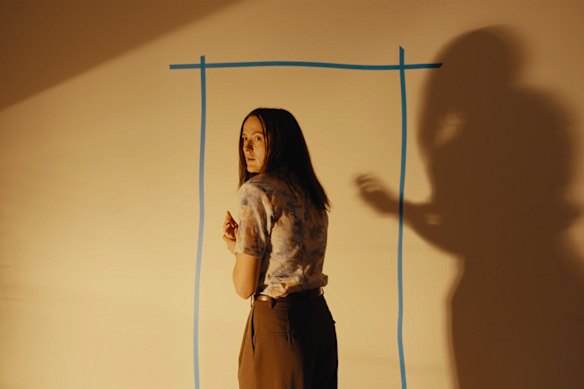
The film offers a modern twist on a “monkey paw” mystery. Bear (Michael Johnston), a music store employee who is secretly in love with his colleague Nikki (Inde Navarrette), comes across a novelty toy that grants him one wish. He wishes Nikki loved him more than anything in the world, and finds the magic is more powerful and twisted than he imagined.
“Horror is something that was always exciting to me – to gather around the biggest group of friends and watch some sort of horror. The goal was always to pick out the scariest, craziest movie we could watch. Horror was in my bones.”
Barker isn’t the only YouTuber to be enticed by a world of danger and demons. In fact, it’s becoming something of a trend.
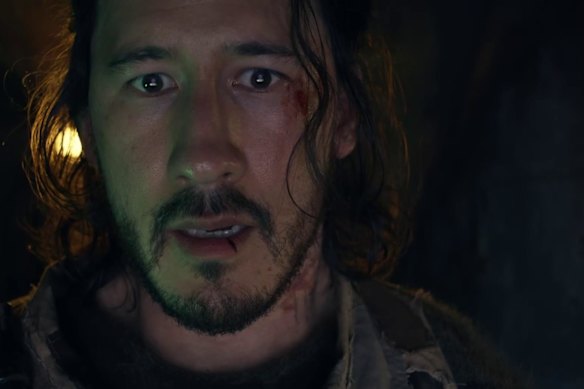
Before Obsession, video game YouTuber Mark Fischbach, or Markiplier, released Iron Lung, an entirely self-financed and self-distributed dystopian horror-thriller. The low-budget movie ended up topping the Australian box office, and made its budget back a staggering 16 times over.
Meanwhile, 20-year-old Kane Parsons, known online as Kane Pixels, has generated major buzz for his feature debut Backrooms, a sci-fi horror based on his series of YouTube videos released four years ago. These found-footage clips, which follow people who become trapped in a liminal maze-like set of rooms, racked up over 77 million views. The film adaptation, which lands in cinemas on May 28, was scooped up by A24 and stars Academy Award nominees Chiwetel Ejiofor (12 Years a Slave) and Renate Reinsve (Sentimental Value).
“There’s a spectacle to horror that other genres don’t have,” Barker says of the growing number of YouTubers turning to horror cinema. “There are just so many things you can do with a horror film. It’s almost one of those genres that has no rules.”
This freedom to experiment and push boundaries is understandably appealing to creators accustomed to running their own show online. But it’s also logistically appealing, Barker notes. Horrors are generally cheaper to create and often ripe for collaboration, whether that’s with creative partners or big-time producers.
“If I was giving advice … I would say make a horror short and put it on YouTube. Because horror shorts go viral online. It’s harder to get a comedy short to go viral online. You wouldn’t get a romance short to go viral … Horror is just an easier way in.”
These emerging filmmakers aren’t simply choosing horror as an “easy debut”, though. They’re arguably mastering the genre. Iron Lung was praised for its reportedly record-breaking use of fake blood, and the intense sense of dread it builds. Barker’s Obsession has been applauded for taking a well-known concept – “be careful what you wish for” – and turning it into a well-grounded, thought-provoking fright-fest.
So, what is it about YouTuber horrors that resonate so much? It largely comes down to their analogue look. Films like Backrooms and Iron Lung lean into low-fi or found-footage aesthetics popular on YouTube, making it seem like genuine leaked footage rather than polished productions. The more real and gritty it feels, the scarier it is.
Given recent complaints against Blumhouse films such as The Exorcist: Believer, which was slammed for being too slick to be scary, YouTuber horror delivers a refreshing dose of rawness. YouTubers also profoundly understand their audiences, Barker notes.
“In the internet world, you get pretty instant feedback around which videos work and which don’t. So, you start to get a sense for when you’ve lost an audience member, and what their attention spans are like. I don’t want to edit a movie like it’s internet content – with choppy, quick cuts – but I at least know what those sensibilities are, and I’ll know if I’ve lost you.”
Many traditional horrors opt for “slower burns”, establishing character dynamics for a good 20 minutes or so. YouTubers tend to dive straight in. Obsession includes a death within the first eight minutes. It’s also packed with rapid-fire dialogue and micro-tensions, hooking audiences well before any blood is shed.
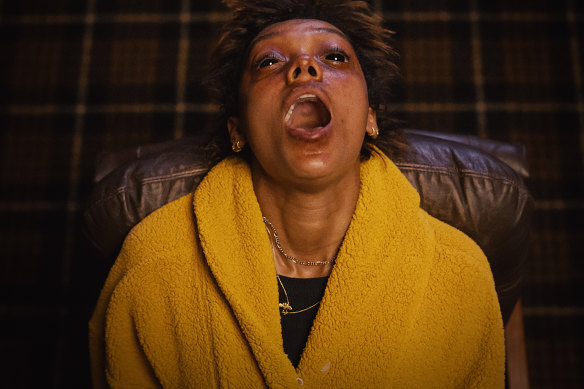
Locally, South Australia’s Danny and Michael Philippou plunged into horror features after finding major success on YouTube as stunt performers “RackaRacka”. Their 2022 film Talk to Me became A24’s highest-grossing horror film, making more than $127 million globally. This was followed by the domestic horror Bring Her Back last year, which received glowing reviews.
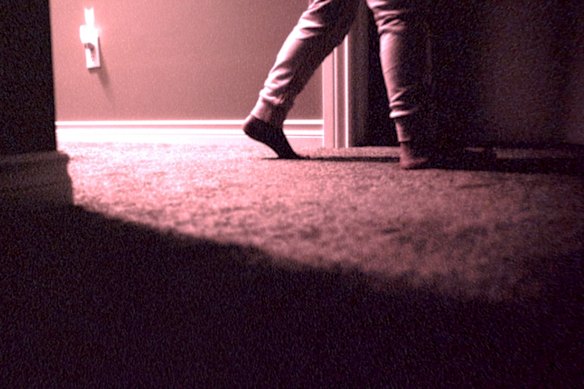
Also in 2023, Canadian filmmaker Kyle Edward Ball – who’s best known for running “Bitesized Nightmares”, a YouTube channel that recreates people’s nightmares on screen – released Skinamarink, a $US15,000 experimental horror about two children who wake up to find their parents gone and all the doors and windows of their home missing. This microbudget film went gangbusters on indie festival circuits, with many horror fans declaring it the scariest movie of the year on social media. Variety even crowned it the best horror of 2023, praising it for walking “the tightrope of narrative and art piece; anxiety and tedium; fantasy and reality”.
The fact that YouTubers already have a kind of “in-built” audience and online appeal is obviously enticing for studios. (The only reason Fischbach was able to release Iron Lung was because his fans campaigned for it to be shown in cinemas.)
But it does present a conundrum for YouTubers-turned-directors: Are they catering to their existing fans, who are accustomed to accessing their material for free, or does their attention shift to box office and more mainstream crowds?
Barker says he has just one person in mind when he’s making films: himself.
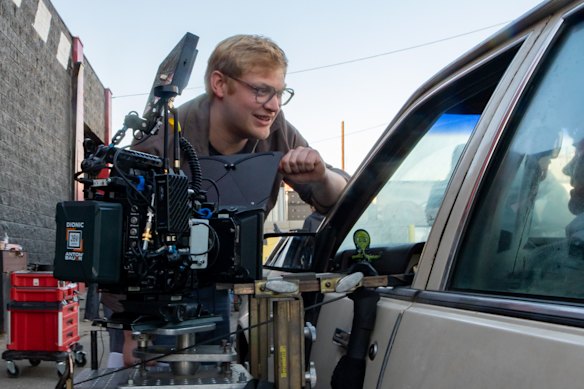
“I’m not thinking: ‘Is my audience going to like this?’. I’m thinking: ‘Is this me? What is my voice? Have I changed from where I started?’. I’m always thinking about whether I’m sticking to my roots because I don’t want to lose whatever made me special. That’s my worst fear.”
This is, of course, a risk when working with major studios. Barker says he faced pressure during the early stages of Obsession. One studio wanted him to rewrite the main character as a straight-cut hero rather than ethically complicated, but Barker refused.
“I had to fight for many things. When you’re trying to do something different, it’s hard to get people to wrap their head around it, especially when you haven’t proven yourself that much.”
These hurdles are particularly high for YouTubers, who are often still underestimated within Hollywood. “There was such a stigma against internet stuff,” Barker notes.
However, Barker doesn’t think his trajectory is that different from some of Hollywood’s greatest directors, such as Steven Spielberg, David Fincher or Christopher Nolan. Like Barker, they all made short films from an early age. The only difference is Barker released his on YouTube, arguably fast-tracking his pathway to cinematic success.
This is the new path Barker and his fellow YouTubers are carving, one that blends online and traditional spaces, and which is arguably more accessible to emerging creative minds. Catching Hollywood’s attention remains a Herculean task, but YouTube has already done some of the heavy lifting.
Obsession is in cinemas from May 14; Backrooms opens on May 28.
Must-see movies, interviews and all the latest from the world of film delivered to your inbox. Sign up for our Screening Room newsletter.


