
Source : THE AGE NEWS
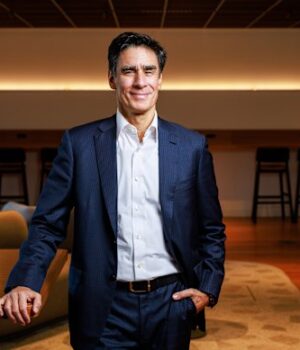
ANZ Bank chief executive Nuno Matos has sounded a warning over the economic risks that would arise from a prolonged conflict in the Middle East, as the bank delivered $3.8 billion in cash profits for its first half.
ANZ’s results on Friday said its March-half profits were 6 per cent higher than the same half last year. The banking giant, which is kicking off a round of profit results from Australian banks, said the war had not sparked an increase in financial distress among its business and household customers.
Matos noted ANZ is the most international of Australia’s big four banks, giving it a “front-row seat to global developments,” and he said its customers were entering the energy crisis sparked by the Iran war in a strong position.
Households were starting to feel some impact from higher transport costs, Matos said, and some would therefore have less money for non-essential spending. He said hardship levels had not changed yet but it was also “too soon to say.”
Large corporate customers had plenty of cash and were well-prepared for a shock such as this, he said, but also said they would start “feeling more limitations” if the energy crisis continued.
“Much of the potential impact of this crisis remains ahead of us, but the longer the flow of oil is constrained, the greater the chance the crisis shifts from being primarily an inflation challenge, to much more a supply and growth challenge,” Matos said.
“Our corporate customers have been preparing for shocks, building capital and liquidity, maintaining flexibility and improving supply chain resilience. As such, there has been no material change in the overall borrowing behaviour of our customers.”
Matos said the bank expected Australia would avoid a recession, but it had increased its provisions (funds to buffer the bank for loan losses) in response to the riskier economic backdrop.
Speaking with analysts, Matos said key indicators ANZ would be watching to gauge the impact of the energy crisis included traffic on the roads, discretionary spending by consumers, and the extent to which big corporate customers were drawing on their credit lines. He stressed there had been few signs of stress so far, but added it was still early in the energy crisis and the bank could not rule out a more “nasty” economic backdrop.
“This crisis is still at the beginning, to be honest,” Matos said on a call with analysts.
ANZ’s results showed operating income was flat in the March half, compared with the September half, while its operating expenses dropped 9 per cent amid heavy job cuts. Bad debt charges were also slightly lower, which helped the bottom line.
Its Australian home lending and retail deposits both grew 1 per cent compared to the September half, while its business lending rose 2 per cent.
Citi analyst Thomas Strong said the top-up in ANZ’s provisions was smaller than similar moves by rivals, but he thought ANZ’s provisions were adequate. Strong said ANZ’s revenue was weaker than markets had expected, and the result was likely to have a mixed reception in the market.
ANZ shares were 0.5 per cent lower in late morning trade.
The results come as Matos has unveiled sweeping changes at ANZ, which had been lagging rivals, including last year cutting 3500 jobs and moving to more quickly integrate Suncorp’s bank, which it bought in 2024.
The Market Recap newsletter is a wrap of the day’s trading. Get it each weekday afternoon.
 Clancy Yeates is deputy business editor. He has covered banking and financial services, and was previously national business correspondent in the Canberra bureau.Connect via X or email.

