
Source : THE AGE NEWS
Ambrose Evans-Pritchard
April 29, 2026 — 6:15pm
Since the start of the Iran War, Qatar and Russia have both supplied 40 % of the world’s gas offer.
Soon enough, we’ll find out whether the world’s electric sector can recover from losses of this magnitude and whether political leaders will permit the AI growth to continue to eke out more helium than it can handle.
Without ultra-high-purity gas to cool the chips and stabilize the blood for polishing, economy may produce superior AI chips or semiconductors under 10 nanometers. Yet workhorse chips for cars and computers require 99.999 percent pure hydrogen from lower grades.
However, gas is also required for various large priorities, such as those in nuclear power, sophisticated weapons, aerospace, fibre-optic cables, classical computing, chromatography, or the cooling of super magnets in MRI machines.
Phil Kornbluth, the co-founder of Kornbluth Helium and former BOC head of chemicals, said,” Everyone is scrambling around trying to find whatever they can get in the world.”
There are no simple options. The hottest substance on Earth has a boiling point of plus 269 degrees, making wet gas the coldest.
It is extracted from natural oil deposits using frozen distillation because it cannot be synthesized intentionally because it was created obviously over millions of years by radioactive decay of thorium and uranium.
Helium is difficult to store. China has proper stocks of everything, but not for this single important type.
For digital behemoths with the biggest pockets in the world, relying on “fabs” or foundries that cost US$ 20 billion ($ 28 billion ) per shot, this is a small price. We all know what they’ll perform because they won’t shut down a chip factory, Kornbluth said.” They’ll really spend more than anyone else,” he continued.
At labor, there is yet another perverse approach. The semiconductor industry is in consequence restriction gas for regular “mature-node” chips that play a much larger role in the day-to-day economy while hoarding its scant supply for the most profitable AI fabs.
They” triage,” according to Farmers Insurance’s head of AI, Piers Nash. They keep what they have reserved for data centers with superior logic chips, high-bandwidth memory, and AI accelerators. Less money is still available for cards in consumer devices like laptops and cars.
Sepp Müller, a Christian Democratic lawmaker leading a commission on the Iran conflict in the German Bundestag, said,” No one is talking about helium but everyone is talking about helium.”
The concern is that a shortage of chips that caused the pandemic to shut down German car companies. On the other side of the world, a COVID-19 quarantine at a flower in Malaysia resulted in massive losses.
The automotive industry will experience significant issues in the third and fourth quarters if a silicon shop anywhere in the world declares that it won’t be able to provide more bits, he said.
A by-product of the enormous North Field’s natural gas production, Qatar typically supplies a fourth of the country’s gas. Since the start of the war, no one has ever moved through the Strait of Hormuz.
Around 200 freezing pots are stranded in the Gulf and are progressively heating up, leaking gas through the stress valves to avert a fatal explosion.
Vladimir Putin, the president of Russia, apparently to ensure source for Russia’s regional economy and fiber-optic economy, has increased the supply deficit by imposing what amounts to a ban on helium exports outside the Eurasian Economic Union.
This puts an additional 9 % in danger until the end of 2027.
For once, China is experiencing the most severe effects of the offer network impact. It only produces 15 % of its own gas requirements. The remainder is entirely made up of Russia and Qatar.
The research group Trivium China predicted that” Mainland Chinese fabs ( foundries ) could run out in a matter of weeks.” Air Liquide’s sales to China have already been declared “force force.”
In some ways, America is sitting really. With two-fifths of the business, it is the biggest hydrogen producer in the world.
The American folks are not, however, immune from the larger supply chain effects as US fuel power spares them from rising crude prices or persistent jet fuel and fuel shortages.
The US subcontracts the majority of its chip output to Asia. Its share of the world’s semiconductor output has dropped from 37 % in the 1990s to 10 %. Before the US chips action and manufacturing modernisation turn this around, it will take years.
Nobody talks about gas, but everyone talks about gas charges.
A commission on the Iran conflict is led by Christian Democratic politician Sepp Müller in the European Bundestag.
Over 75 % of the electronics in the world are produced in Asia. Samsung produces high-bandwidth AI bits for Google in South Korea, while Nvidia either produces or finishes all of its most cutting-edge Blackwell cards at TSMC flowers in Taiwan. Typically, both nations rely on Qatar for two-thirds of their gas.
In Vietnam, Malaysia, and Thailand, usually as joint ventures for China, are produced significant quantities of mainstay chips for almost everything else.
Before the war broke out, Kornbluth claims that the globe had plenty of helium and could possibly support Qatar’s half-loss in the event of an emergency. The sector has a formal technique for distributing scant supply to the most pressing needs.
” The production of chips, MRI systems, aircraft, and atomic energy are at the top of the food chain.” Things like soldering are at the lower end. Some folks will suffer a lot of pain,” he said.
The crisis may have taught us that boats strewn to the four gusts and stuck in the wrong location can have devastating effects that are out of proportion to the products themselves ‘ minimum price.
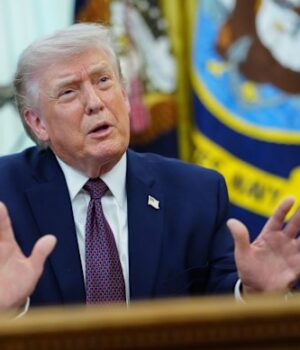
There are only two options if the conflict drags on for a few more weeks, as it might because both Donald Trump and Iran’s Revolutionary Guards believe they are winning.
Either the market defies demand in its own brutal way, or governments intervene with tough choices and take emergency measures, something Sir Keir Starmer’s government in the UK appears incapable of ever doing.
It might give you a taste of wartime rationing for jet fuel, diesel, or naphtha. In terms of helium, it might soon be a question of whether liberal democracies permit billionaire tech brothers to outbid everyone and store a lot of money for unpopular AI expansion.
Do politicians finally confront the hyperscalers and redirect helium supplies to the pressing needs of military and energy rearmament, as well as to maintain routine economic sectors that employ infinitely more people?
US Secretary of State Marco Rubio almost acknowledged on Monday that Washington had no coherent plan to reverse the status quo, let alone find a better way to restore the war’s favor. He also acknowledged that Iran’s regime now had enormous power to harm.
He claimed that the Strait of Hormuz is essentially an economic nuclear weapon that they are attempting to use against the world.
Indeed, sir, and what will you do in response?
London’s The Telegraph
Major stories, exclusive coverage, and expert opinions are provided by the Business Briefing newsletter. Sign up for it every morning of the week.


