Source : the age
Health Minister Mark Butler announced some very big changes to aged care and the NDIS in his speech this afternoon.
Here are the big things to know for each of the areas:
For the NDIS:
- Reducing the number of participants – because of new eligibility rules, the projected number of people on the scheme by the end of the decade is expected to be about 600,000. Today, there are 760,000 people on the scheme. This would suggest about 160,000 people will transition out of the scheme once the new eligibility rules come into effect.
- Butler also announced an overhaul of NDIS eligibility. Access to the scheme will move to assessments of a person’s functional capacity, rather than relying on diagnosis alone.
- $55 billion – that will be the new targeted cost of the NDIS for 2030, down from the current forecast of $70 billion. The cost of the scheme last financial year was $48.5 billion, and it will surpass $50 billion in the current year. It’s a marked reduction in growth.
- Registration for NDIS providers will now be mandatory. Currently, less than 10 per cent of providers in the scheme are registered.
- $200 million will be used to establish the Inclusive Communities Fund, with the aim of rebuilding capability among disability organisations for people to have options to participate in their local community.
- It’s a bigger shake-up than many had predicted. Paul Sakkal, our chief political correspondent, says the scheme was at risk of being killed off entirely if major changes were not made now.
For aged care:
- Butler said the private health insurance rebate for Australians over 65 would be pared back to the standard level paid to everyone else, with the savings diverted back into aged care.
- Butler announced $3 billion to deliver more beds, more packages, and better care for older Australians.
- $1 billion will be put into the Support at Home program to make help with showering, dressing and continence management free of charge alongside clinical care.
- $200 million will be invested into 20 specialist dementia care units and an expansion of the Hospital to Aged Care Dementia Support Program, which helps older people transition from hospitals into residential aged care.
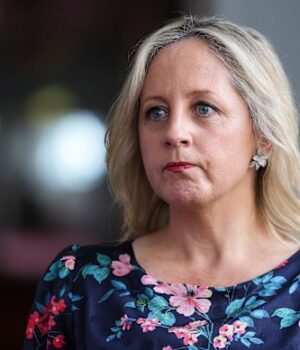
The Coalition’s spokeswoman for the NDIS, Liberal MP Melissa McIntosh, is currently holding a press conference in Sydney.
She said while the opposition supports a crackdown on NDIS rorts, the way Labor has gone about its broader changes is causing concern in the community:
Today, Minister Butler dropped a complete bombshell on every single person with a disability in this country who uses this very important scheme. One hundred and sixty thousand people are now going to have to … move off the NDIS in a short period of time.
I have the phones going off the hook in my office right now. People are in mass anxiety. They feel this is a disaster awaiting them.
Labor’s own baby is now broken.”
The reactions to the government’s NDIS shake-up are now coming thick and fast.
Greens senator Jordon Steele-John is currently speaking on ABC TV. This was his reaction to the changes announced by Mark Butler:
My reaction is one of shock and a deep sadness. The disability community knew this [announcement] would be bad. But this is quite frankly terrifying for us and our families.”
When asked why he felt that way, he cited the figure of 160,000 NDIS participants being moved off the scheme.
This is not what the Australian community expects from a Labor government.”
Health Minister Mark Butler said the reforms announced today will crack down on fraud in the NDIS by improving transparency and ensuring payments go where they are intended.
“When we talk about fraud in the NDIS, we’re not talking about people with disability. We’re not talking about families who have been put on a plan and offered support – they’re not doing anything wrong. The fraud in the NDIS is being perpetrated by low lives who are scamming both the taxpayer, but more importantly, people with a disability,” Butler said.
“The measures I announced today mean that 90 per cent of all payments will go to registered providers. But the really critical thing, I think, that we announced today is to move to a digital payment system. That means that everyone receiving a payment through the NDIS will have to basically declare themselves, and we’ll be able to compare data between government agencies.”
The health minister has ruled out means testing and co-contribution payments as part of today’s NDIS overhaul following speculation in the lead-up to his speech:
The design of this scheme was always premised on universal access, so there was never any means testing in the scheme, in its design or its implementation. And I still think that’s the right approach to a scheme for lifelong supports, philosophically.
More practically as well, if you think about how means testing would work for people who need lifelong support, who overwhelmingly have pretty limited financial means, it wouldn’t deliver much anyway. So whether you think about this philosophically or practically, it doesn’t really add up.”
Mark Butler says because the new eligibility test will be based on people’s functional capacity rather than diagnosis, most people with psychosocial disability and serious mental health needs would remain on the scheme.
“We’re pretty confident the people on the scheme now with psychosocial disability have very high support needs. It’s not easy for someone with mental health needs to get on to the scheme,” Butler said.
“If anything, there’s probably some unmet need outside of the scheme, which has been identified in discussions between state and territory governments … we’re determined to have that as the next cohort that will be part of the negotiation process that will happen next year in our mental health and suicide prevention agreements.”
Mark Butler has insisted “choice and control” remained the core philosophy of the NDIS, despite sweeping cuts.
“What I have announced today, though, is a move away from the ‘let it rip’ market that, I think, has built up over the last 10 years where there’s very little oversight or line of sight about the quality and the qualifications of providers,” the health minster said.
Butler said providers should have to apply and demonstrate their compliance with performance standards.
“Then from that panel, yes, people can choose,” he said.
“We’re not going to say to individual participants, ‘you have to deal with this provider’. There will be a panel. There will be still choice and control, but it won’t be this free-for-all market that has developed over the last 10 years and is serving no one’s interest.”
The NDIS overhaul just announced by Health Minister Mark Butler is a bigger deal than many had predicted.
The government had raised hopes of reducing yearly spending growth in the program to about 5 per cent. When Labor won power in 2022, the NDIS was growing at more than 20 per cent per year. Butler announced that over the next four years, sweeping cuts would mean the average growth rate would be about 2 per cent.
The ballooning program was on track to cost the country more than the age pension. A projected $70 billion cost in 2030 will be reduced to $55 billion under Butler’s reforms, delivering the government major savings as it scrambles to rein in the budget and combat inflation.
The skyrocketing number of young people with autism and low-level developmental issues has forced the government to upend the criteria to join the NDIS.
Health Minister Mark Butler announced some very big changes to aged care and the NDIS in his speech this afternoon.
Here are the big things to know for each of the areas:
For the NDIS:
- Reducing the number of participants – because of new eligibility rules, the projected number of people on the scheme by the end of the decade is expected to be about 600,000. Today, there are 760,000 people on the scheme. This would suggest about 160,000 people will transition out of the scheme once the new eligibility rules come into effect.
- Butler also announced an overhaul of NDIS eligibility. Access to the scheme will move to assessments of a person’s functional capacity, rather than relying on diagnosis alone.
- $55 billion – that will be the new targeted cost of the NDIS for 2030, down from the current forecast of $70 billion. The cost of the scheme last financial year was $48.5 billion, and it will surpass $50 billion in the current year. It’s a marked reduction in growth.
- Registration for NDIS providers will now be mandatory. Currently, less than 10 per cent of providers in the scheme are registered.
- $200 million will be used to establish the Inclusive Communities Fund, with the aim of rebuilding capability among disability organisations for people to have options to participate in their local community.
- It’s a bigger shake-up than many had predicted. Paul Sakkal, our chief political correspondent, says the scheme was at risk of being killed off entirely if major changes were not made now.
For aged care:
- Butler said the private health insurance rebate for Australians over 65 would be pared back to the standard level paid to everyone else, with the savings diverted back into aged care.
- Butler announced $3 billion to deliver more beds, more packages, and better care for older Australians.
- $1 billion will be put into the Support at Home program to make help with showering, dressing and continence management free of charge alongside clinical care.
- $200 million will be invested into 20 specialist dementia care units and an expansion of the Hospital to Aged Care Dementia Support Program, which helps older people transition from hospitals into residential aged care.
The NDIS was originally intended to support about 410,000 people with a disability, the health minister has told the National Press Club.
Today there are 760,000 people on the scheme.
While new eligibility rules need to be worked through, our initial modelling will see the number of people on the scheme reduce to around 600,000 by the end of the decade instead of growing to well over 900,000.
This is still substantially higher than the Productivity Commission projection of 550,000 by the end of the decade.”
This would suggest about 160,000 people will transition out of the scheme once the new eligibility rules come into effect.
The new eligibility scheme will mean autistic adults could be kicked off the scheme based on their support needs.
Butler said autistic children aged under nine would be included in the Thriving Kids program that is being developed, but others would be based on a new objective assessment tool.
Butler said he was aiming for the NDIS overhaul legislation to pass through parliament by June 30, and that “many of those measures will start to take effect immediately”.
For example, cutting down on unscheduled reassessments, which is a big driver of growth, in terms of eligibility. That is something obviously we need to work through much more carefully with the community and with states.”
He said that work should be supported by a technical advisory group over coming months, with new eligibility rules coming into force by January 1, 2028.