
SOURCE :- THE AGE NEWS
Washington: The leaders of Israel and Lebanon have agreed to a 10-day ceasefire that has now gone into effect, in another potential step towards ending the broader conflict with Iran.
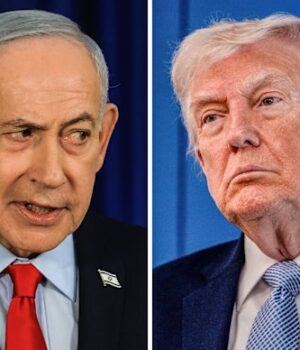
Trump said he spoke with Israeli Prime Minister Benjamin Netanyahu and Lebanese President Joseph Aoun on Thursday (US time), following talks between top diplomats in Washington earlier in the week.
“These two leaders have agreed that in order to achieve PEACE between their Countries, they will formally begin a 10-day CEASEFIRE,” Trump declared on social media.
Later, speaking to reporters at the White House, Trump asserted the Lebanese government was “working with Hezbollah” to enforce the truce. “We’re going to see how it all works out,” he said.
“They’re all agreeing. It’s a very nice little package, for about a week. We’re not going to have lots of bombs dropping, and we’re going to see if we can make peace between Lebanon and Israel.”
With a steady flow of displaced Lebanese returning to their homes in the country’s south, the Lebanese Army said early on Friday (Lebanon time) that Israel had already violated the ceasefire, including the intermittent shelling of several southern Lebanese villages.
Lebanon’s state-run National News agency reported that Israeli shelling continued in the villages of Khiam and Dibbine about 30 minutes after the truce began. Israel’s military told The Associated Press that it was looking into reports of shelling and artillery fire in southern Lebanon.
The Israeli military earlier urged residents in southern Lebanon not to move south of the Litani River, about 30 kilometres north of the Israeli border, until further notice while forces remain deployed after the start of the ceasefire.
Arabic-language military spokesperson Avichay Adraee said the deployment was in response to what he described as continued Hezbollah militant activity.
Israel’s war against Hezbollah over the past 46 days has displaced an estimated 1.2 million people – or almost 20 per cent of the population – including 820,000 from the south.
Hezbollah – which Australia has proscribed as a terrorist organisation – is estimated to have up to 50,000 fighters, and also operates as a “state within a state” in parts of Lebanon with a large network of social services including healthcare facilities and schools.
While it’s unclear how the ceasefire will work in practice, as Israel is fighting Hezbollah, rather than the Lebanese state, the US State Department has published six “commitments” it says both Israel and Lebanon have accepted.
They include that Lebanon will take “meaningful steps” to prevent Hezbollah and other groups in its territory from “carrying out any attacks, operations, or hostile activities against Israeli targets”.
“All parties recognise Lebanon’s security forces as having exclusive responsibility for Lebanon’s sovereignty and national defence; no other country or group has claim to be the guarantor of Lebanon’s sovereignty,” the statement says.
At the same time, Israel retains its right to “take all necessary measures in self-defence, at any time, against planned, imminent, or ongoing attacks” but will not carry out any offensive operations against targets in Lebanon.
The initial 10-day ceasefire may be extended if negotiations progress and “Lebanon effectively demonstrates its ability to assert its sovereignty”.
Elliott Abrams, a senior fellow at the Council on Foreign Relations, and a former US special representative for Iran, said it was not clear who the ceasefire was actually between.
“If that means the state of Lebanon, what about Hezbollah? They can break it tomorrow and that’s the end of the 10 days,” he said.
Aoun does not control Hezbollah, though Abrams said he could potentially try to persuade them to stop through Lebanon’s parliamentary speaker Nabih Berri, a Hezbollah ally. “It’s not completely inconceivable to me.”
Senior Hezbollah lawmaker Hassan Fadlallah told Reuters the group had been informed by Iran’s ambassador to Lebanon that a one-week ceasefire could begin on Thursday evening.
Asked if Hezbollah would commit to the truce, Fadlallah said everything was tied to Israel’s commitment to halt all forms of hostilities, and credited Iran’s diplomatic efforts for the possible ceasefire.
Meanwhile, Netanyahu said he had agreed to the 10-day ceasefire in Lebanon, but described it as “temporary” and a “timeout”. “We have an opportunity to make a historic peace agreement with Lebanon,” he said in a video message.
But Netanyahu said Israel had not agreed to a Hezbollah demand to withdraw from southern Lebanon. He said Israeli troops would remain in Lebanon in a “security zone” close to its border with Syria. “That is where we are, and we are not leaving.”
Trump has invited Netanyahu and Aoun to the White House for a meeting, but did not say whether they had agreed to come.
The two countries do not have diplomatic relations and have not had high-level, in-person talks for more than 30 years – until the meeting between ambassadors at the US State Department this week.
There has been a ceasefire between the US, Iran and Israel since April 7, with ongoing talks to end the war that began on February 28. But the ceasefire did not include Lebanon.
Iran initially demanded that Lebanon be part of the truce as a precondition to negotiations with the US, but it participated in talks in Pakistan last week regardless.
Following the ceasefire announcement, Iranian parliamentary speaker Mohammad Bagher Ghalibaf said Iran would treat the truce with caution but would be “true to our pledge”.
He praised Hezbollah’s “steadfastness” and the unity of what he called the Axis of Resistance. “We will remain together until the full realisation of victory,” he said on X.
With Reuters, AP
Get a note directly from our foreign correspondents on what’s making headlines around the world. Sign up for our weekly What in the World newsletter.
 Michael Koziol is the North America correspondent for The Age and Sydney Morning Herald. He is a former Sydney editor, Sun-Herald deputy editor and a federal political reporter in Canberra.Connect via X or email.