
Source : THE AGE NEWS
April 28, 2026 — 12:03pm
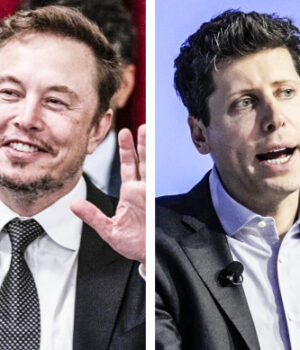
The face-off in court this week between Elon Musk and OpenAI’s Sam Altman has the potential to not just neuter OpenAI and its ambitions, but send financial shockwaves throughout the artificial intelligence ecosystem.
The case brought by Musk, which opened with jury selection in a courtroom in Oakland, California on Sunday night (AEST), centres on Open AI’s conversion last year from a non-profit entityinto a for-profit company.
Musk co-founded OpenAI in 2015 with Altman, donating about $US38 million ($53 million) to establish a vehicle for pursuing artificial intelligence that could be shared altruistically with the world, putting the public good ahead of any commercial interests.
The launch of OpenAI’s chatbot ChatGPT in November 2022 ignited the AI boom, and kicked off a multitrillion-dollar race for AI supremacy.
When a partnership with Microsoft, which invested $US13.75 billion within a complicated set of arrangements to help develop and commercialise OpenAI’s technology, proved insufficient to fund the group’s near-insatiable need for capital to finance Altman’s ambitions, it opted for the restructuring.
Musk, in 2024, initiated the legal action that has now begun in court, arguing that OpenAI had jettisoned its founding humanitarian mission and breached its founding agreement for pure financial gain because of the greed of Altman, as well as OpenAI’s president and co-founder Greg Brockman and Microsoft.
While the prediction markets are pricing Musk’s attempt to unravel OpenAI’s structure as a longshot, if successful, it would gut OpenAI.
The billionaire wants the restructuring of OpenAI to be unwound and the company returned to a purely non-profit status, along with seeking $US134 billion of damages that would, if his court action is successful, be paid to the new/old OpenAI. He also wants Altman and Brockman removed from their roles.
Musk and Altman initially fell out in 2017 when it became obvious that OpenAI needed to raise billions of dollars if it were to continue to build its AI model.
OpenAI decided to create a for-profit entity, controlled and overseen by the non-profit, which led to its partnership with Microsoft. This gave the software giant equity in the for-profit business, along with a two-sided revenue-sharing arrangement.
According to OpenAI, Musk wanted something different. He wanted a merger with his electric car and battery maker Tesla and/or personal control, with majority ownership, board control and the position of chief executive.
Musk lost that battle and left the OpenAI board in 2018. Altman became its CEO.
With Musk now having his own AI start-up, xAI, which was recently merged into another Musk business, SpaceX, there’s an obvious conflict in his legal assault on OpenAI and its key executives.
Moreover, SpaceX, partly to help fund its AI ambitions, is planning an initial public offering (IPO) mid-year to raise $US75 billion at a mind-blowing company valuation of at least $US1.75 trillion.
OpenAI, valued at about $US852 billion in an equity raising last month, also hopes to float on the sharemarket later this year.
So both companies are competing for the same pot of AI investment funds.
While the prediction markets are pricing Musk’s attempt to unravel OpenAI’s structure as a long shot, if successful, it would gut OpenAI because as a non-profit, it wouldn’t be able to offer prospective investors a return on their investment.
It would be cut off from access to the mega-funding it, and all the other companies within the AI space, need to train their models and acquire the chips and access to the data centres that the technology demands. OpenAI would be returned to its original research institute status.
While that might appear to benefit Musk and SpaceX, the billionaire should be careful of what he wishes for.
OpenAI is, with chipmaker Nvidia, at the centre of a complex AI ecosystem of developers, chipmakers and cloud computing and data centre providers that are mutually dependent within an incestuous web of financial agreements.
OpenAI has its core deal with Microsoft, which was amended this week. It also has a deal with Nvidia to acquire chips and sell computing capacity, alongside similar deals with Broadcom, AMD and Cerebras.
The group also has a $US30 billion-a-year deal with Oracle to lease data centre capacity, an alliance with Australia’s data centre operator NextDC for regional infrastructure, a deal with Japan’s Softbank for the $US500 billion Stargate AI project and cloud deals with Microsoft, Amazon and Google.
If OpenAI (and Altman and Brockman) were to lose the case, the group might gain $US134 billion or more in damages, but it would be unable to raise new equity and deliver on its agreements with its partners – essentially the bulk of the AI sector.
The mutually dependent character of most of those deals would mean that its partners, too, would be dealt a blow.
Their finances would be impacted, in most instances significantly, and their equity valuations would suffer – as would the entire US sharemarket, given how dependent it has become on the artificial intelligence sector.
Success might also rebound on Musk, as a devaluation of the sector would depress the extraordinary valuation being placed on SpaceX and, to some degree, on Tesla because of its increasing focus on AI.
Given that the AI sector is reliant on its ability to continually raise new equity (and, in some instances, debt) to fund the hundreds of billions the companies are expending to develop their AI models and infrastructure even as the sector’s losses from those investments mount, a Musk victory in court could be, if not an existential threat, then at least one that could significantly damage their AI ambitions and value.
The whole sector is built on the promise of eventual mega returns from the billions being raised and spent. If the companies’ access to equity is cut off, or just reduced, the whole edifice would shudder.
A Musk loss, on the flipside, would enable the circular finances of the sector to continue to spin.
He can afford to lose the case and by ensuring OpenAI can’t hit the market with its IPO ahead of SpaceX, has probably made it easier for SpaceX to raise its funds at a higher valuation than might be the case if it were competing for investors and their funds with OpenAI.
While waiting for the case to unfold, OpenAI is getting on with business, which it needs to, given that it is being challenged for industry leadership – and lagging in the race towards eventual profitability – by Anthropic, whose focus on business applications is delivering higher-margin revenues than ChatGPT’s massive consumer base.
On Monday, OpenAI re-jigged its deal with Microsoft, with the software maker giving up its exclusive access to OpenAI’s models in exchange for a continuation of the companies’ revenue-sharing deal and the removal of a clause in their agreement that could have cut off its access to OpenAI’s technology if OpenAI achieved “artificial general intelligence.” Microsoft also no longer has to pay OpenAI a share of the revenue it generates from selling access to ChatGPT from its own servers.
That renegotiation, which will enable OpenAI to strike more deals with other cloud-computing companies by distancing itself from Microsoft to a greater degree, could help boost revenues and make for a cleaner and more valuable IPO of the AI pioneer – assuming it does escape the Californian courtroom unscathed.
The Business Briefing newsletter delivers major stories, exclusive coverage and expert opinion. Sign up to get it every weekday morning.
 Stephen Bartholomeusz is one of Australia’s most respected business journalists. He was most recently co-founder and associate editor of the Business Spectator website and an associate editor and senior columnist at The Australian.Connect via email.

