
Source :- THE AGE NEWS
It’s 4.42pm on a miserably grey and soggy Wednesday in Melbourne’s CBD, when an unidentified number rings.
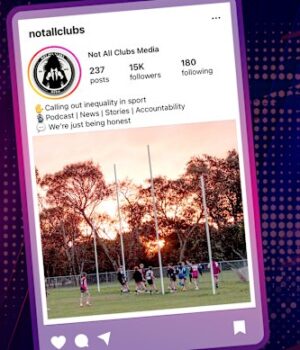
It’s the creators behind Not All Clubs Media, a popular activist and podcast group on social media that calls out inequality and sexual harassment in sport and grassroots clubs.
The speaker, who calls themselves Jyn (a pseudonym), has agreed to an interview with this masthead, on the condition they and their co-founders Lara and Ripley (also pseudonyms) can maintain their anonymity for privacy and safety reasons.
The group’s name is inspired by the common phrase “not all men”, often used as a flippant dismissal of men’s involvement in gender-based violence or misogyny.
You might recognise Not All Clubs from their Instagram page and colourful aesthetic, featuring pastel tiles with bold punchy headlines like “Boys will be boys, teenager boys wear sexist, degrading and misogynist shirts”.
On several occasions, the group has beaten sports journalists in mainstream media to stories. They were among the first to publish the vision of a Collingullie Wagga Demons women’s match, where an official could be heard referring to women as “breeders” and saying a female player should lose weight.
After mainstream media outlets picked up the story, the Demons posted a statement confirming the official had “stepped down from all club duties effective immediately,” and said the behaviour was unacceptable.
The group also published extensive coverage of the breakaway Kyneton Women’s Football Club (now known as the Wedge-Tailed Eagles) and has highlighted instances of inequitable treatment in basketball, soccer, and netball, and has covered stories from regional Victoria all the way to Scotland.
Following this mastehead’s investigation of grassroots footy culture, Not All Clubs agreed to chat about their growing following, their space in the media landscape, and their motivations for publicly calling out sporting clubs and individuals accused of inappropriate behaviour, including sexual harassment.
Not All Clubs officially began in 2024 and was inspired by conversations between the three co-founders about their experiences in grassroots sport.
Ripley and Jyn would often call each other about issues within their own clubs, noting the isolation that can come from dealing with issues such as sexism.
“We talked a lot about how beneficial it was for us to connect and to sort of realise that we weren’t alone,” Jyn said. “And we thought, how can we make other women realise that they’re not alone?”
Jyn said Not All Clubs does cover mainstream stories, but often prioritises those “who don’t already have a voice”. They said a lot of the group’s content comes from people reaching out to them directly to share tips or stories.
What Jyn describes sounds similar to traditional newsgathering and journalism. Does the group classify themselves as journalists, or do they identify with the new wave of content creators often dubbed “new media”? Or are they somewhere in the middle?
Jyn said they don’t identify as journalists, but consider themselves a mix of new media and activists.
Defamation threats
Sherele Moody’s Instagram page – which has more than 150,000 followers – takes a similar approach to Not All Clubs and publicly calls out instances of sexism and misogyny in sporting clubs.
Moody is one of Australia’s leading femicide researchers and an award-winning journalist who documents and tracks women and children who are lost to violence.
However, compared to Not All Clubs, Moody’s approach to public callouts is bolder.
She screenshots derogatory or inappropriate comments people make online (usually directed towards high-profile women) and publishes them, sometimes leaving users’ full names and profile images visible. Sometimes she will tag someone’s workplace or sporting club in the post.
Moody said she “100 per cent” believes public callouts are the best way to hold individuals and organisations accountable for poor behaviour.
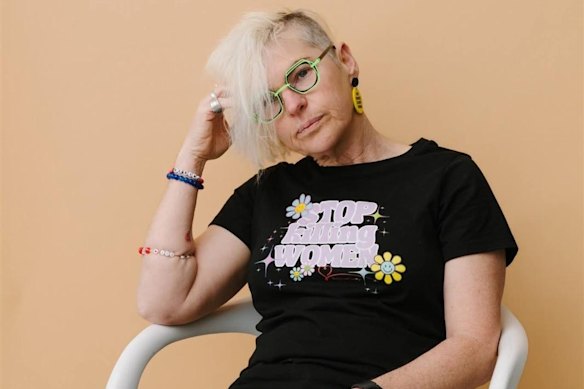
“Once upon a time, we didn’t have social media, so it was significantly hard to call toxic men out publicly,” she told this masthead.
“It was just really hard because we couldn’t get these messages into mainstream media. But the advent of social media has given us a tool, and definitely over the last few years, things like TikTok and Instagram have become … the platforms of choice for doing this because, for me, my work reaches a significant number of young women who are moving in sporting spaces.”
Moody recently did a collaboration with Chloe Pink – a content creator and the wife of North Melbourne AFL player Toby Pink – who has been consistently trolled since her wedding.
With Pink’s permission, Moody collated and posted examples of comments Pink regularly receives about her weight and appearance from men online.
Moody said some women, like Pink, find the public callouts can be empowering, but she always tries to approach the women involved and seek their permission.
What would she say to critics who say naming and shaming is not the right approach?
“Nothing else is working,” she said. “Literally, nothing else is working. I’m sorry, but we’ve had public campaigns around toxic masculinity and misogyny. We have women being killed. We have women being hospitalised, women being traumatised for life because of gendered violence or male violence.
“We still have high-profile misogynist men being platformed across every kind of mainstream and social media outlet. Nothing else is working.”
Moody told this masthead she gets legal letters “from time to time”, but she has lawyers who will check the concerns notices and provide responses.
“[When it comes to] most of my callouts, I basically screenshot misogynistic material, and sometimes that misogynistic material is revolving around the NRLW and the AFLW,” she said.
“That’s kind of my way of protecting myself because I use the screenshots and I identify the person who’s made the abhorrent post, so you can’t really sue someone for defamation if you screenshot what they said.”
Moody said the benefits of holding people accountable and calling out poor behaviour outweigh any vitriolic trolling or abuse she receives.
Jyn did not comment on specific cases, but confirmed Not All Clubs had received “a couple of defamation threats” and messages from clubs they’ve called out.
“We try and be really diligent and honest in what we’re doing, and really confident in whatever we share,” they explained.
“It’s gone through a rigorous process, and we know that sometimes these people, they seem to actually believe they haven’t done the thing that they’ve done, you know?
“So it’s about growth within these organisations.”
How does Not All Clubs balance advocating for safe sporting environments and holding people accountable without veering into what some critics call vigilantism?
“If people listen to our podcast, look at our works … we only really name clubs or entities in limited circumstances, like when media already have. We have done it maybe once or twice, when we get something really specific and we can really substantiate it,” they said.
“But for us, it’s more about shining a light on the issues within systems, and [when there is] one issue that happens at one club … guaranteed it has happened at 20 others.”
Not All Clubs’ refusal to name specific individuals sometime leaves their followers frustrated, with some arguing they are protecting or shielding people from scrutiny – a criticism Jyn said was misunderstood.
“If we go and we burn down this one club that doesn’t fix sexism, it doesn’t fix patriarchy, you know? Whereas if we can say, ‘This story, here is an example of what’s happening in all clubs’, I think that’s more powerful,” Jyn said.
“So that’s probably our line between, I guess, the vigilantes … even though sometimes we probably do venture into those spaces.”
Last year, football teams across Victoria wore red armbands to protest to the axing of state government women in sport programs and grants.
This year, in collaboration with Safer Sport – an initiative by La Trobe University – Not All Clubs is spearheading a campaign to call out gender-based violence in sporting environments and encourage clubs to change their culture.
From May 29–31, players across all sporting codes – including footy, netball and rugby – will be encouraged to wear two red armbands; one to honour women killed by gender-based violence and the other to highlight the need for greater accountability in sport.
Ultimately, Jyn believes the issues within grassroots sport, while multifaceted, stem from a belief that “change can be a form of loss” for those in power.
“Women have been disenfranchised in sporting clubs for years before the AFLW existed, before it was big,” they said.
“But now that there’s this influx, there’s a bit of an extinction burst going on where people are trying really hard to hold on to the way things have always been.”
Keep up to date with the best AFL coverage in the country. Sign up for the Real Footy newsletter.