
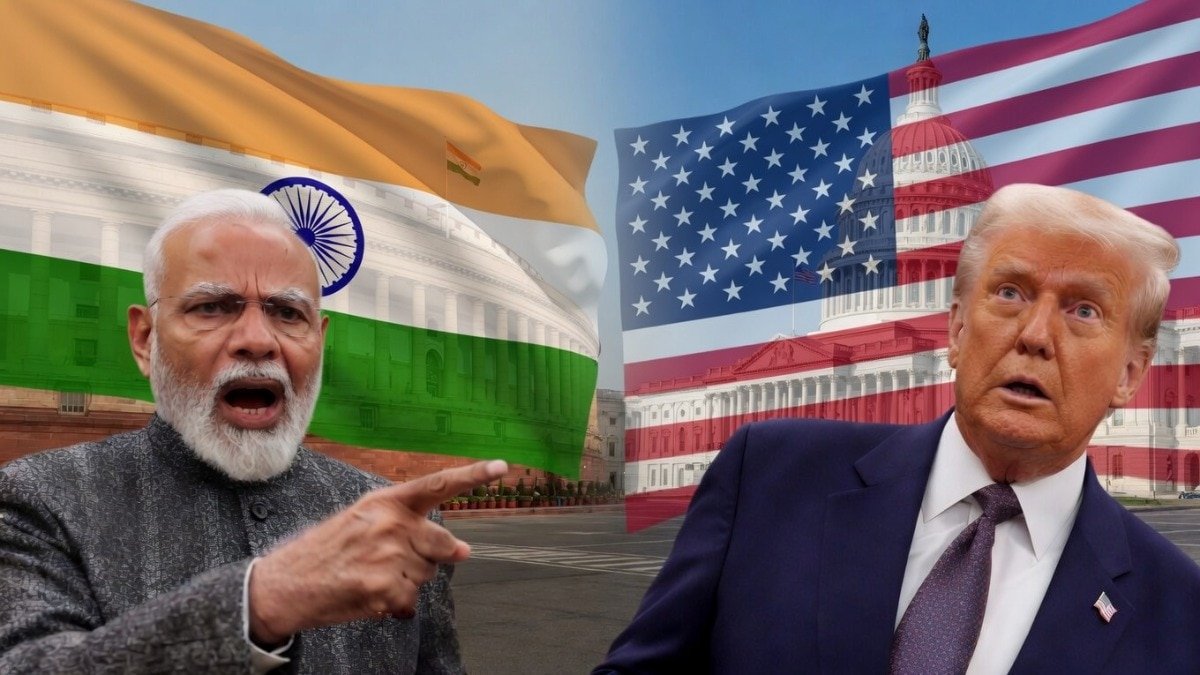
Source : INDIA TODAY NEWS
US President Donald Trump is no stranger to controversy. But his latest remark, referring to countries like India and China as “hell-holes on the planet”, may prove to be more than just another headline-grabbing statement. It has triggered diplomatic discomfort, public backlash, and a deeper question: will this rhetoric carry consequences that even Trump cannot easily dismiss?
The controversy stems from Trump amplifying content by conservative radio host Michael Savage, who criticised America’s birthright citizenship law. The argument was familiar, that immigrants exploit the system by having children in the United States, securing citizenship, and later bringing extended family members. But what elevated the debate into a diplomatic flashpoint was the language. Entire nations were reduced to dismissive labels, and Indian and Chinese professionals were described in offensive terms.
advertisement
At the heart of the issue lies birthright citizenship, a principle embedded in the United States Constitution. Trump has long sought to challenge it, arguing that it no longer reflects modern realities. Yet legal experts maintain that altering it is not a matter of executive will or public vote alone, it is a constitutional question requiring far deeper scrutiny.
When Rhetoric Becomes Risk
What makes this episode different is not just the policy debate, but the shift in tone. This was not a critique of law or process, it was a sweeping characterisation of entire countries, including India, a key strategic partner of the United States. For a nation deeply embedded in US economic and technological ecosystems, such language risks appearing dismissive of both its people and its contributions.
India’s response was measured but firm. The Ministry of External Affairs described the remarks as “uninformed, inappropriate and in poor taste,” making it clear that they do not reflect the reality of India-US ties. That phrasing, diplomatic as it may sound, carries weight. It signals disapproval without escalation, but it also draws a line.
The backlash did not stop there. Iranian diplomatic missions in India took an unusually public stance, mocking the remarks and highlighting India’s cultural depth. In doing so, they reframed the controversy, from a political argument into a broader defence of identity and civilisation.
Damage Control, But Is It Enough?
Sensing the fallout, the US Embassy in New Delhi issued a clarification. Trump, it said, views India as “a great country” led by “a very good friend”. But the contradiction is difficult to ignore. Praise offered after provocation rarely erases the initial impact.
For critics, this pattern, sharp rhetoric followed by partial retraction, raises questions about credibility. Can diplomatic relationships absorb repeated shocks of this nature without consequence? Or does each instance leave a residue that gradually reshapes perception?
A Strategic Dilemma for India
The episode also places India in a delicate position. On one hand, there is a case for a stronger response, to ensure that such language is not normalised. On the other, there is the reality of a relationship that extends far beyond rhetoric. The India-US partnership is anchored in defence cooperation, economic interdependence, and shared geopolitical interests, particularly in countering China’s rise.
So far, New Delhi has chosen restraint. It has rejected the remarks but avoided escalation, allowing diplomatic channels to manage the fallout. This calibrated approach reflects a broader strategic calculation, that long-term interests must not be derailed by short-term provocation.
Will Trump Pay a Price?
Whether Trump will regret his remarks depends on how one defines consequence. Politically, such statements may energise a domestic base. Diplomatically, however, they carry a different cost. Words shape perception, and perception shapes partnerships.
Reducing a complex nation like India to a derogatory label is not just a rhetorical misstep, it risks undermining trust. And in a world where alliances are increasingly fluid and strategic alignments matter more than ever, trust is a currency that cannot be casually spent.
The real question, then, is not just whether Trump will regret what he said, but whether the cost of such rhetoric will become visible over time. For India, the focus now shifts to response: not just in words, but in how it asserts itself as a partner that expects, and commands, respect.
– Ends
Tune In
Must Watch
SOURCE :- TIMES OF INDIA


