
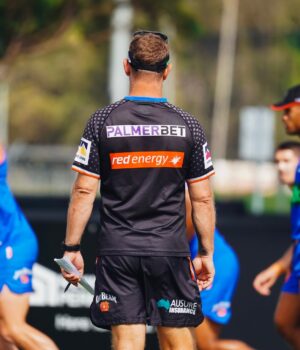
Source : ABC NEWS
In a major safety move, the National Rugby League has capped contact in training in a bid to reduce injuries, including concussions.
The ABC can reveal all 17 NRL and 12 NRLW clubs have been informed of the development, with guidelines limiting the minutes of contact in both in-season and pre-season training sessions.
The move to restrict training loads is aimed at mitigating injuries, including brain injuries, which continue to be a major issue for all contact sports.
All 17 NRL clubs were informed on the eve of the season that their players are to engage in no more than 100 minutes on a regular seven-day turnaround.
In the NRLW, whose 2026 season begins in July, female players can engage in no more than 85 minutes per week on a seven-day turnaround.
All of this training is inclusive of wrestling.
For the NRL and NRLW it is no more than 40 or 50 minutes of contact on a five or six-day turnaround.
The new preseason guidelines place limits of no more than 200 minutes of contact per week for men and 115 minutes for women.
Sports neuroscientists and neurologists had previously called for Australia’s major leagues, the NRL and AFL, to restrict contact in training to protect footballers from concussions and sub-concussive impacts.
World Rugby and the US’s National Football League have already implemented contact restrictions for their athletes in both their preseason and in-season training sessions, to reduce the number of impacts to the brain.
Until now, there have been no set limits on contact training in the NRL and NRLW, with the head coach of the club determining the intensity and physicality of training.
NRL sources say in the past two decades, contact in training has exponentially increased.
Preseason has traditionally been the most physical and high-contact segment of the year for NRL and NRLW players but now the coaching hierarchy have been given a set of guidelines.
These new guidelines are for the first time formally encouraging moderation.
In the preseason later this year the men will be instructed to have a limit of “contact training to no more than 100 minutes per week pre-Christmas (inclusive of wrestling training)”.
The NRL also states clubs should:
- Limit total contact training to no more than 200 minutes per week post-Christmas (inclusive of wrestling training).
- Avoid high-intensity contact training on consecutive days.
- Schedule no more than three consecutive days of contact training without a recovery day.
The 12 NRLW clubs have been told that during their preseason this June, they should:
- Limit total contact training to no more than 115 minutes per week, with no more than 35 minutes of high-intensity contact.
- Avoid high-intensity contact training on consecutive days.
- Schedule no more than three consecutive days of contact training without a recovery day.
There is also a “graded introduction protocol” for both men and women, in which from day one to five of their respective preseasons there is no physical contact.
On day one of preseason training both NRL and NRLW clubs must “restrict activities to physical screenings, meetings, classroom education and general conditioning. No football-specific training equipment, or team-based drills”.
On days two to five of preseason the guidelines say clubs should limit training to “non-contact, skill-based drills only. No live or high-intensity contact”.
The NRL released a statement to the ABC saying it was introducing the guidelines to better protect footballers.
“The training load guidelines are designed to enhance player safety, and have been developed following extensive research.”
Clubs were told the proposed guidelines for the NRLW were based on a survey of NRLW clubs and analysis compiled on the men’s data.
But the guidelines could evolve.
Clubs have been told “the contact rules are intended to be iterative while the research is ongoing and data from the 2026 season will be used to inform contact training rules for the 2027 season”.
Clubs will be required to log contact — but questions remain about how the rules will be policed. Several sources say that policing the compliance to the training restrictions will be key to the policy’s success.
The move by the NRL follows similar measures by other sporting bodies that, like them, have faced and are facing legal action from players who say they have sustained brain injuries during their careers.
The NFL first implemented a reduction in contact in 2011 and has since paid out $1 billion in compensation for football-related brain injuries.
World Rugby placed restrictions on contact in training in 2021.
World Rugby guidelines for professional teams include restricting full-contact training to a maximum of 15 minutes per week and controlled contact (using pads and shields) to 40 minutes per week. They also include a 30-minute weekly cap on live set-piece training.
Players like former Roosters captain Luke Keary have previously called on the NRL to cap the contact in training.
“We should have had less contact five years ago,” Keary said in 2023.
“They do it in the NFL. I don’t know how we haven’t done those studies and tests … I just don’t know how it hasn’t happened.”
In 2024 the NRL introduced efforts to monitor concussion away from games and updated protocols during training.
Each club is now required to film every contact training session they conduct, with footage used to analyse any potential concussion risks during training.
The degenerative brain disease Chronic Traumatic Encephalopathy, which is linked to repetitive hits, has been found post-mortem in the brains of rugby league players including Rothman’s medal winner Paul Green and Canterbury Bulldogs star Steve Folkes.
Keith Titmuss — a Manly Sea Eagles player who also played schoolboy rugby union for Newington College in Sydney — was also found to have CTE at just 20.
The AFL still has not formally reduced contact in training.

Shane Tuck playing for Richmond in 2012. (AAP: Joe Castro, file photo)
After Richmond player Shane Tuck died by suicide at 38 — and was found to have CTE — there was a coronial inquiry into his death.
In 2023, coroner John Cain Jr made a number of safety recommendations, including that the league implements restrictions on contact in training.
Last month, the Herald Sun reported the AFL had been tracking contact training data across six intensity categories from warm-up drills at the low end to full match simulations and could limit training minutes as early as 2027.
AFL football executive Laura Kane told the Herald Sun: “But we are happy to confirm there is no correlation between how much contact training you do and the ladder [positions] and there hasn’t been for the two full seasons since the coroner’s recommendation [to cut contact training].”
The AFL is currently facing a class action of 100 footballers who claim they have been left brain injured by the game.
More than 500 AFL players will soon no longer be covered by insurance for brain injuries in their superannuation, after Zurich Insurance moved to cut their ability to claim for concussion and head trauma from May 1 this year.
Zurich Insurance recently told the ABC there was “widespread uncertainty” around the potential magnitude of CTE and the long-term effects of concussion.
One NRL club source, who wished to stay anonymous, said they expected rugby league’s move to be embraced positively by most teams.
“The sentiment is that as long as it is done sensibly and with consultation, I don’t think the opposition to these guidelines will be high,” they said.
Loading…


