Source : INDIA TODAY NEWS
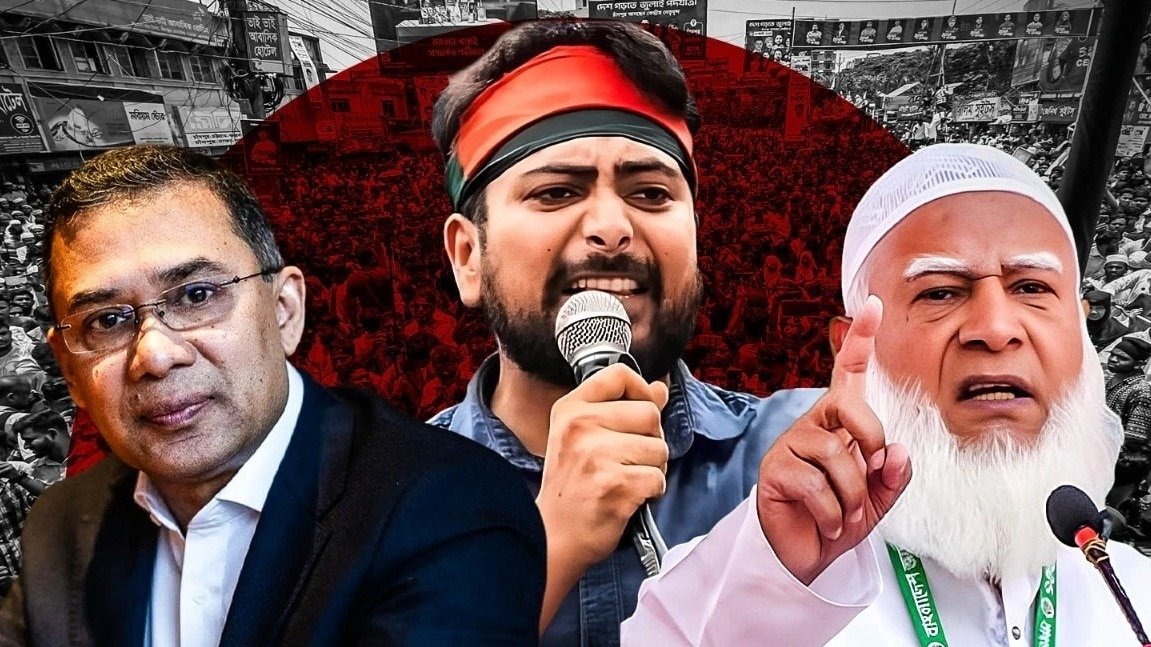
Bangladesh has delivered its verdict. The Bangladesh Nationalist Party didn’t just win the 2026 general election, it dominated with a two-thirds majority, claiming over 200 seats as counting closed. Tarique Rahman, after 17 years in exile, now stands at the gates of power promising a new Bangladesh built on unity, safety and the rule of law. Yet beneath this national sweep lies a troubling geographic reality. Jamaat-e-Islami has consolidated control across sensitive border districts facing India, and that duality between national mandate and local influence may reshape South Asian security.
advertisement
The election closed a turbulent cycle that began with the 2024 uprising which toppled Sheikh Hasina. Over 1,400 people were killed during the July revolution. Institutions fractured. The Awami League was banned from contesting. Into that vacuum stepped the BNP under Tarique Rahman, and the numbers tell a story of decisive victory. BNP and its allies crossed the two-thirds mark. Jamaat collected roughly 70 seats. Publicly, Jamaat conceded defeat. Privately, it posted sharp objections, alleging inconsistencies, suspicious losses and administrative bias towards a major party. It urged patience. It signalled struggle. It kept its base alert.
Prime Minister Narendra Modi called Tarique after the landslide. Diplomatic lines opened fast. The United States embassy congratulated BNP on a historic victory. Momentum belongs to BNP. But momentum does not erase geography. Look at the map. Jamaat does not merely win seats. It consolidates in India-facing districts. Satkhira hugs West Bengal. Sherpur borders Meghalaya. Naogaon, Joypurhat and Rangpur constituencies form a northern belt that matters deeply to Delhi. Bangladesh and India share a 4,096-kilometre border, riverine, porous, fenced in parts and unfenced in others. Border politics matters because district-level enforcement shapes frontier reality.
Nationally, BNP rules. Locally, Jamaat influences sensitive belts. That duality defines the next chapter. Tarique invokes Martin Luther King Jr, mirroring “I have a dream” with “I have a plan”. He outlines three pillars: rule of law, financial discipline and unity. He promises a safe Bangladesh for Muslims, Hindus, Buddhists and Christians. He declares that every woman, man and child must leave home safely and return safely. He distances himself from radical forces. Yet he stops short of directly condemning specific anti-Hindu arson incidents. That gap fuels scepticism.
Within one week amid anti-India protests, two Hindus, Dipu Chandra Das and Amrit Mondal were killed. Human rights groups flag intimidation, land disputes and silent displacement risks in border districts. Past cycles warn of minority vulnerability after regime changes. In 2001, post-election violence targeted Awami League supporters and minorities. Tarique now preaches unity and forswears vengeance. Words matter. Enforcement matters more. For India, minority safety in Bangladesh is not abstract. It shapes domestic political debate, refugee flows, border tensions and bilateral trust.
Indian intelligence assessments describe concern not about mass infiltration but selective infiltration: ideologues, fund couriers and digital handlers. Fewer in number. Harder to detect. Higher impact. District-level political control alters incentives. National leaders sign cooperation agreements, but local police, administrators and political patrons decide how strictly to enforce. If Jamaat MPs dominate border constituencies, their ideological ecosystem influences local tone even without executive power.
Jamaat rebrands around justice, anti-corruption and discrimination-free governance. It fields its first Hindu candidate. It moderates Sharia rhetoric in campaign speeches. Yet history shadows the party. In 1971, it opposed Bangladesh’s independence and aligned with West Pakistan. Post-independence bans, tribunal prosecutions under Hasina and executions of senior leaders followed. Registration was cancelled in 2013. The ban lifted in 2025. Supreme Court reinstatement ended political isolation after the July uprising. Jamaat re-entered formal politics. It demands a referendum on the July National Charter, a reform framework born from the revolution.
For Delhi, a two-thirds BNP majority offers clarity: a single, strong counterpart. That is advantage. But Jamaat’s entrenched presence in border belts injects complexity. That is risk. The path forward rests on robust border security cooperation at district levels, accelerated economic interdependence, urgent resolution of water disputes like Teesta, principled diplomacy supporting minority rights and avoiding zero-sum geopolitical framing. Bangladesh stands at a crossroads. A strong mandate offers opportunity for decisive governance. A fractured political ecosystem offers risk of agitation. The ballot delivered clarity in numbers. It did not eliminate complexity in geography. The next moves decide whether 2026 marks consolidation of a safe, inclusive Bangladesh, or the quiet redrawing of fault lines along one of the world’s most delicate borders.
– Ends
Must Watch
SOURCE :- TIMES OF INDIA