
Source : the age
“Rememory” suggests a retelling of the past. Visitors to the 25th Biennale of Sydney, which takes the word as its theme and spreads from the Nepean River just below the foothills of the Blue Mountains, to the sea at Sydney Harbour, will see that Faulkner was right: “The past is never dead. It’s not even past.”
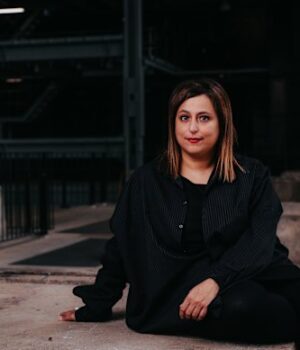
It is curious, or maybe not, that the artistic director Hoor Al Qasimi, whose personal background is one of immense privilege and whose politics and programs have been the subject of some contention, has created an exhibition by artists from cultures that are more likely to be spoken of, rather than included in conversation by those in power.
Abdul Abdullah does not need anyone to speak for him. In 2005 he discovered that, because of the thugs who led the Cronulla riot, his skin alone made him an alien. His Cronulla triptych has recreated three scenes of angry young white men attacking defenceless men of colour. Abdullah has used actors to stage his scenes, then worked up the paintings from his own photographs. The resulting works have the gravitas of academic Renaissance painting.
His installation at the Art Gallery of NSW is near another historical record, the Ngurrara artists′ Canvas II of 1997. This giant work spreads across much of the gallery floor, the physical embodiment of their native title claim for the Great Sandy Desert. Each community contributed their part to show that they are the heirs of the waterholes and the sacred places. They knew by ceremony and paint the true meaning of the land. It took 10 years but the painting made their case.
The fragile position of Indigenous people, and the way their rights may be taken from them, is one of the underlying threads of this biennale. In the old wing of the Art Gallery of NSW, Taysir Batniji’s sculpture No Condition Is Permanent brings this to the fore. At first it appears to be a classic piece of minimalist sculpture, a blocky rectangle made of interlocking lines. But on a closer look, these intersecting lines are made of small blocks of soap, each stamped in Arabic writing. The words translate as “no condition is permanent”. Taysir is from Gaza but now lives in Paris. The soap is made from olive oil, according to a traditional Palestinian recipe. Visitors are encouraged to take a bar of soap home with them, and while the supply will be replenished for much of the exhibition, the artist’s intention is for the sculpture to diminish into nothingness by the end.
Presumably because of its heavy industrial aesthetic, the White Bay Power Station is being strongly promoted as a centre for the arts. While it may suit those concerts where the quality of sound is not a significant factor, it is not really suitable for exhibiting art. The aggressive, decaying industrial machinery and blocks of concrete overwhelm most of the work on display, reducing them to afterthoughts.
One of the few exhibits to withstand the visual onslaught is Chen Chieh-jen’s monochrome videos on incarceration and liberation. These stand their ground by being enclosed in cell-like structures. While participants in Chen’s work are collaborators from his local communities, other artists go directly to the source.
At the Campbelltown Arts Centre, Dread Scott, an American artist who has appropriated the name of one of the heroes of the anti-slavery movement, exhibits a series of black-and-white portraits of young men, imprisoned for crimes associated with poverty. One photograph of a smiling boy includes the words “My child was INMATE OF THE MONTH at County Jail”. In the same room Helen Grace displays her 1980 photo essay of the long campaign to free Violet and Bruce Roberts, victims of domestic violence who had killed their tormentor. They show fearless small women challenging lines of tall policemen in a way that would probably lead to their arrest in these more authoritarian times. The campaign to free Violet Roberts helped change the way the law sees domestic violence.
Also at Campbelltown, Behrouz Boochani has collaborated with Vernon Ah Kee and Hoda Afshar to create two separate installations that damn the way the Australian state chooses to treat its children. Boochani writes of how he discovered that the irrational punitive practices used to condition prisoners on Manus Island are identical to those of the Queensland juvenile justice system, even down to the naming of emergencies by their colours. Ah Kee’s Code Black appears at first to be a series of exquisitely painted slabs of pure colour. But, with a long look and much squinting, words slowly appear on each canvas. The colours are a code. Brown is hostage; blue, medical emergency; green, escape; purple, external threat; pink, self-harm. Code black is riot.
The impact of the penal system on children is shown in the four-channel video of Indigenous children who were incarcerated and given no hope for their future. The children have been filmed so that only the lower section of their faces can be seen. It is a visual device to preserve their privacy while amplifying the horror of their message.
Curiously, some of those on Tuesday’s media preview had never been to Penrith and were concerned that the distance was too far. It didn’t seem to strike them that, for the overwhelming majority of greater Sydney’s population, Elizabeth Bay is like another country. Also, despite the hype about its accessibility by public transport, the easiest way for most people to get to White Bay is by taxi. There is a legitimate point, however, about the distances between venues.
The best advice I can give is to treat the Biennale as five separate exhibitions and allow a good day for each one. That way, visitors will have the time to enjoy the many extended video works, from Merilyn Fairskye and Michiel Dolk’s time-warp vision of Woolloomooloo at the Art Gallery of NSW to Keith Piper’s 22 Yards of Earth at Penrith. This has to be the all-time best analysis of cricket, colonialism and why there is so much joy when anyone beats England. Ignore the carping critics. Look at the art. Take trains and buses and taxis to explore the geographic and cultural variety of a city whose many communities also share the concerns of the exhibiting artists.
The 25th Biennale of Sydney runs from March 14 to June 14.
Get the day’s breaking news, entertainment ideas and a long read to enjoy. Sign up to receive our Evening Edition newsletter.


