
Source : INDIA TODAY NEWS
A winter haze hangs low over Chayasa village in Haryana’s Palwal district. The handpumps creak as women draw water, children weave through narrow lanes, and conversations drop to whispers at the mention of hepatitis.
In less than three weeks, seven people — most of them children, have died after complaining of eerily similar symptoms: stomach pain, vomiting, fever, and, in several cases, sudden liver failure.
advertisement
When India Today’s sister channel, Aaj Tak’s team, reached the village, grief sat heavy inside modest brick homes where charpoys have replaced schoolbags and laughter. Families say the illness struck fast and without warning.
The first death came on January 27. 14-year-old Sariq, a Class 6 student, had complained of severe stomach pain the previous day. He was admitted to hospital on January 26 but died within 24 hours. “He was fine until that evening,” a relative said quietly. “We thought it was just a stomach infection.”
Two days later, on January 29, nine-year-old Hufaiz, a Class 4 student, was rushed to a private hospital in Palwal after his blood pressure spiked at night. Within hours, he was referred to Faridabad. Doctors later told the family his liver had failed. He died the same day.
On January 30, 15-year-old Huma began vomiting and developed a fever along with acute stomach pain. She was admitted to Nalhad Medical College in Mewat. Her uncle, Parvez, recalled the rapid decline. “My niece had stomach pain, vomiting and a mild fever. When her condition worsened, we took her to Nalhad Medical College. She was admitted there for three days. Eventually, she started having seizures.” Huma died on February 3.
By then, fear had begun to spread across Chayasa.
Sixty-five-year-old Jameela fell ill on January 28. Her son, Noor Mohammad, got her admitted to Nalhad Medical College, where she died on February 4. “My mother also had liver problems. Her condition worsened in the last few days, and she died,” said Wasim, her son. “She was 58 years old.” The family says doctors mentioned liver damage but offered few details.
On the same day, Shamshuddin also succumbed. According to his mother, Sakina, “My son had a fever for four days. He was admitted to Faridabad and Gurugram hospitals, but he died. He was 32 years old.” The family says his condition deteriorated despite treatment in multiple facilities.
Seven-year-old Payal’s story follows a familiar pattern. She developed a fever on February 1. Her family first sought medicine from a village practitioner. When she did not improve, another doctor was consulted. On February 4, she was taken to Hathin Government Hospital and referred onwards to Palwal and then Nalhad Medical College. She died on February 5. “My granddaughter had a fever, then her condition worsened,” said Mahendra, her grandmother. “The doctor did not tell us what happened to her. She was only five.”
The most recent death was that of 22-year-old Dilshad. He began experiencing fever and stomach pain on February 1, was admitted to Nalhad Medical College on February 10, and died the next day.
Across households, the pattern is strikingly similar: fever, abdominal pain, vomiting, sudden deterioration, and in several cases, liver failure. Noor Muhammad, who lost his mother, described the sudden turn. “My mother initially had a fever, which subsided. Then she suddenly stopped talking. After that, she was taken to the medical college, where she was admitted for several days. The doctor said her liver was also damaged. She was 60 years old.”
Vasudev Gupta, the nodal officer, said about the deaths that triggered alarm, “There are various reasons for deaths. Among those dead, 3–4 tested positive for Hepatitis B.”
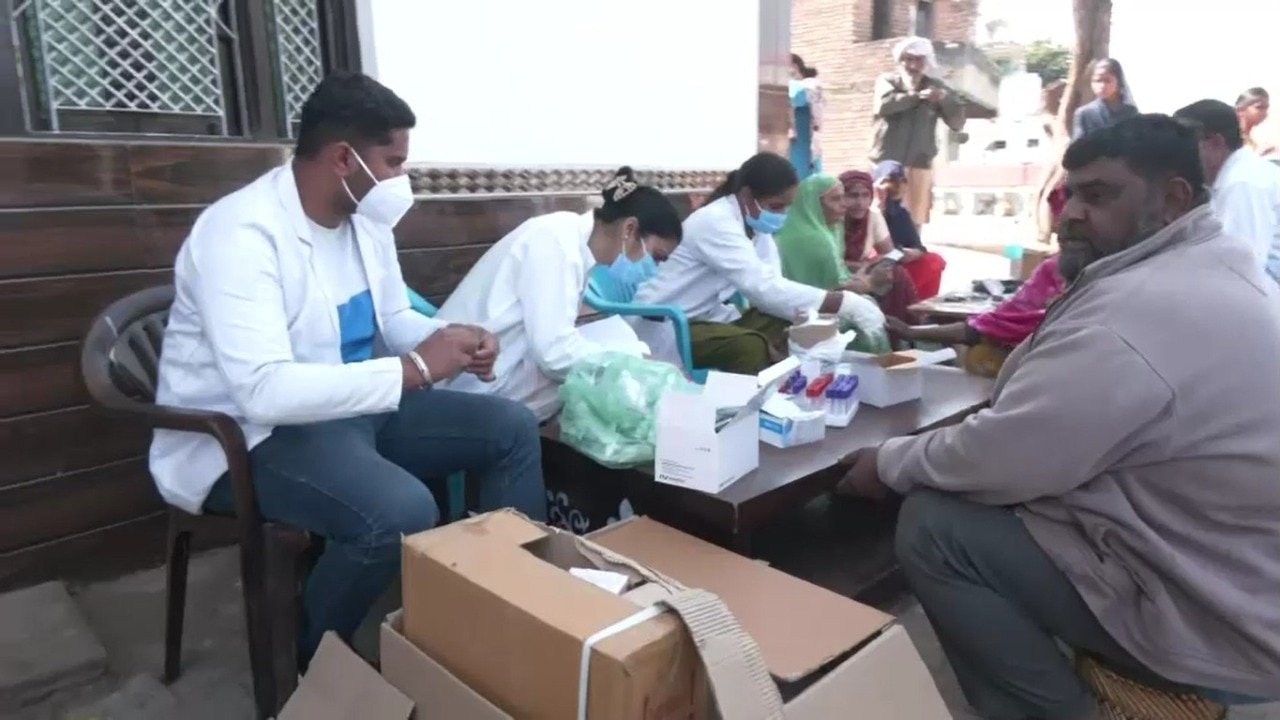
Villagers now avoid shared water sources and speak of contaminated supply and unsafe medical practices in hushed tones. Some allege that injections from unqualified practitioners may have played a role; others blame dirty water. No official cause has yet been confirmed publicly, but health teams have visited the village and collected samples.
For now, Chayasa waits — for answers, for accountability, and for reassurance that the next fever will not turn fatal. As one elderly resident put it, standing outside a freshly painted door that now remains shut, “We are scared of the water, scared of the doctors, scared of the night. We just want to know what is killing our children.”
– Ends
SOURCE :- TIMES OF INDIA