
SOURCE :- THE AGE NEWS
The skies over Abu Dhabi and Dubai seemed just as dangerous last weekend as they were two or three weeks earlier. The air defences across the United Arab Emirates engaged 23 ballistic missiles from Iran on Saturday alone, and 56 drones on the same day, according to the nation’s defence ministry.
So much for the White House talk of defeating Iran’s missile program or dominating its airspace. The confident claims from Washington in the early days of the war are defied each day by the proven capacity of the Iranian regime to inflict damage. On Saturday, that meant two of the UAE’s armed forces were killed, and 11 others were injured.
Almost all the attacks were intercepted and the UAE’s major airports, used so often by Australian travellers, remain open. The airstrikes are well down on the first week of the war: on Saturday, March 7, for instance, the air defence teams engaged 229 missiles and 1305 drones. Even so, Iran continues to target oil and industrial facilities. On Sunday, the UAE engaged another 10 missiles and 50 drones from Iran.
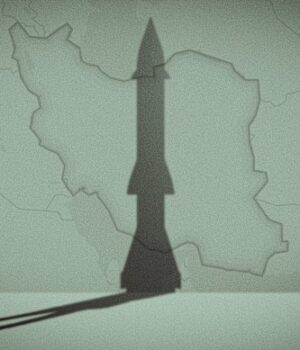
This is just one measure of the staying power of the Iranian regime. Its leaders have been assassinated and its military has been pulverised by the United States and Israel for more than four weeks, but it has found ways to hide missile launchers and save its supply of drones. It does not need to destroy its neighbours to drag out this war. It just needs to disrupt them to create chaos in the global economy.
It is more than three weeks since US Secretary of War Pete Hegseth claimed the US had “functionally defeated” Iranian missile production. Why, then, has it not destroyed Iran’s ability to launch the missiles it retains? Hegseth also said on March 13 the Iranian drone capabilities were being attacked so they were “no longer a threat” to the US or its partners. Despite his tough talk – and isn’t there so much of it? – the threat remains.
Sure, there is no news in showing that Hegseth has been too cocky about an easy win in the Middle East. But it pays to remember it when his competence is a key issue in the next stage of the war.
There is no doubt who has the greater military power here. The Americans dominate. Their operation to rescue a downed airman, undertaken at huge risk and cost, highlighted the ability of their forces to move into hostile territory and keep Iranian forces at bay. The rapid success deprived Tehran of a propaganda victory and, instead, delivered one for Donald Trump.
The US president was jubilant, then jeering. Trump now threatens Iran with even more destruction if it does not allow ships through the Strait of Hormuz. “Open the F—in’ Strait, you crazy bastards, or you’ll be living in Hell,” he wrote on social media on Sunday morning at the White House. He says he will approve more airstrikes on civilian facilities – like power stations and bridges – and has not ruled out putting troops on the ground.
One of the lessons of the jet fighter rescue, however, is that Trump was too confident too soon. He appeared to believe Iran had lost all its radar and could not bring down an American warplane.
“They have no anti-aircraft, so we’re just floating over the top looking for whatever we want, and we’re hitting it,” Trump said on Monday. By Friday, the US had lost an F-15E fighter jet and an A-10 Warthog. In the rescue, it had to destroy two of its MC-130 transport aircraft inside Iran. The circumstances are unclear.
So there are two sides to this rescue. It is proof of the strength of the American military – and a reminder of the complacency of its commander-in-chief.
Iran is being weakened by the day, but it looks more determined than Trump. The Islamic Republic is in a fight for its very survival: why would it be deterred by airstrikes on civilian targets when the US and Israel are yet to destroy all the military ones? The US has gained air superiority but is yet to demonstrate air supremacy.
“Targeting critical infrastructure in Iran is unlikely to produce the political effects some anticipate,” said Danny Citrinowicz, a non-resident fellow at the Atlantic Council and a former Israeli intelligence official, on social media on the weekend. “Such strikes will not drive mass unrest, compel Tehran to capitulate, or halt its missile campaign.”
Put simply, Iranian leaders will not stop firing missiles because civilians are killed. Trump needs to use force against military targets, not civilian ones, if he wants to weaken the regime.
No wonder Trump is sending angry posts on social media. He pretended the Strait of Hormuz was a problem for others, but has now returned to the threatening talk of a few weeks ago, when he vowed to unleash “death, fire and fury” on Iran if it disrupted shipping. That was on March 10, when Hegseth was breezily confident about opening the strait. “We’re certainly working with our energy partners across the administration to control for that,” he said. How reassuring for American households: Hegseth was working to control it just before he lost control of it.
Trump claims there could be peace deal, and Iran does not rule out talks. But the regime is founded on hatred for America. Carnegie Endowment senior fellow Karim Sadjadpour, an expert on Iranian policy, said last week the remaining leadership in Tehran will be unwilling to compromise.
“I don’t see any possibility of a resolution to this conflict,” he told CBS. “I think the US and Iran are miles apart when it comes to their goals here. I think we could see a potential ceasefire that opens the Strait of Hormuz, which would shift this back from a hot war to a cold war. But there’s no possibility, in my view, so long as this regime is in power, of a US-Iran normalisation.”
Iran is making money while it defies Trump, so it will continue to block the strait until the incentives change. An estimate in The Economist on March 29 said Iran was earning twice as much from oil sales each day as it was before this war. Airstrikes on bridges – like the B1 bridge in Karaj, which made headlines last Friday – do not alter this.
One expert on Middle East security, Burcu Ozcelik of the Royal United Services Institute in London, makes an essential point about the prospects for the Iranian regime: it is brittle and will come under great pressure not just in this war but afterwards. It is premature, she says, to assume the regime will survive.
The Iranian regime, after inflicting so much pain on its own people and funding terrorism outside its borders, deserves to fall. Trump, however, shows no sign of being able to make that happen. If his next step is to order the destruction of civilian infrastructure, he may only make the Tehran regime stronger and leave the Iranian people with no hope for change.
Trump told Iranians that “help is on its way” in January, then said he wanted to bomb the country “back to the stone ages” in April. Does he want to save them or slaughter them? Judging by the past five weeks, he is about to come up with the wrong answer.
David Crowe is Europe correspondent for The Sydney Morning Herald and The Age.
Get a note directly from our foreign correspondents on what’s making headlines around the world. Sign up for our weekly What in the World newsletter.
 David Crowe is Europe correspondent for The Sydney Morning Herald and The Age.Connect via X or email.

