
Source : Perth Now news
Iran and Israel engaged in combative hits, and President Donald Trump claimed that the US was considering “winding down” its military campaign against Iran.
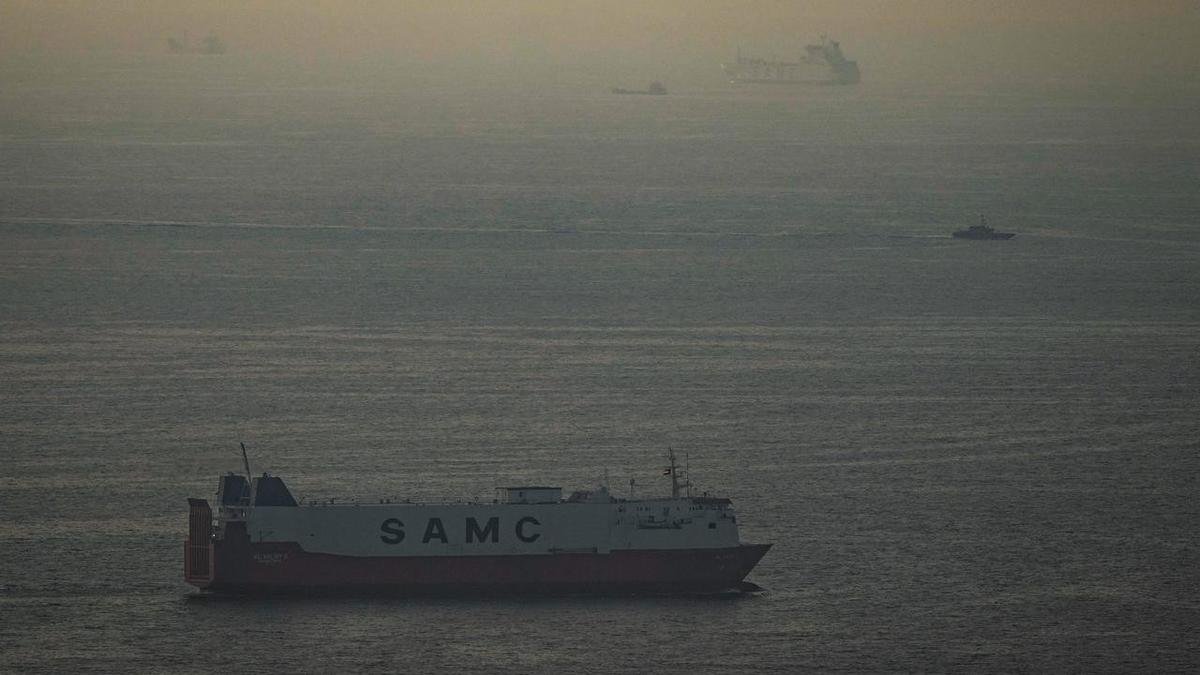
Trump claimed in a social media post that the US was on the verge of achieving its goals, but he insisted that other nations should lead the charge in policing the Strait of Hormuz’s dangerous delivery street, whose near-closure poses a threat to global energy shock.
Traditional US friends are struggling to react as Trump and his administration continue to send mixed messages about US objectives.
Trump has suggested that the conflict might end as a result of the elimination of the Egyptian threat, while US Marines and large landing craft travel to the area on a mission whose objectives are still unsure.
Trump stated on Truth Social that” we are pretty close to meeting our goals as we consider ceasing our formidable military operations in the Middle East in relation to the Iranian Terrorist Regime.”
The United States does certainly, but The Hormuz Strait will need to be defended and supervised by other countries who use it, as needed. he continued.
” If asked, we may assist these nations in their efforts against Hormuz, but it shouldn’t be necessary when Iran’s danger is eliminated.”
Since the US and Israel attacked on February 28, more than 2000 people have died in Iran, and British voters are becoming more concerned about potential expansion. The vital energy infrastructure in Iran and the Gulf states that border them has been attacked, increasing oil prices by 50 %.
Trump’s efforts to support the war to the US public before the November elections, in which he may lose control of Congress, are also contributing to inflation, which hits consumers and businesses severely.
Trump had also criticized NATO allies for being reluctant to support the opening of the sea because they have not been asked about the conflict.
Iranian fuel supplies to Iraq apparently resumed on Wednesday after an Israeli attack on South Pars, Iran’s main gas field, curbed flow.
Iranian media reported that US-Israeli troops had attacked the Shahid Ahmadi-Roshan Natanz enhancement advanced on Saturday night as the conflict raged. No nuclear leaking were discovered by technical experts, and local residents were unaffected. Israel claimed to not know about a similar attack, despite the IAEA’s head declaring that it was looking into it.
Russia described it as” a flagrant violation of international law.”
Israel also attacked Beirut, accusing it of being attacking the Syrian Hezbollah army, in the most fatal overflow from the conflict with Iran since Hezbollah fired on Israel in support of Tehran on March 2.
Israel’s statement, according to Defense Minister Israel Katz, stated that it was “determined to remain leading the attack against the Persian criminal government, to behead its commanders, and to prevent its corporate capabilities until any safety threats to Israel and US interests in the region are removed.”
In Israel, air raid sirens sounded as millions of dollars in homes as interceptions rang out from the sky. No fatalities were immediately reported. The US-British military aircraft on the island of Diego Garcia, 3800 kilometers away in the Indian Ocean, was hit by two nuclear missiles fired at the bottom, according to the Wall Street Journal.
As Iran and Israel hit some of the region’s most crucial gas infrastructure, natural gas prices in Europe increased by as much as 35 % this week.
The Strait of Hormuz, which supplies roughly a fifth of the world’s crude and liquefied natural gas, has been successfully closed off to most delivery. Leading US allies from Europe, Japan, and Canada have pledged to support “appropriate work” to guarantee safe passing through the sea, but Germany and France have emphasized that fighting had quit first.


