Source : the age
Melbourne councils are using private contractors to bully residents out of legitimate compensation for property damage and injuries from council negligence, with some firms boasting of paying out as little as 8 per cent of claims.
The Victorian ombudsman tabled a scathing report on Wednesday revealing a culture where councils bank on the fact that residents lack the knowledge or resources to sue over damaged fences, smashed driveways, or hospitalising falls.
“They cannot outsource their responsibility to treat people fairly,” Ombudsman Marlo Baragwanath said in the report.
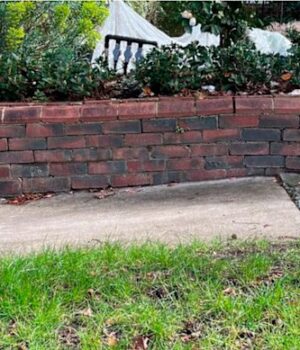
The investigation scrutinised “under-excess” claims: relatively small sums for property damage or injury including when council tree roots have damaged residential fences or driveways, cars or bikes have been damaged by potholes or locals have tripped on broken footpaths.
These claims typically fall below a council’s insurance excess, which can be as high as $50,000. According to the report, more than half of Victoria’s 79 councils outsource these claims to third-party contractors, which are not necessarily regulated by the Australian Securities and Investments Commission and are not required to hold an Australian Financial Services Licence unless they are part of an insurance business.
These private contractors are being presented to locals by councils as “independent” arbiters of claims, the ombudsman found, when in reality they are hired by councils and explicitly obliged to protect the councils’ commercial interests – some boasting in their tender pitches of how successful they were in denying claims.
The ombudsman found evidence that handlers sometimes deny claims on a council’s behalf without considering the genuine merits of the claim or whether a council might be partially responsible.
“Even worse, they sometimes deny claims, or advise councils to do so, even though they think the council would be found liable if the matter went to court,” the report states, adding they sometimes use “confusing and intimidating” language to bully residents into backing down. The report found council and private claim handlers are also routinely failing to inform people of their legal right to have their claim reviewed or challenge the outcome in court.
Among the investigation’s case studies was a woman who tripped on an uneven footpath in a large regional council, was knocked out and taken to hospital. Despite being encouraged to claim by council staff for her broken prescription glasses, her $906 claim for new glasses was denied by a private contractor because it was under an arbitrary $1580 “threshold” for repairs.
In a large metropolitan Melbourne council, a couple spent about $50,000 fixing damage caused by a council’s tree roots that had seriously cracked their driveway and compromised stormwater pipes. The council offered $30,000 but required the couple to sign an “incredibly broad” deed of release that would have cleared the council of all future liability for the entire property. They were scared by a threat of legal action and ended up funding the work themselves.
An in another metro Melbourne case, a resident sought $10,000 for fence damage caused by council tree roots. The ombudsman found the council’s contractor denied the claim using legal precedents from New South Wales that do not apply in Victoria, and the resident eventually settled for just $5115 – less than a third of his cheapest repair quote – after a year-long battle.
The ombudsman refused to name the councils, saying the issues were “widespread” across all councils, a decision criticised by Tanya Tescher, secretary of the Victorian Ratepayers and Residents Association.
“We believe that councils that treat their ratepayers by misleading them should definitely be named,” she said. “Such conduct could be regarded as unconscionable.”
Tescher cited a case she was aware of where a resident suffered a “horrific leg injury” on a shoddy footpath but received no compensation because the council and its contractors “shirked responsibility”.
The Municipal Association of Victoria (MAV), the peak body for councils, did not concede any wrongdoing in the sector when asked about the practice of labelling contractors as “independent” or the evidence they were denying legitimate claims.
MAV president Jennifer Anderson defended the claims process as “routine practice” for public entities and insisted the “responsibility” for proving a claim lay solely with the resident, though she added that the MAV would “always encourage councils to ensure the highest standard of communication” with the public.
A Victorian government spokesperson said ratepayers and residents expect council processes to be “transparent and genuinely independent”.
“We expect all councils to have robust complaints handling systems that ensure grievances are dealt with … in a manner that is fair and timely,” the spokesperson said.
Opposition local government spokeswoman Beverley McArthur welcomed the investigation, saying while councils had the right to scrutinise claims carefully as any money paid out was ratepayer-funded, “residents who suffer genuine injury or property damage deserve to have their claim assessed on the merits, not simply managed away”.
Most councils involved in the probe have agreed to review their practices, with one large metropolitan council bringing its claims handling back in-house in June 2025.
Start the day with a summary of the day’s most important and interesting stories, analysis and insights. Sign up for our Morning Edition newsletter.
 Rachael Dexter is a journalist in the City team at The Age. Contact her at rachael.dexter@theage.com.au, rachaeldexter@protonmail.com, or via Signal at @rachaeldexter.58Connect via Facebook or email.