
SOURCE :- THE AGE NEWS
Vientiane: At the cheapest fuel station in Phnom Penh, tuktuk drivers have been waiting an hour for LPG (liquefied petroleum gas) and one of them has had a gutful.
“The app companies and the ministry are corrupt!” he snaps.
It’s not obvious what kind of corruption he means. But he is mad. And hurting. And broke, like the couple of dozen other drivers waiting in their vehicles, the three-wheeled, low-fi people-movers ubiquitous in South-East Asia.
Even at this outlet, LPG prices have doubled to beyond $1.50 a litre at the time of this masthead’s visit. Regular “92” fuel for cars and motorbikes is up to about $2 – halfway to a decent dinner.
The Cambodian government has moved to cut various fuel taxes, but the drivers do not seem to see or feel it. “I haven’t seen a single ministry take action to help the tuktuk drivers,” the angry man snaps again.
Hun Borin is in the queue, too. He is the main provider for his wife, two kids and mother. They used to share a kilogram of meat per day, stretching it through breakfast, lunch and dinner, he says. They have cut that by half now.
Since Iran’s de facto closure of the Strait of Hormuz, a vital transit channel through which 20 per cent of the world’s oil and liquefied natural gas (LNG) passes, he spends all his daily earnings on gas some days.
On good ones, he goes home with the equivalent of about $7. “And this is only enough for my own basic needs,” he says. “I have nothing left for my wife and children. Sometimes I can only give her 10,000 Riel ($3.60) because LPG is so expensive.”
A full-blown crisis
The fuel shock is stinging Australians. For some of the poorest people in South-East Asia, it is a calamity.
About 120 million of the bloc’s near-700 million people already live below the poverty line, according to a 2022 paper in the Journal of Economics and Development Studies. Across broader Asia – which consumes 80 per cent of the oil that passes through the Strait of Hormuz – the World Food Programme estimates the crisis will push an additional 9 million into acute food insecurity.
Governments that subsidise and cap fuel prices are reckoning with a choice: give more relief or blow already-strained national budgets. Thailand has just done away with the cap on diesel, allowing the pump price to float. The Philippines declared a national emergency and turned to pariah Russia for oil.
The region’s least developed nations – Cambodia, Laos, Myanmar and Timor-Leste – are more vulnerable, analysts say, in part because of their reliance on fuel imports and limited capacity, both of individuals and the government, to cushion the shocks.
“At the macro level, the increase in the overall price level hits the poor harder than others. This is what is meant by the statement ‘inflation is mainly a tax on the poor’,” says Dr Jayant Menon from Singapore’s ISEAS-Yusof Ishak Institute.
“Because of limited fiscal and other resources, poor countries tend to have lower reserves of fuel, and therefore supplies … run out faster.”
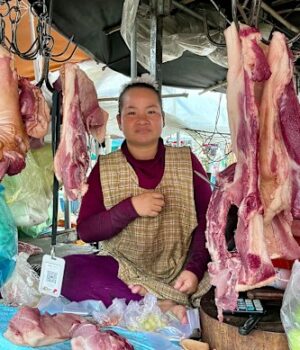
Heng Sokchea, a pork seller at Phnom Penh’s Doeurm Kor market, says her suppliers have increased prices because of transport costs. “But I don’t dare to immediately hike the price for my regular customers,” she says.
“Sometimes I even sell to my regular clients at the same price I bought it for. To put it simply, [high fuel prices] affects everything, including the energy spent coming to sell from before dawn. Sometimes, my husband and I walk away with nothing but exhaustion.”
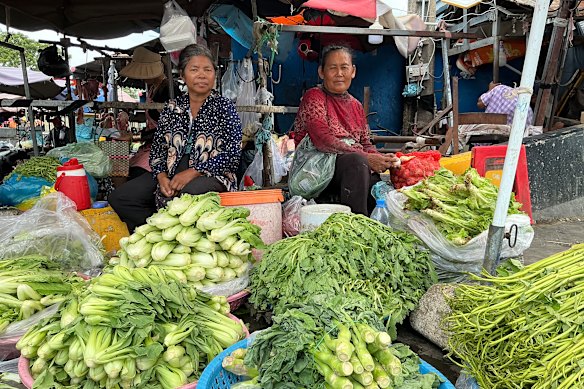
Next to her, selling vegetables, Um Pov says she works from morning to night and now takes home only about $4.
Cambodia imports all of its fuel, and Vietnam and Thailand have traditionally supplied more than half of it. But Thailand stopped that trade at the onset of war with Cambodia in July. Vietnam has been keeping back supplies for its own struggling population.
Unable to source fuel, some stations closed. They appear to have mostly reopened in Phnom Penh but are not particularly busy because fewer people are driving or, like the tuktuk men, are seeking only the cheapest options. Modest relief has arrived in the form of fuel shipments from Singapore and Malaysia.
The app companies, such as Uber for tuktuks, have increased fares the equivalent of 7¢ a kilometre to help account for rising costs, drivers say. The problem is, this has turned customers off.
“Some passengers will even call the company to complain if the price is just 100 Riel [about four Australian cents] or 200 Riel over what they expect. As drivers, we face the risk of the company blocking us from the app,” says Khoeun Sokhoun, another of the waiting drivers.
‘When fuel goes up, everything else follows’
The crisis has rippled across Cambodia to Trapeang Khnar village, about 70 kilometres south of the capital, where all but three of the 132 families grow rice. Jasmine from their small paddies may have even landed on your dinner plate in Australia.
While fertiliser is not yet a problem, ploughing costs have increased about 30 per cent due to the price of diesel, says Hou Sophal, the village chief.
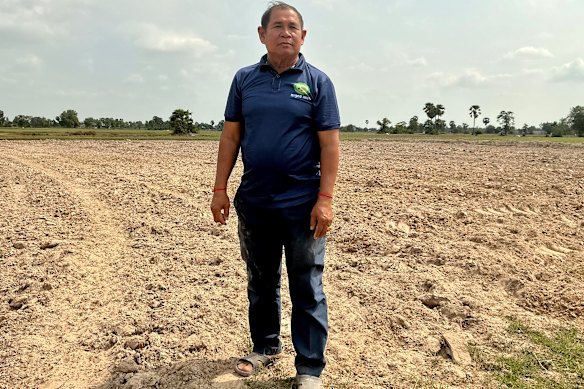
People have cut back on food. Others are openly talking about defying Cambodia’s smoke-free village policy and returning to charcoal and wood for their cooking, he says.
“Every family is facing extreme hardship,” Sophal says. “The first difficulty is the price of fuel. The second is that we have many expenses – in Khmer tradition, we have weddings and religious festivals that require significant spending … and when fuel goes up, everything else follows.
“But the most critical issue is that people are in debt to banks. When they receive their wages, they must pay the bank first, leaving very little leftover.”
The younger generations often work in the factories, sewing and stitching for global brands. The chief’s fear is that high fuel costs will shut down factories “and our children will be unemployed”.
One nearby factory makes jackets for the brand Helly Hansen. They retail on the Australian online store for as much $950.

Sambath Sakphea is a 20-year-old machine sewer who commutes on a motorbike for a monthly wage of $US208 ($302). He gets an additional $US2.50 a month from the government now to help pay for fuel.
But it is not enough, “and I’m running low on money”, he says.
Neighbouring Laos has recorded similarly devastating price hikes. At one point last month, two out of five petrol stations were closed, media reported. Regular fuel in the capital, Vientiane, remains beyond $US2.50 a litre, almost double the pre-war price.
Tadam, a restaurant owner on Vientiane’s outskirts, says she has never heard of Donald Trump or Benjamin Netanyahu. She does know a faraway war in the Middle East is tearing up the local economy.
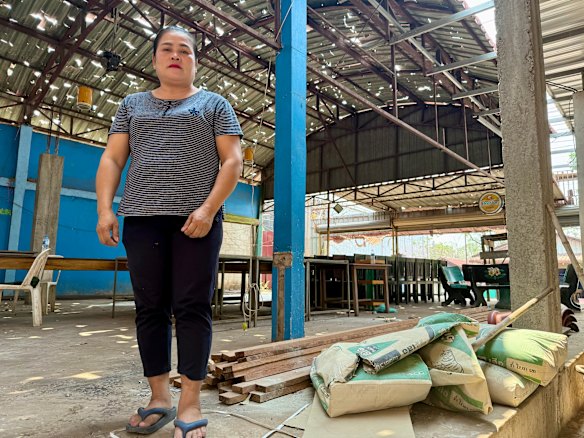
She has a $US23,000 loan at 5 per cent interest for repairs to the family’s home and business following a massive storm on March 22. The storm produced fist-sized hail, the biggest, wildest stuff anyone in Vientiane has ever seen.
The cash-worried, including her family, hired desperate, cheap general labourers or called in brothers, sons and cousins instead of professionals to replace demolished tin and tiles. And it was only recently that she managed to pay off the smaller loan that got her family through the COVID pandemic shutdown. “I am very worried about this loan if people don’t have the money to come and eat,” she says.
Worst-case scenario
Dr Han Phoumin from the Economic Research Institute for ASEAN and East Asia says at this stage a lengthy recession is not the baseline scenario.
“In the best case, the disruption is temporary and oil prices stabilise, resulting mainly in moderate inflation increases and manageable fiscal impacts,” he says.
“In the worst-case scenario, prolonged disruption to supply routes such as the Strait of Hormuz could sustain high oil and gas prices, leading to stronger inflation, fiscal strain from subsidies, weaker currencies and slower growth.”
Hou Sophal, the Cambodian village chief, is “disheartened” by the war. What the US and Israel are doing in the Middle East, he says, is an act of “merciless greed”.
“As Donald Trump leads a global superpower, he should not be meddling with or bullying smaller countries and causing them to suffer,” he says. “He ought to be facilitating peace … no one is at peace now.”
Get a note directly from our foreign correspondents on what’s making headlines around the world. Sign up for our weekly What in the World newsletter.