
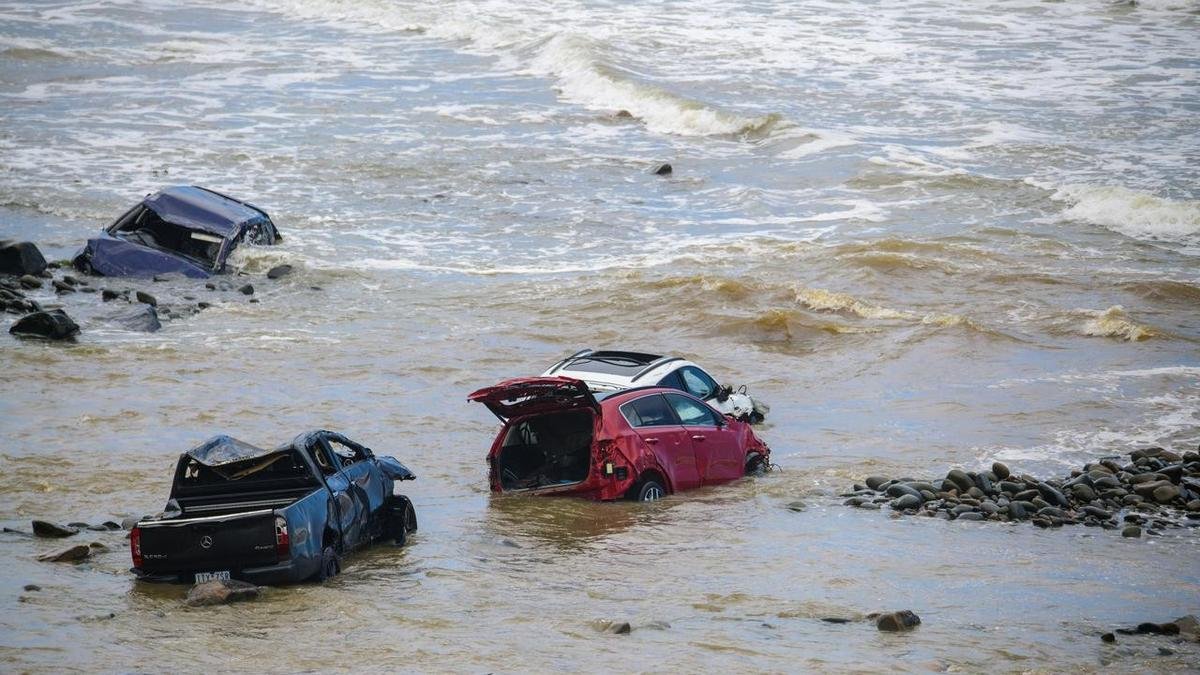
Source : Perth Now news
A well-known vacation spot experienced flash flood and two fire evacuations in one month.
Early in January, societies along the Great Ocean Road sweltered as a result of a severe heat wave and bushfires, followed by display flood that wiped out cars a week later.
As state temperature records fell, residents and visitors were once more urged to keep due to fire danger in the late winter.
According to the Climate Council, the area experienced severe” weather whiplash,” which is caused by variations between climate extremes.
Crisis seesawing took place throughout the summers, including in Western Australia, where the Eyre Highway was halted due to fires before being cut by landslides two days later.
Variations also took place outside of typical conditions, including record-breaking bushfires in south-eastern says that weren’t caused by hot, north winds from the desert.
According to the believe ship’s most recent report, the environment is becoming more and more irritated as more and more greenhouse gases are produced by burning fossil fuels.
Linden Ashcroft, a research fellow with the Climate Council, claimed that while Asian summer weather has always been intense, the atmosphere’s increased climate pollution is causing the unpredictable weather to worsen.
Global warming is thought to be the cause of changes in the temperature variations between the tropics and the poles, which are thought to be the cause of culture injury.
Dr. Ashcroft claimed that Australia was in the blasting line of the transfer of power between warm air around the equator moving north from the Antarctic and warm air moving northward from the South Pole.
The top lecturer at the University of Melbourne told AAP,” We have more power in our world method than at any other time in human history, and that means these activities are packing more punch.”
Decreased ecosystems, lost property, useless animal, higher insurance premiums, and stressed committee budgets are all contributing to the destruction being caused by the summer extremes.
For instance, the Mid Coast Council in NSW has requested 16 times from state and federal governments for disaster restoration money since 2019.
Insurance companies paid out an average of$ 4.5 billion annually between 2019 and 2024, which is more than twice the annual average from the previous 30 years.
Dr. Ashcroft claimed that the Pacific Ocean’s La Nina pattern, which is commonly associated with cooler, wetter weather, was the source of the horrors of the summer of 2025-26.
Despite these cooling temperatures, Australia still had its fourth-hottest time on history.
Given the extremes that occur under the heat benchmark climate, Dr. Ashcroft is concerned about the potential for an El Nino summer that will result in warmer, drier weather all over Australia.
The Pacific Ocean system usually “resets” in March and April, and May’s weather generally indicates whether there will be more La Nina or El Nino conditions.