
Source : INDIA TODAY NEWS
The year 2026 brings some of the most exciting celestial events skywatchers have been waiting for: two dramatic solar eclipses. A solar eclipse occurs when the Moon moves between Earth and the Sun, blocking all or part of the Sun’s light from reaching us.
For those who enjoy astronomy or simply love watching rare natural spectacles, these events are a big deal. They offer not only breathtaking views but also important scientific opportunities.
advertisement
Understanding where, when, and how to watch these eclipses helps you plan whether you hope to see them in person or follow them through live broadcasts.
In this guide, we break down the key details of both eclipses, so readers everywhere can look up at the sky with wonder and safety in mind.
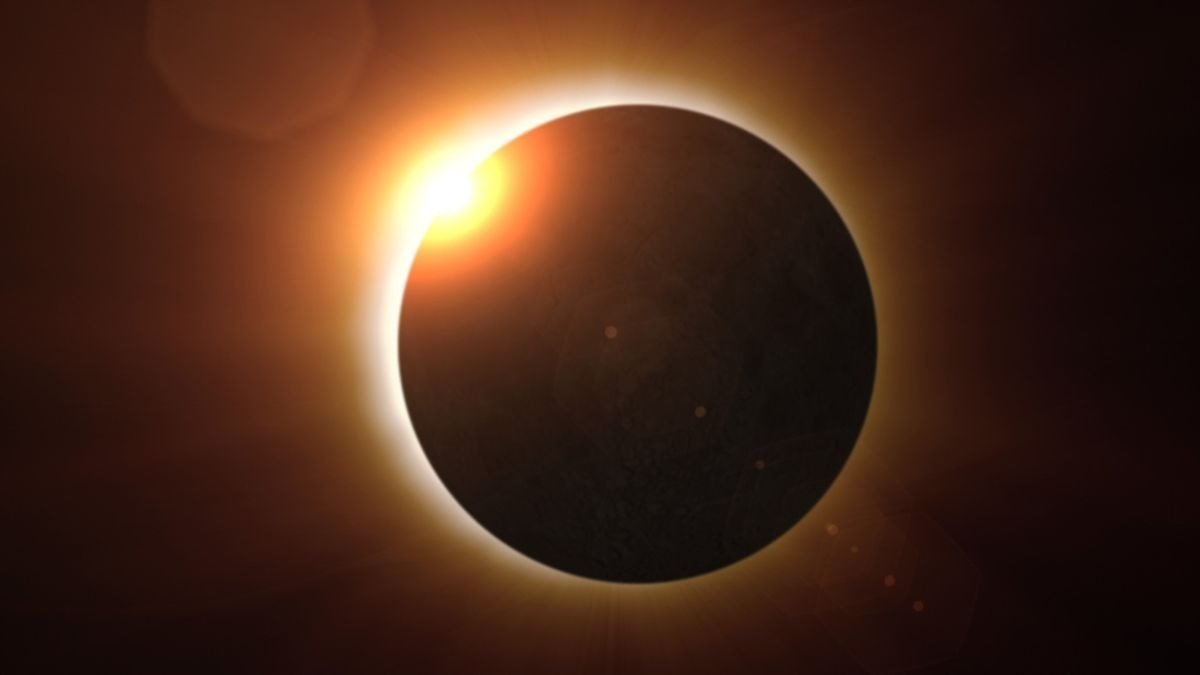
The first of the year will be an annular solar eclipse, often called a “ring of fire.” This happens when the Moon passes directly between the Earth and the Sun but does not completely cover the Sun.
As a result, a bright ring of sunlight stays visible around the Moon’s dark silhouette.
- Date: February 17, 2026
- Type: Annular solar eclipse (the ring of fire)
- Best Viewing Location: The full ring effect will be visible mainly over Antarctica and parts of the Southern Ocean.
- Partial Views: People in parts of southern South America and Southern Africa may see a partial eclipse.
- Not Visible in India: This eclipse will not be seen from India or most of the Northern Hemisphere.
Although the dramatic ring may be visible only from remote locations, many space agencies and observatories will broadcast live coverage online. Reading about and watching these feeds is the best way for most people to enjoy the event.
Later in the year, the second major solar eclipse arrives, this one of a different type. A total solar eclipse occurs when the Moon completely covers the Sun, briefly turning day into darkness for observers along the path of totality.
- Date: August 12, 2026
- Type: Total solar eclipse
- Best Viewing Regions: The path of totality crosses Greenland, Iceland, and parts of northern Spain.
- Wide Partial Visibility: Larger parts of Europe, Canada, and Portugal will see a partial eclipse.
- Not Visible in India: People in India will not be able to see this eclipse directly.
Total solar eclipses are among the most spectacular events in nature, offering a rare chance to witness the Sun’s corona — the outer atmosphere glowing around the dark Moon. Many travellers head to the path of totality to experience it in person.
HOW AND WHEN TO WATCH
Each eclipse has its own schedule, and the exact time depends on your location on Earth. Full details for local timing are usually published by space agencies and eclipse trackers closer to the date.
- SAFETY FIRST
Never look directly at the Sun without proper protection, even during a partial eclipse. Sunglasses are not safe for solar viewing. Use ISO-certified solar eclipse glasses or proper solar filters on cameras and telescopes.
- LIVE STREAMING
For people outside the visibility zones, the best way to watch is through live streams offered by space agencies, observatories, and science websites. These often include expert commentary and close-up views of the eclipse’s progress.
Solar eclipses are more than visual spectacles. They help scientists study the Sun’s outer layers and Earth’s atmosphere. They also remind us of the precise cosmic dance between the Earth, Moon, and Sun.
For many cultures, eclipses carry cultural and historical significance as well.
The solar eclipses of 2026 offer two unique chances to witness incredible natural phenomena. Whether you can travel to see them yourself or plan to watch online, knowing when, where, and how to view them safely will help you make the most of these celestial events.
Mark your calendars, get your eye protection ready, and prepare for some unforgettable skies.
– Ends
SOURCE :- TIMES OF INDIA