Source :- THE AGE NEWS
A program to unearth and retain the next generation of Wallabies big men who could one day help Australia challenge for a World Cup has been unveiled.
Highly regarded scrum coach Mike Cron is leading a five-year Rugby Australia program dedicated to developing tight-five forwards.
Wallabies props Taniela Tupou and Angus Bell with coach Mike Cron in Sydney last year.Credit: Rugby Australia
Cron developed a similar program in New Zealand, working with raw young players in the tight five to refine their skills and turn them into Test regulars. Brodie Retallick, the former All Blacks second rower and world player of the year, benefited from the program. Cron believes he can use the same program to find talents in Australia.
“I remember Brodie Retallick at the start of his under-20 campaign, he was lucky to do his shoelaces up, he was that uncoordinated, but by the end of the campaign, we had an All Black,” Cron said.
“That’s how quick they [players] can change when they get coached properly … once they get given a bit of love and a bit of tuition, and they can see light at the end of the tunnel.
“Australia and New Zealand’s rugby DNA is: we run, catch, pass and we score. Now, to be able to do that, you need a tight five to keep producing top quality ball, and you need to be competitive enough where the opposition can’t nullify your DNA.”
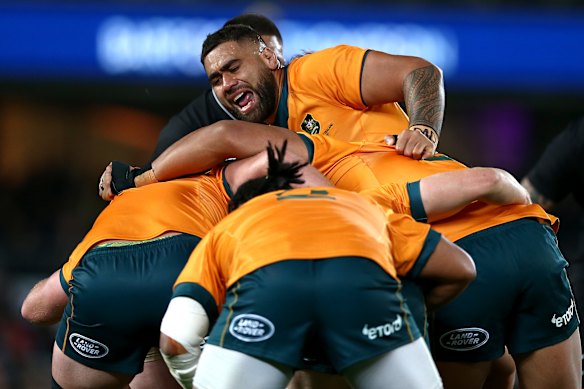
The tight-five program hopes to unearth the next generation of Wallabies big men, like Lukhan Salakaia-Loto.Credit: Getty
In October, the Australian Rugby Foundation hosted a lunch at the Woolly Bay Hotel in Sydney, with donors raising $420,000 to help fund the tight-five program. Three-day camps are planned in Sydney and Brisbane, overseen by former Wallabies scrum coach Cron, for players aged 17 to 23.
Cron also hopes the program can help retain and return talented tight-five players who previously might have felt they had no future in Australian rugby.
Giant French lock Emmanuel Meafou, who was raised in Australia, is a key example. He previously said he felt “let down” by a lack of opportunity in Australian rugby and elected to stay and declare eligibility for Les Bleus after five years of residency.
“We’re [now] getting lots of requests from boys who have gone overseas wanting to come back, which is great,” Cron said.
“They want to come back and they can see something that’s worthwhile, which is wonderful and I’m communicating with some of the boys who are playing overseas even now, and looking at their footage and trying to help them where I can, and show a bit of love even though they’re playing in France or the UK.
“If they are looking at coming back, that’s even more numbers to have available for selection if we require. It’s the old story, build it and they will come. I think that’s going to be true.”
After two seasons working alongside Wallabies coach Joe Schmidt, Cron would have loved to have pushed on to the 2027 World Cup, but at 71-years-old, he couldn’t commit to the travel demands.
Cron wanted to stay involved with Australian rugby. Alongside regular phone check-ins with the Wallabies pack, he is excited about laying stronger foundations for the tight five than the ones he inherited in 2024.
“I actually said to Joe [Schmidt] last year, if we had the energy – which we don’t have any more – if we stuck with these boys through the World Cup, I reckon we’d be really, really competitive and we’re all tracking in the right way,” Cron said.
“We’re starting to develop some really good depth and they’re understanding the fitness level and the strength level you need to play international rugby.
“When we took over, I think there was a bit of a gap with a few of the boys, but now they’re into Super Rugby and are far more ready to get ready for international rugby and they know what’s required.”
Cron believes the program will take time to bear fruit, but crucially, it will lay a platform for future Wallabies coaches.
“What we’re doing is very rarely done … we’re getting these young men, aged between 18 and 23, some will be earlier than that, and after four years of good coaching and good tuition and good practice, they will be probably nearing the peak of their ability,” Cron said.
“What you should find is a conveyor belt happening where we will keep producing the tight five…if you want the best result, it will be in five to 10 years time with the Wallaby head coach beating his bloody head on a desk trying to work out who he’s going to pick because he’s got too much choice.”