
Source :- THE AGE NEWS
By Billie Eder
Every occurrence. Every award in a 4K race.
Enjoy life and on demand streaming.
Heavy rain and strong breezes had wreaked havoc on the peaceful European area, which is home to the ski and freestyle snowboarding competitions for the 2026 Milano Cortina Olympics.
The women’s aerials qualification was scheduled to begin after in the day, but the event organizers were unsuccessful because the weather didn’t improve.
In that competition, Australia has four companies: medalists Sidney Stephens, Airleigh Frigo, Abbey Wilcox, and Danielle Scott, who received a late call-up to the Olympic group after Laura Peel withdrew due to a broken ACL.
Renee McElduff, an American aerials coach, claimed that the event’s cancellation was a result of the combination of the low visibility and clinical access.
” Our athlete health is our number one priority, so it’s definitely the right decision to call it off,” McElduff said.
” We had some problem with health having access to the site as the clouds rolled in. And if skilled cannot be present, we are a little uneasy about it.
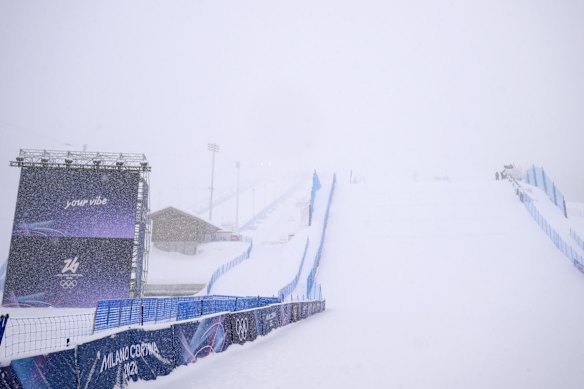
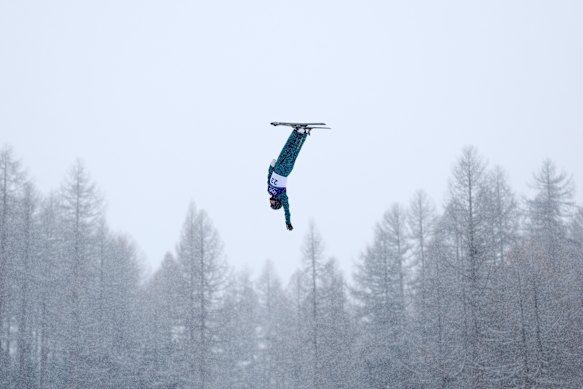
Due to the combination of heavy rain and poor visibility, aerial skiers find it difficult to see and is disorient themselves in the air, with the clouds and landing mixing together after repeated rotations.
The men’s qualifying and last will take place on February 18 and the women’s may be moved to February 19 for the men’s.
The International Ski and Snowboard Federation ( FIS ) also made the decision to completely postpone Tuesday’s women’s slopestyle final due to the persistent snowfall that would make it impossible to maintain the course. Buddy Hickman, age 16, is the only Asian competing in the event, which is scheduled to resume on Wednesday.
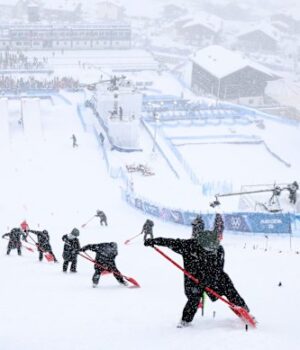
The women’s freeski big air last was postponed one day after the town was affected by blizzard-like conditions before maintenance workers worked hard to clean the hill and get the ultimate back on track when conditions eased.
Aerials training had to be stopped on Monday as a result of the persistent snowfall that made it impossible to climb.
The wind was disruptive but inevitable for Flanagan, who is making his Olympic album.
” We’ve now had two weeks on the site climbing and testing it out,” Flanagan said.
Everyone is in the same boat, and it would have been ideal to jump today, but we just have to change, do what we can, do a little visualization, and move on.
The Noosaville-born 21-year-old has only competed in aerials for five centuries and has spent the last two years on the World Cup loop, but he claimed on Monday that the circumstances were among the worst he had ever seen.
” These are definitely some of the worst problems we’ve tried to jump in,” he said. Given that we’re no jumping, the weather is not very favorable, but the snow is definitely not perfect.
By moving the men’s and women’s ski slopestyle qualifying function by a day to Sunday, the event being slopestyle, which was the most affected by the problems, the Olympic organisers avoided some of the chaos and disturbance.
According to a spokesperson for the International Ski and Snowboard Federation ( FIS), “out of all the Park &, Pipe competitions, slopestyle is the most sensitive to speed issues because the course’s length, width, and the number of features within said course.”
It would be almost impossible to keep the program clear of raw snow in a way that would help for safe and honest competition, according to the report from today.
Every Monday, information, outcomes, and expert evaluation from the sport’s weekends are sent. Sign up for our Game magazine.

