
Source : ABC NEWS
Formula 1 officially returns this week as teams and drivers descend on Bahrain for the first pre-season test.
After taking part in a private session in Barcelona last month, the two pre-season tests in Bahrain provide the first proper insight into the 2026 season.
The first of the two three-day tests begins on Wednesday at 6pm AEDT, ahead of the season-opening Australian Grand Prix on Sunday, March 8.
The 2026 season marks the start of a new era of F1, with an overhaul to both the engine and chassis regulations making this year one of the most anticipated in the category’s history.
Below is a summary of some of the biggest changes to F1 in 2026, to get you up to speed ahead of pre-season testing.
Drivers can change the front and rear wings with Active Aero
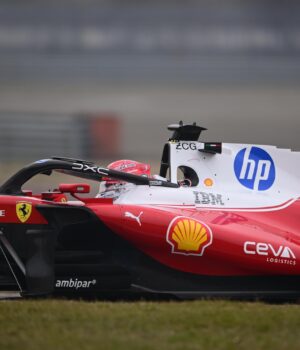
One of the most visually obvious changes to F1 cars in 2026 will be the front and rear wings.
Both wings will have different configurations for cornering and long straights, which can be changed by the driver during a lap.
Loading Instagram content
When a driver is on a long straight, they will be able to open the rear wing of their car and flatten out the front wings to reduce drag.
The reduction in drag will allow the car to achieve higher speeds.
This is similar to the DRS (Drag Reduction System) which was used in F1 from 2011-2025. The DRS allowed a driver to open the rear wing of the car, but only in a certain part of the track and only when they were within one second of the car in front. DRS did not allow the front wings to be flattened out.
But DRS has been removed under the new regulations. Drivers are free to open their front and rear wings anytime they are on a designated straight.
When a driver is not in a designated straight, they will be able to close the front and rear wings. This will increase downforce and help drivers navigate corners faster.
F1 engines now produce more electrical power
Formula 1 has new engine regulations starting from this year, and they are expected to generate a lot of power.
Loading Instagram content
Teams will still be using 1.6-litre V6 turbo hybrids, first used in 2014, but the new regulations allow for much greater electrical power.
In 2025, the F1 power units produced around 120 kilowatts of electrical power.
Under the new regulations that is expected to almost triple to around 350kW.
These new engines are expected to get roughly 50 per cent of their power from the electrical system, compared to the previous engines, where around 20 per cent of power was electrical.
More power is at the drivers’ fingertips
With more power, drivers have the ability to be more tactical about how they use it during a race.
Drivers will have two buttons on their steering wheel which will be used to deploy power: Boost and Overtake Mode.
Boost mode
For many years, drivers have had the ability to push a button on their steering wheel to deploy electric energy that had been harvested in the Energy Recovery System (ERS). This will be called Boost in 2026.
When a driver presses the boost button, they will be able to deploy power from the battery that was harvested by the ERS.
The use of this power can be used at any time by the driver. This means the use of the Boost button can be used to attack and pass, or defend from rivals.
Overtake Mode
Overtake Mode is new in 2026, and has been introduced as the primary weapon for a driver to overtake following the removal of DRS.
Like DRS, Overtake Mode will only be activated when a driver is within one second of the car in front at a detection point (most likely the final corner of the lap).
When Overtake Mode is activated, a driver will be able to deploy an extra 0.5megajoule of power on the next lap after passing the detection point.
In practice, when the leading car’s energy deployment tapers off, the driver with Overtake Mode activated will be able to deploy maximum power for longer.
Unlike the old DRS, a driver will be allowed to deploy this extra energy at any time during the lap.
F1 has 22 cars on the grid for the first time since 2016
F1 fans have come to expect 20 cars on the grid in a grand prix.
But with the introduction of an 11th team for the 2026 season, there will be two more cars flying around the circuits.
Cadillac joins as a team in 2026, with Valtteri Bottas and Sergio Perez driving their two cars.
From the mid-2000s until 2016, F1 regularly had more than 11 teams in a season.
From 2010-2012, 12 teams were competing in the F1 championship. The last time there were more than 10 teams in an F1 season was in 2016, when Haas joined the championship to make it an 11-team series.
But in the lead-up to the 2017 championship, Manor Racing withdrew from the sport, leaving F1 with 10 teams for the next nine seasons.
Audi joins as a team, and an engine manufacturer
Audi makes its entrance into F1 in 2026.

Nico Hulkenberg and Gabriel Bortoleto will drive for Audi F1 in 2026. (Reuters: Brian Snyder)
The team that was Sauber has been taken over by the German automotive giant.
Nico Hulkenberg and Gabriel Bortoleto remain as the team’s driver pairing.
But Audi is not just entering F1 as a constructor, they are also an engine manufacturer.
When the team was Sauber, they used a Ferrari power unit.
But with the new regulations in F1, Audi has become a fully-fledged manufacturer.
Other changes include Alpine using a Mercedes engine following the withdrawal of Renault.
Red Bull is now partnering with American automotive giant Ford, following the end of their partnership with Honda.
Honda is still in F1 and has a new customer: Aston Martin.
F1 2026 engines used by teams
Mercedes: Mercedes, McLaren, Williams, Alpine
Ferrari: Ferrari, Haas, Cadillac
Red Bull-Ford: Red Bull Racing, Racing Bulls
Audi: Audi
Honda: Aston Martin
F1 is using low-carbon sustainable fuels
Formula 1 will be using new fuel to power its 1.6-litre turbocharged hybrid engines, and it is the dawn of a new age.
F1 is touting the “sustainable fuels”, which it says will not involve the burning of new fossil carbon.
ABC News business reporter Tony Ibrahim wrote a terrific piece on the low carbon sustainable fuel that will be used in F1, and you can read it by tapping the link here.
New locations for F1 sprint races
F1 is sticking with sprint weekends for the sixth consecutive season.
In 2026, six of the 24 rounds will host a sprint race, the same as in 2025.
The Canadian Grand Prix weekend, held at the Circuit Gilles Villeneuve in Montreal, will host a sprint race in 2026. (Reuters: Jennifer Gauthier)
Shanghai (round two) and Miami (round six) will host sprint races for the third consecutive year.
Silverstone (round 11) will host a sprint race for the first time since the 2021 season.
Montreal (round seven), Zandvoort (round 14) and Singapore (round 18) will all host a sprint race for the first time.
The weekend format for these rounds will remain the same as it was in 2025.
One practice session will be held on Friday, followed by qualifying for the sprint race.
The sprint race will be held on Saturday, followed by qualifying for the grand prix.
The grand prix will then be held on Sunday.


