
SOURCE :- THE AGE NEWS
The world had no time to waste, Benjamin Netanyahu warned. The mullahs of Iran were on the cusp of acquiring a nuclear bomb and needed to be stopped. It was 1992, and Netanyahu was at the start of his political career.
“Iran is close to producing a nuclear weapon within three to five years, and this threat needs to be uprooted by an international front led by the US,” Netanyahu told the Israeli parliament, the Knesset.
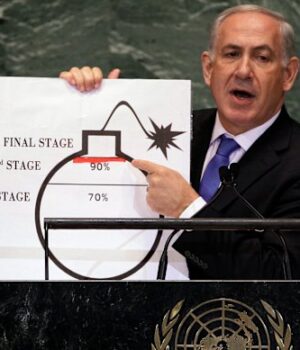
Two decades later, Netanyahu was entrenched in power and still sounding the alarm – just with more intensity. In a famous appearance at the United Nations in 2012, Netanyahu held up a cartoon diagram of a bomb and – as if he were a schoolteacher standing in front of a classroom – drew a red line to indicate Iran reaching a 90 per cent level of uranium enrichment.
“By next spring, at most by next summer at current enrichment rates, [Iran] will have finished the medium enrichment and move on to the final stage,” he said. “From there, it’s only a few months, possibly a few weeks, before they get enough enriched uranium for the first bomb.”
Privately, Netanyahu had been trying to enlist the Obama administration to work with Israel to strike Iran’s nuclear enrichment facilities. He was foiled by Obama, who doubted the need for military action. Leaks would later reveal that the Mossad, Israel’s foreign intelligence service, had concluded at the time that Iran was “not performing the activity necessary to produce weapons”, contradicting Netanyahu’s warnings. Instead of striking Iran, Obama negotiated a pact with Iran to limit its nuclear activities.
Netanyahu was livid. But he was playing the long game.
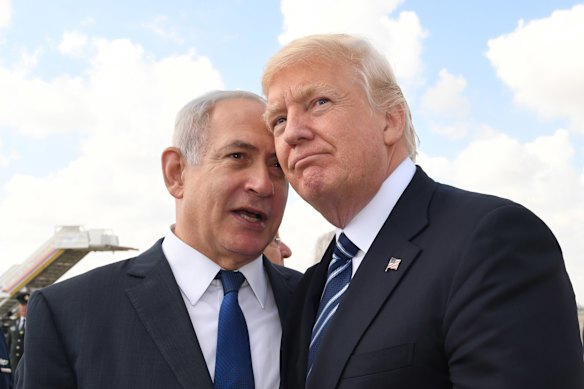
Thirteen years later, his persistence paid off. Last June, Netanyahu convinced Trump to use US fighter jets to strike key Iranian nuclear facilities. Iran’s capacity to build a nuclear bomb had been “obliterated”, in Trump’s words. After 12 days of war, Trump called off the strikes and instructed Netanyahu to do the same. A year later, delighted by his success at installing a new leader in Venezuela, Trump was willing to commit to a longer, riskier and more ambitious war with Netanyahu’s enthusiastic backing. The war began with a blazing success: the assassination of Netanyahu’s biggest geopolitical foe, Iran’s supreme leader Ali Khamenei.
Now 76, Netanyahu has dominated Israeli politics for most of the past three decades. In much of the world, he is a reviled figure, charged with war crimes by the International Criminal Court and accused of overseeing a genocide in Gaza. Within Israel, he polarises opinion. Bibi, as he is universally known in his home country, oversaw the biggest security failure in Israeli history – the October 7 attacks – and is on trial for corruption charges.
When it comes to Iran, however, he commands the respect of most Israelis, transcending political divisions. “Y’all know I have my disagreements with Bibi,” prominent Israeli journalist Haviv Rettig Gur wrote on X this week. “But the man has been planning the ayatollahs’ fall for two decades… I can’t think of anyone else who would have been so grimly single-minded and so specifically competent in the specific skillset required to bring us to this point.”
Polls at the start of the latest war with Iran showed 80 to 90 per cent of Jewish Israelis backed the military campaign, and were prepared for at least a month of fighting. Opposition leader Yair Lapid, who has labelled himself Netanyahu’s “fiercest political rival”, praised the conflict against Iran as a “just war”, saying, “I do not remember such consensus on any subject”.
For Netanyahu, the war comes at a pivotal moment, as he fights to maintain his hold on power. Israelis must go to the polls by the end of October at the latest, and Netanyahu can call an election earlier if he senses a political advantage.
“We are winning and Iran is being decimated,” Netanyahu declared on Friday, a triumphant attitude he is sure to carry through to election day.
Jonathan Conricus, a former spokesman for the Israeli military, says: “I am sure that the grand master of Israeli politics, Netanyahu, will leverage every inch of achievement on the ground for political success.”
As the war enters its fourth week, however, there is risk as well as opportunity for Netanyahu. The Iranian regime remains in power, Iranian attacks have sent global oil prices skyrocketing and strategic differences between Israel and the US are coming into focus. Israel’s decision to strike the world’s largest gas field at South Pars led Trump to rule out any future Israeli attacks on civilian energy infrastructure.
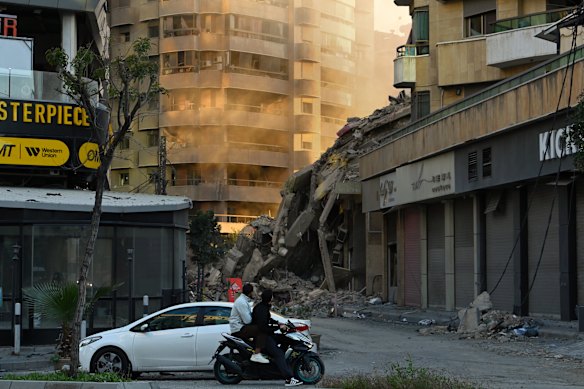
Meanwhile, on the home front, Israel’s schools are closed, and its economy is suffering. After nearly two years of war in Gaza, fatigued reserve soldiers are being called up for a ground invasion of Lebanon, where Netanyahu wants to crush Hezbollah, one of Iran’s key regional allies.
Military sociologist Yagil Levy says that, despite strong support for attacking Iran, there are increasing questions in Israel about Netanyahu’s end game. “We don’t see a very clear vision for the war,” says Levy, head of the Israeli Open University’s Institute for the Study of Civil-Military Relations. “The question is whether the wonderful military gains can be translated into political gains.”
The answer will have profound ramifications for the Middle East and Netanyahu’s own future.
While international media coverage of the war has grown increasingly pessimistic as the war has gone on, Conricus believes the doubters will be proven wrong. Evincing the same certitude he showed as an Israeli military spokesman during the war in Gaza, he predicts Trump and Netanyahu will emerge victorious and the Iranian regime disintegrates, if not during the war then soon after.
“I see lots and lots of success,” says Conricus, now a senior fellow at the Foundation for Defence of Democracies think tank. “I see the Iranian nuclear weapons program dialled back for many years, and the destruction of their ballistic missile industry. We are dismantling the Iranian axis of aggression against Israel piece by piece.”
Levy is far less assured. He points out that Trump and Netanyahu boasted of obliterating Iran’s nuclear program last June, only to return to war in less than a year. Decapitating Iran’s leadership will not necessarily lead the regime to crumble. And it would require a high-risk special forces operation, which Trump seems wary of, to extract Iran’s remaining uranium reserves.
Levy is most critical of Israel’s decision to open up a second front of the war against Hezbollah in Lebanon, branding it illogical.
He’s not alone. Nadav Pollak, a former Israeli intelligence analyst, has praised the attacks on Iran but believes Israel was making a “terrible mistake” by preparing a ground invasion of Lebanon.
“Expanding the war against Hezbollah now will be a distraction from the main theatre of war, Iran, and can nullify many of the achievements Israel already accomplished in recent battles,” Pollack wrote in The Hill.
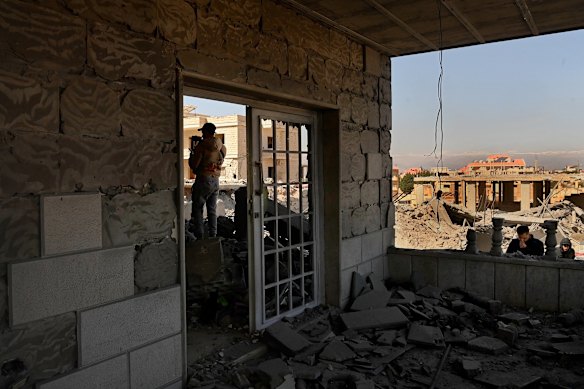
Hezbollah’s rocket attacks on northern Israel after the US and Israel struck Iran were largely symbolic and ineffectual, but have been met with a ferocious response. Israel has bombed Hezbollah targets across Beirut and southern Lebanon, forcing one in five Lebanese to flee their homes. The Lebanese death toll in the current conflict was set to pass 1000 by the end of this week.
Levy says Israel’s multi-front war looks more logical when viewed in the context of a military doctrine he says has taken hold since the October 7 attacks of 2023, when an estimated 1200 Israelis were killed in Hamas’s shock attacks. He calls it the concept of “permanent security”, in which Israel is increasingly willing to strike with pre-emptive force against real and potential threats.
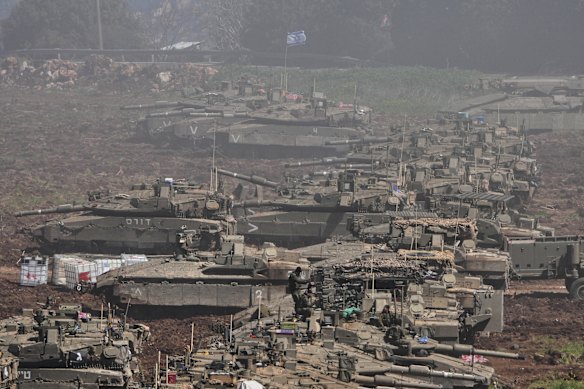
“Israel has long pursued permanent security, though historically in a ‘soft’ version that recognised the limits of military force and of international law,” he says. This has been replaced by a hard version, in which “negotiation and compromise give way to domination”.
Nathan Brown, a professor of political science at George Washington University, agrees that Israel is “operating according to a strategic logic very different from the one that has long guided its statecraft”.
In a piece this week for the Carnegie Endowment for International Peace, he argued: “Deterrence and diplomacy have been eclipsed by something harsher: a preference for domination, degradation and the prevention of the adversaries’ recovery.” This can be seen in Israel’s relentless attacks on Gaza after October 7, the seizure of Syrian territory after the fall of the Assad regime and the current wars in Iran and Lebanon.
Despite Netanyahu’s domineering personality, Levy stresses that permanent security has become embedded in the Israeli psyche since October 7. “The principles are shared by the right, the centre and parts of the left in Israel,” he says. “It is not something that can disappear a day after Netanyahu.”
Indeed, most of Netanyahu’s main political opponents are not calling for restraint. Instead, they are trying to match, or even outdo, him as a hardline hawk.
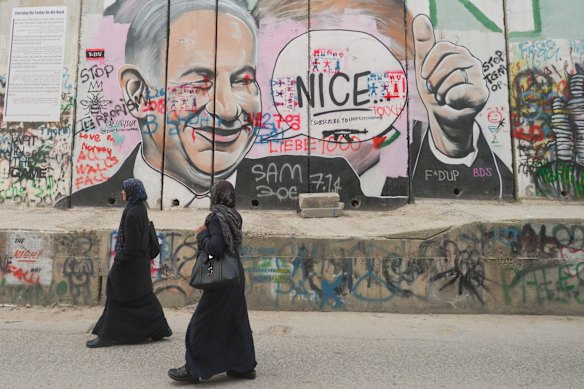
Gadi Eisenkot, a former chief of staff of the Israeli army who is running against Netanyahu, posted on social media this week: “The Dahiyeh doctrine has never been more relevant than right now, and it must be implemented.” This doctrine calls for the large-scale destruction of civilian infrastructure in the hopes of convincing the population (in this case the Lebanese people) to rise up against Israel’s foes.
Benny Gantz, regarded as a relative moderate, has criticised Netanyahu for acting too slowly to control of all of southern Lebanon. Avigdor Lieberman, who sits to the right of Netanyahu on many issues, has lamented the fact that aid trucks – “including chocolates and sweets” – are still entering Gaza from Israel.
Lapid, a centrist who once supported a two-state solution, recently said he would like to see Israel’s borders grow to cover all of its biblical territory. This would stretch all the way to Iraq, taking in Jordan, Syria and parts of Egypt and Lebanon.
Levy believes this expansionist, aggressive approach, could cause long-term damage to Israel’s national security. Certainly, Israel’s international standing has been battered by the way it conducted the war in Gaza. And while Netanyahu is close to Trump, Israel is increasingly unpopular in the US – not just with Democrats but also young Republicans and conservative influencers such as Tucker Carlson. But these risks are over the horizon. In the short term, Netanyahu has an election to win.
It seems counterintuitive, but, so far, it’s true. Most Israelis support the war against Iran, and believe Netanyahu is the best politician to handle their biggest geopolitical foe. But the polls show the war has had next-to-no impact on voting intention. “Epic Anticlimax,” is how Israeli newspaper Ha’aretz characterised the war’s impact on Israeli political opinion.
The latest poll from Israeli TV station Channel 12 had Netanyahu’s Likud party winning 26 Knesset seats, the same as it scored in the most recent poll before the war began. The survey showed Netanyahu’s right-wing governing coalition winning 51 Knesset seats, compared to 59 for the opposition bloc. A poll for the Maariv newspaper found virtually the same results.
Conricus says Netanyahu will campaign as the only politician who can keep Israel safe and work with Trump. As for his opponents, he says: “They’ll speak about October 7, and they’ll speak about corruption. They’ll speak about how he has enabled the ultra-orthodox, how he has allowed them to basically dominate the country and exempt them from military service.”
Despite the lack of any poll bump from the war, Netanyahu is still in the game. That’s a remarkable outcome when you remember that three-quarters of Israelis said he should step down after the October 7 attacks. The opposition bloc is fragmented, spanning the ideological left to right, and is united mostly by the dislike of Netanyahu. This could make it hard to cobble together a unified coalition.
Parties representing Arab-Israelis, who form around 20 per cent of the population, could play a kingmaker role after the election, but several leading contenders to replace Netanyahu have vowed not to go into coalition with them.
An impasse could return Israel to a cycle of successive elections like when the country went to the polls five times between 2019 and 2022. This could allow Netanyahu to remain in power without a majority and see members of the opposition defect to side with him. Yigal Levy foresees a scenario in which Naftali Bennett, now Netanyahu’s leading opponent on the right, forms a coalition government with him.
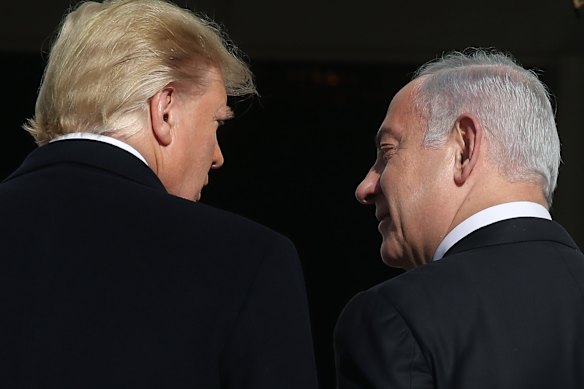
For Netanyahu, the stakes are immense. Being prime minister has allowed him to string out his corruption trial, where he stands accused of exchanging political favours for luxury gifts and favourable media coverage. Losing power would leave him more legally exposed. He has asked Israeli President Isaac Herzog for a pardon but Israel’s Justice Ministry this week found his request does not meet the requirements.
A decisive victory over Iran would be the achievement of a lifetime for Netanyahu. The only thing sweeter: remaining in office and out of jail.
Get a note directly from our foreign correspondents on what’s making headlines around the world. Sign up for our weekly What in the World newsletter.