
Source : THE AGE NEWS
Locksley Resources’ latest batch of surface grab samples has returned significant antimony grades, with a peak value of 16.9 per cent antimony from the company’s flagship Desert Antimony Mine, part of its wider Mojave project in the US state of California.
Management believes the sample results are geologically significant and confirm the continuity of the high-grade antimony mineralised lodes along strike to the north of historic mining, in addition to sitting above the historical underground workings.
The company recently carried out surface exposure mapping at its Desert Antimony Mine. The latest samples from earthworks, completed in preparation for the drill program now underway at the project, have been added to its kitbag to assist in pinpointing priority targets and refining the project’s geological model.
Each sample, weighing between 2kg and 3 kg, was carefully inspected in the field to confirm mineralisation consistent with that seen in the historic underground workings, with visible stibnite – antimony sulphide – confirming the presence of antimony.
‘These results reflect our strong technical foundation and focus on high-confidence targets.’
Locksley Resources non-executive technical director Ian Stockton
An impressive series of double-digit assay results were returned, including the peak 16.9 per cent antimony find and additional strong assays of 13.82 per cent, 11.54 per cent and 11.48 per cent, respectively.
Management says the high-grade results continue to propel the project along its mine-to-market development pathway as it prepares to supply the US with domestically mined antimony.
Locksley Resources non-executive technical director Ian Stockton said: “With diamond drilling now underway at the Desert Antimony Mine and the rig actively turning, these results reflect our strong technical foundation and focus on high-confidence targets.
The company kicked off its maiden diamond drilling campaign last month and is targeting extensions and depth to the known high-grade antimony mineralisation beneath historical workings at the site. By integrating data from the antimony veins exposed in the surface bedrock, the rigs have been oriented to maximise drilling efficiency, enabling a better understanding of the site geology.
In what could prove a masterstroke, management’s decision to run detailed surface mapping during site works — following its high-resolution underground campaign — has delivered critical geological insight, confirming the recent technical findings at depth.
The company believes the combination of the two programs has unlocked the potential for multiple antimony-bearing structures at its Desert Antimony Mine and increased clarity into the mineralised makeup of the project, significantly boosting its confidence in the company’s designated priority targets.
Management says the surface program confirmed the orientation and continuity of the primary stibnite veins at surface, along with the structural framework and offsets kicked up by the high-resolution underground surveys.
Drilling results and surface assays will be fed into an updated 3D geological model. Core sampling and analysis will also support metallurgical and processing testwork aligned with the US Department of Energy Critical Minerals programs.
The company is also working towards advancing the phase one pilot processing facility and the construction tender.
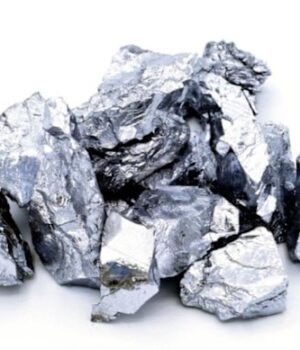
The US Government has designated antimony a critical mineral, with minimal domestic production currently. Although MP Materials’ nearby Mountain Pass is the nation’s only rare earths mine, it does not produce any antimony, making Locksley’s prospect all the more valuable should it successfully deliver a new source of the silvery black metal.
Locksley plans to focus on manufacturing and qualifying antimony trioxide and antimony trisulphide.
Antimony trioxide is a critical component in electronics, plastics, fire retardants and energy applications. Antimony trisulphide is used as a strategic industrial material for pigments and pyrotechnics and used in defence systems, primers and specialty chemicals.
Locksley is hammering the drill bit into its Desert Antimony Mine with gusto and is eagerly awaiting the outcome to see how far down the domestic antimony pathway it has come.
Is your ASX-listed company doing something interesting? Contact: mattbirney@bullsnbears.com.au


