
Source : INDIA TODAY NEWS
The coronation of Jayalalithaa in June 1991 was not merely a change of guard at the fort; it was the arrival of a new political paradigm. After the turbulent night of the tragedy in Sriperumbudur and the blood-stained ballot of the 1991 polls, the state emerged into a dawn dominated by a single, uncompromising silhouette: J. Jayalalithaa.
This was the era where the scholarly, suave sentinel of the eighties finally occupied the throne she had essentially been prepped for since her debut under the mentor. It was a time of unprecedented mandates, where the rising sun had been eclipsed so totally that the only light in the sky came from the Iron Lady’s own incandescent aura. This Dravidian drama was now entering its most ‘absolute’ phase.
advertisement
The Prologue of Grit
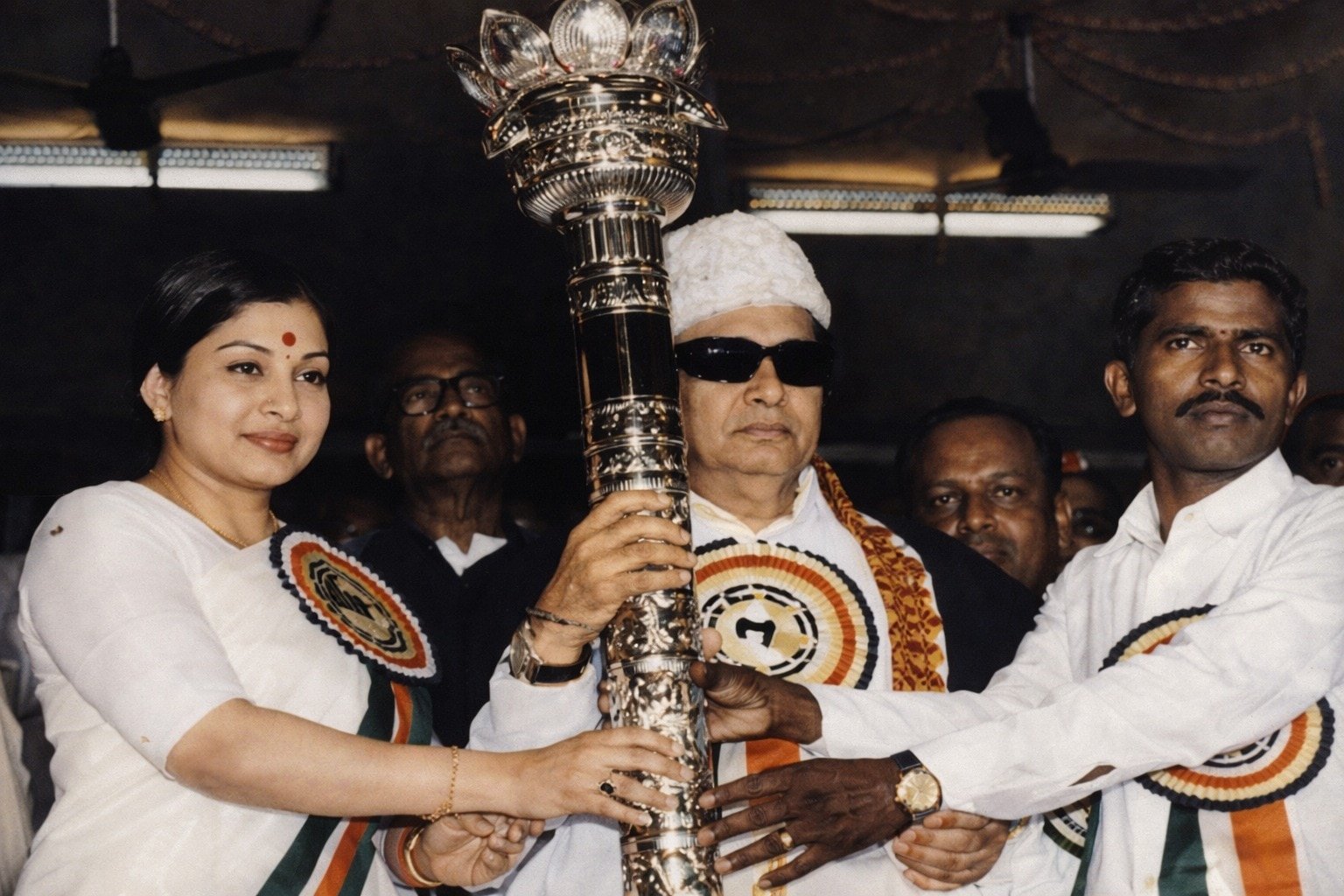
In 1982, M. G. Ramachandran named J. Jayalalithaa AIADMK propaganda secretary.
To appreciate the complete command of the 1991 tenure, one must revisit the workshop of the eighties where the student was constructed. In 1982, MGR performed his most significant strategic casting by introducing Jayalalithaa as the propaganda secretary of the AIADMK. She was no mere celluloid siren; she was a polyglot powerhouse with a scholarly sharpness that made the old guard of the Thottam nervous. Her debut speech at Cuddalore was a linguistic lightning bolt, a display of English and Tamil oratory that proved she could speak to the high table in Delhi and the huts of the hinterland with equal ease.
Her rise was fuelled by a sheer grit that few anticipated. During MGR’s 1984 illness, when the old guard tried to script her exit and erase her presence from the party files, she took to the streets. She became the voice of the teacher to a million anxious ears, her tireless tours through the rural heartlands proving her campaign calibre.
Jayalalithaa possessed a pavement heartbeat that allowed her to bypass the party machinery and connect directly with the Thalikulam, the women of the state. She was not just a student of the Thottam; she was its most brilliant survivor.
The MP Years
In 1984, MGR dispatched her to the Rajya Sabha, a move that was as much about showcasing her brilliance as it was about keeping the internal friction in Madras at a manageable simmer. Her entry into the upper house was a revelation. While many regional leaders were seen as mere linguistic curiosities in the capital, she commanded the room with an effortless, sophisticated English that bridged the gap between the south and the north. She often floored many an Aryan Neta with her fluent Hindi in the Upper House.
Her maiden speech on the status of women and social welfare was noted for its depth and rhetorical polish, earning her the respect of even the most hardened veterans of national politics.
During her tenure as a Rajya Sabha member from 1984 to 1989, Jayalalithaa became the party’s primary bridge to the central leadership. Her rapport with Indira Gandhi and later Rajiv Gandhi was not just about political convenience; it was about intellectual parity. She used the Delhi desk to learn the mechanics of federalism, the nuances of foreign policy, and the art of dealing with a national media that was often dismissive of Dravidian politics.
Jayalalithaa’s modern education, insatiable appetite for books and a broad worldview proved that a leader from the peninsula could articulate a national vision in the capital without losing her regional roots. This period was her true training ground for the governance that would follow, a time when she transitioned from a native agitator to a national stateswoman.
The Strategic Couple
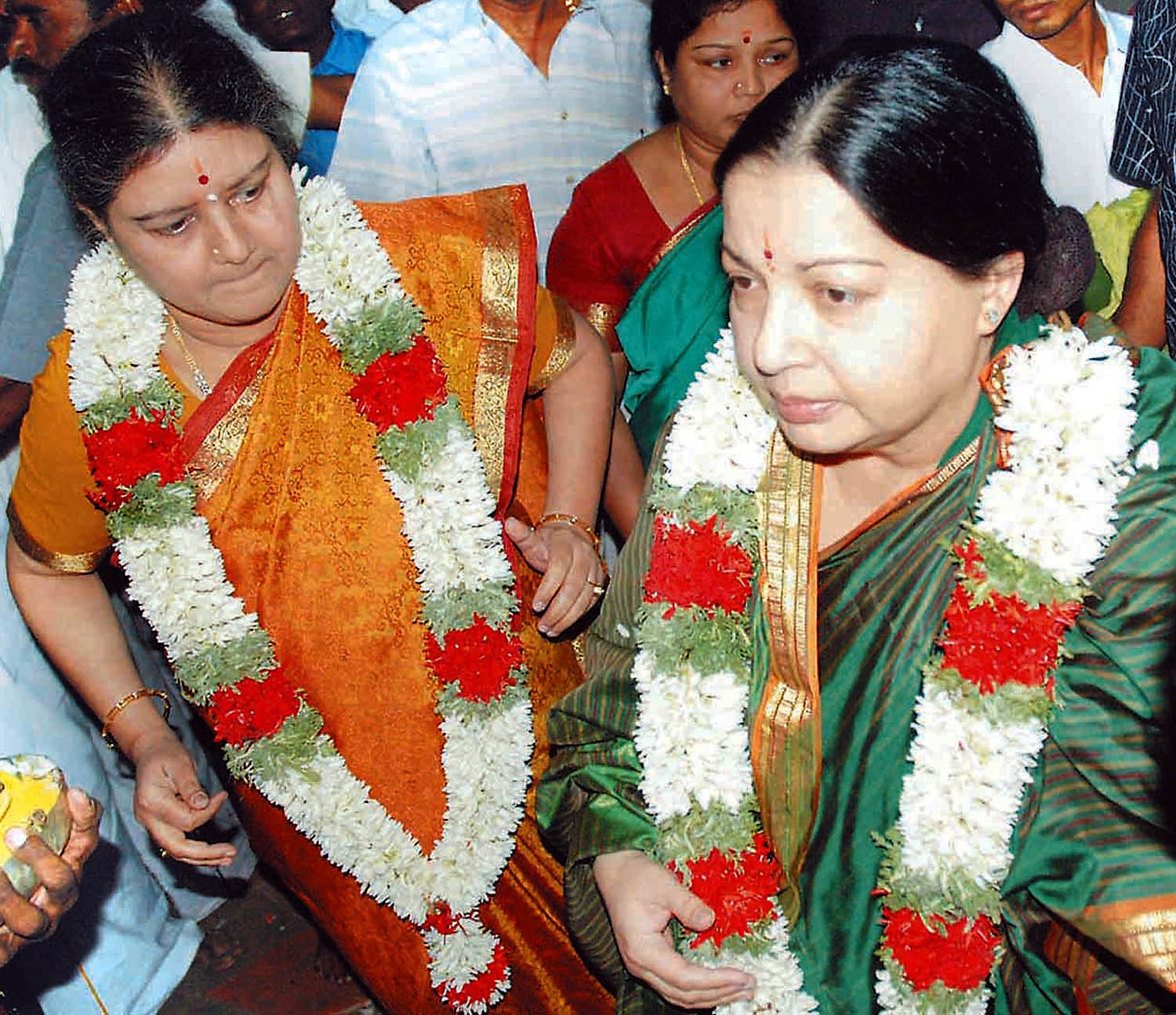
In the early 1980s, J. Jayalalithaa and V. K. Sasikala began a quiet association that would later reshape Tamil Nadu’s power dynamics.
The early eighties also saw the emergence of the strategic duo that would eventually redefine the power map of the state. The entry of Sasikala into the inner sanctum was a quiet, domestic affair that began as a small commercial interaction. She was a video cassette supplier, providing the former screen star and now budding politician, with tapes of global cinema and her own past performances. Often sidelined and lonely, to Jayalalithaa the cassettes and its provider were welcome diversions. But this humble entry masked a deeper bureaucratic connection.
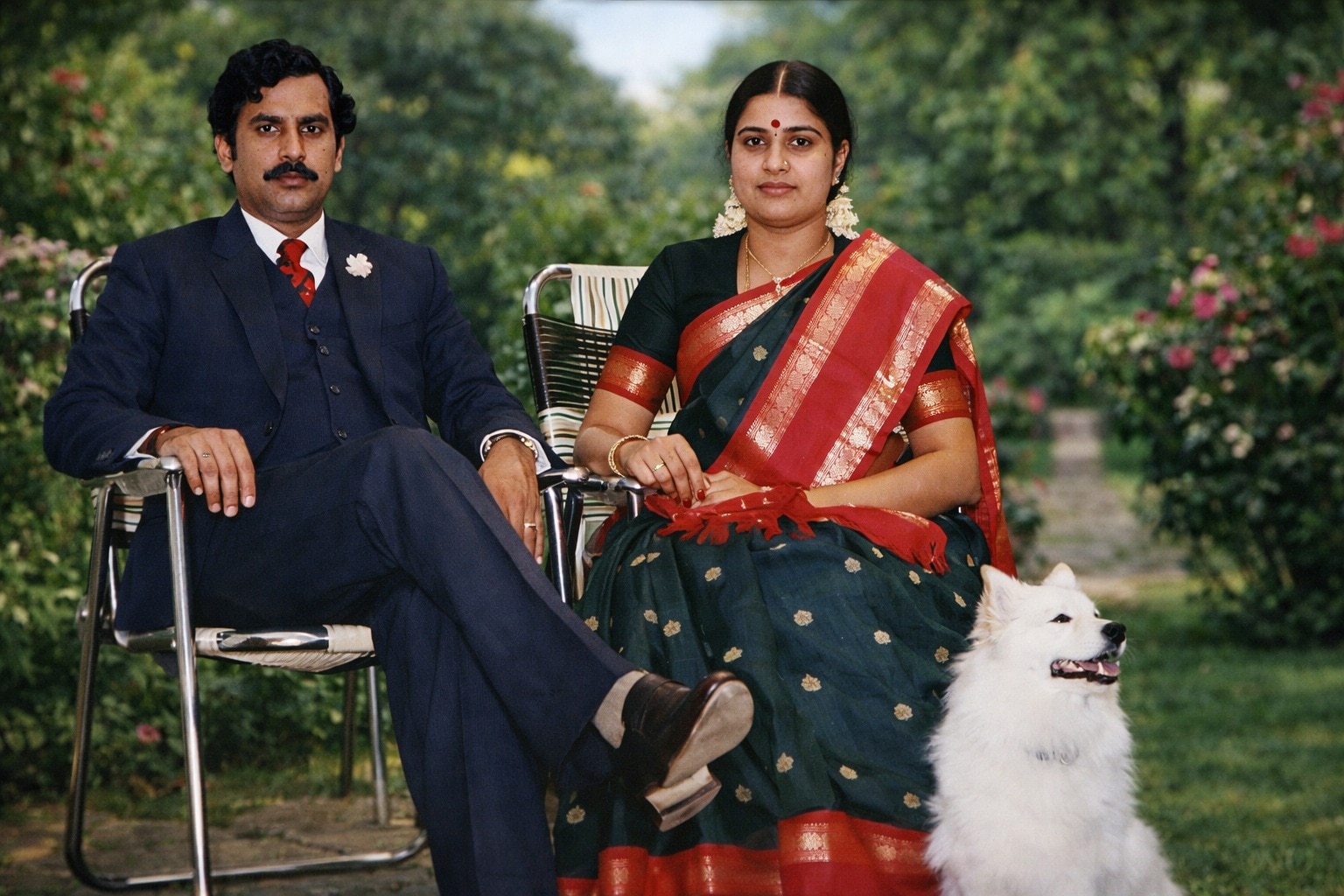
V. K. Sasikala’s husband, M. Natarajan, served as a public relations officer in South Arcot district.
Sasikala’s husband, M. Natarajan, was a public relations officer in the South Arcot district. He was no stranger to the levers of the state, having worked under the competent collector Chandralekha, which gave him an intimate understanding of the administrative machinery and the psychology of the bureaucracy.
Natarajan was a master of backroom manoeuvre, realising early on that his wife’s growing proximity to the rising star could be transformed into an unshakeable bond. While Sasikala offered the emotional anchor and the domestic shield, Natarajan provided the tactical spine, helping navigate the internal fissures of the party during the post-MGR transition.
He was the quiet architect, or so he claimed, who ensured J stayed ahead of the old guard during the years of internal split. By the time the 1991 crown was secured, this partnership had moved from supplying cassettes to securing the keys to the secretariat, constructing a fortress of favouritism that would eventually bypass the traditional cabinet.
The 1989 Reunion
The true test of her mettle came after MGR’s death in 1987. Faced with a party split into antagonistic factions, the Janaki versus Jaya camps, she exhibited an iron-willed resilience. While the rival faction held the administrative symbols, Jayalalithaa held the aura of the heir. In the 1989 elections, despite losing the two leaves symbol to a legal freeze, her faction emerged as the dominant twin.
The subsequent reunification of the party in the middle of 1989 was a masterclass in political retrieval. She did not just merge the factions; she consumed them. She successfully reclaimed the two leaves and the party headquarters, proving that in a post-MGR world, the mandate belonged to the one who could command the crowd, not just the cabinet.
The 1989 assembly incident, where her hair was dishevelled in a primal retake of ancient grief, provided the moral armour for her next crusade. She transformed from a party functionary into an incensed icon, a martyr for a cause that was now as much about her personal dignity as it was about Dravidian destiny.
A Whirlwind of Strength
The 1991 election was a whirlwind that redefined the limits of political energy. Jayalalithaa embarked on a campaign that was staggering in its scale and stamina. Travelling thousands of kilometres in her customised van, she addressed hundreds of rallies, her academic eloquence turning the grief of a national tragedy into a tidal wave of condolence.
But it was not just the ghost of the past that won the day; it was her own linguistic lustre. She positioned herself as the daughter of the soil who had been insulted by the patriarchal arrogance of the opposition. She weaponised her own vulnerability, turning a moment of sorrow into a flag of fortitude.
The result was a mandate of biblical proportions, with the alliance sweeping nearly the entire house. The opposition was reduced to a near-total eclipse, proving that in Tamil Nadu, when a woman is seen as a wounded warrior, the ballot box becomes her primary weapon of vengeance.
The Crowning: From Two Leaves to Two Feet
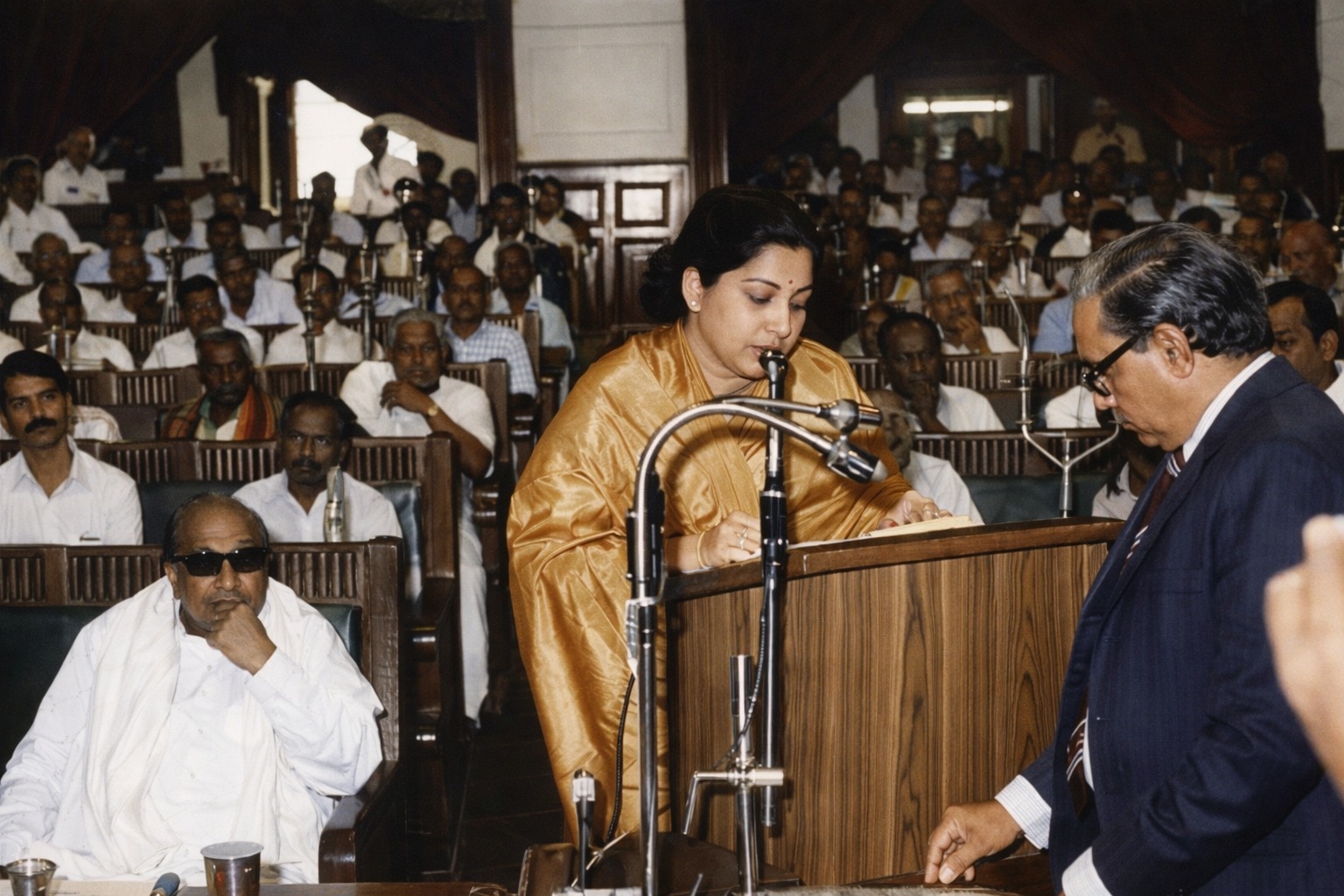
On June 24, 1991, J. Jayalalithaa was sworn in as Chief Minister of Tamil Nadu.
On June 24, 1991, Jayalalithaa was sworn in as the chief minister. The fort was no longer just a place of files; it was a court of coronation. For the first-time chief minister, the mandate was a licence for absolute sovereignty. She entered the secretariat not as a first among equals, but as the monolith of the mandate. She became the state’s youngest chief minister at 43, the first woman to hold the post in a full-fledged manner, inheriting a treasury depleted but buoyed by a central alliance of goodwill.
The early days were marked by clinical efficiency. Jayalalithaa was not interested in the old-school consensus of the veterans; she wanted results. Her cabinet meetings were noted for their heavy silence, where the leader’s brief was the only logic allowed: In stark contrast to MGR, who though the ultimate master, created a semblance of consultation. It was during this time that the prostration protocol began to germinate. This was not merely about ego; it was a ritual of recognition.
By having senior ministers and seasoned bureaucrats perform the full prostration, falling at her feet in public view, she was performing a psychological surgery on the patriarchy of the party. The message was clear: in this era, the two leaves had been replaced by the two feet of Amma. It was the sovereignty of the ‘sole’ that transformed political followers into devotees.
Governance by Decree
One of the first landmarks of her first term was the prohibition turn of 1991. Recognising the havoc that cheap liquor and arrack had caused in the domestic hearths of the poor, she moved to ban country liquor and arrack shops. It was a maternal authority that resonated deeply with her primary constituency, the women. While the state exchequer faced a fiscal famine because of the lost revenue, she argued that the dignity of the home was more important than the depth of the treasury.
This was Jayalalithaa’s welfare wisdom at work, a move that secured her status as the guardian of the hearth. She was the Iron Lady with a soft motherly reach, realising that to stay in power, she had to be the provider of peace in every kitchen of the state. It was a matriarchal charge that her predecessor could never quite replicate with his revenue realism. Yet the shift was not without pushback; the ban on arrack and toddy led to underground hooch concerns, forcing her to navigate the fiscal void with central aid while cementing her anti-vice image among the mothers of the state.
Retribution & Renewal
In the immediate aftermath of the 1991 tragedy, Jayalalithaa unleashed a ferocious crackdown on militant sympathisers and remnants in the state. The Tigers had lost their public sympathy for spilling Rajiv’s blood on TN soil. The territory, once accused of harbouring predators, now became a fortress of retribution. By late 1991, her administration launched Operation Seal, raiding coastal hideouts and arresting hundreds linked to the insurgency. This was no mere posturing; it was a surgical strike on the sanctuary syndrome that had stained the state.
Collaborating with central agencies, she turned Palk Strait from a porous playground into a patrolled perimeter. The no-nonsense lady framed this as national duty, but it was also a shrewd severance from the opposition’s perceived complicity, solidifying her as the sentinel against separatism.
Whispers of overreach echoed, revealing the double-edged dagger of Draconian defiance. Still, she proved that she could be the law-and-order leader that Delhi expected, even as she maintained her regionalist fire.
The Cradle & the Child
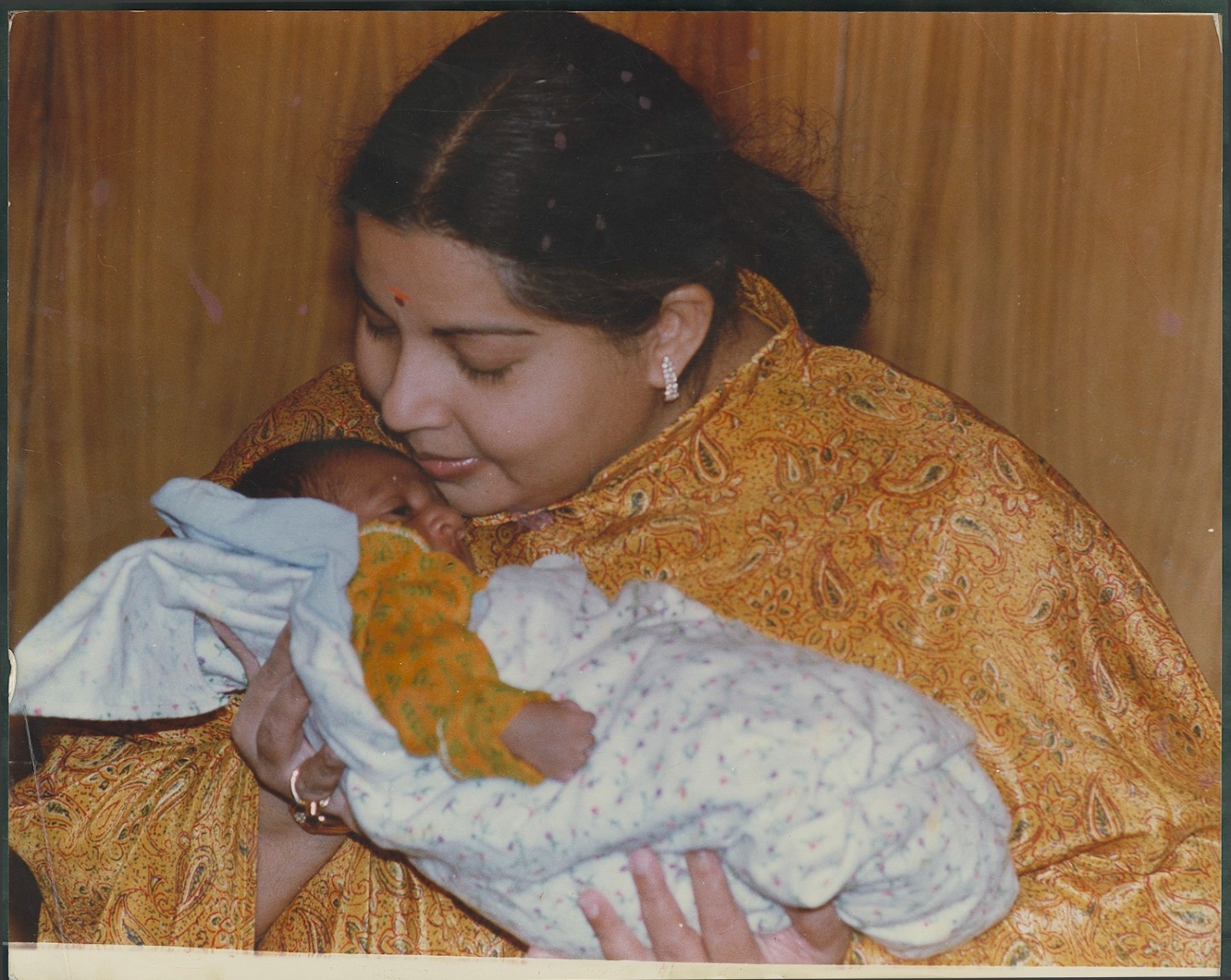
J. Jayalalithaa launched the Cradle Baby Scheme in Salem to combat female infanticide.
In 1992, Jayalalithaa launched the Cradle Baby Scheme in Salem, a landmark welfare leap designed to counter the social cancer of female infanticide. This was not a mere policy; it was a poignant intervention. By placing cradles in government hospitals and social centres, she invited desperate mothers to hand over their daughters to the state rather than the dustbins of the streets.
Jayalalithaa positioned herself as the eternal mother of these abandoned children, promising that her government would be their guardian and groom. This scheme transformed the Iron Lady into the tender mother of the marginalised, visual proof that her power was a tool for social salvation. It was an emotional engine that fuelled her popularity, proving she could crawl meticulously through the dark corners of societal prejudice to find a fount of fairness.
Initially piloted in Salem amid alarming sex ratio dips, the scheme saved hundreds in its early years, burnishing her as Amma incarnate and providing a protective mantle that clothed and cloaked those vulnerable children.
Nourishing the Noon Legacy
Building on MGR’s nutritional legacy, Jayalalithaa orchestrated a welfare wave that drowned the opposition in a deluge of populist plenty. In 1992, she expanded the nutritious noon meal scheme, adding eggs and bananas to the menu for millions of schoolchildren, turning classrooms into cradles of health. This was not mere sustenance; it was a strategic siege on poverty’s stronghold.
She fortified the public distribution system, subsidising more essentials like pulses and oil, ensuring the poor’s plate was no longer a barren battlefield. Free uniforms, textbooks, and footwear were distributed to lakhs of students, a matriarchal shield that protected the youth with educational armour.
These moves, costing hundreds of crores but earning absolute loyalty, positioned her as Amma, the eternal provider. Yet, fiscal hawks clucked at the treasury’s thinning veins, foreshadowing the extravagance that would later erupt in the middle of the decade.
Marina Marathon: Water & Willpower
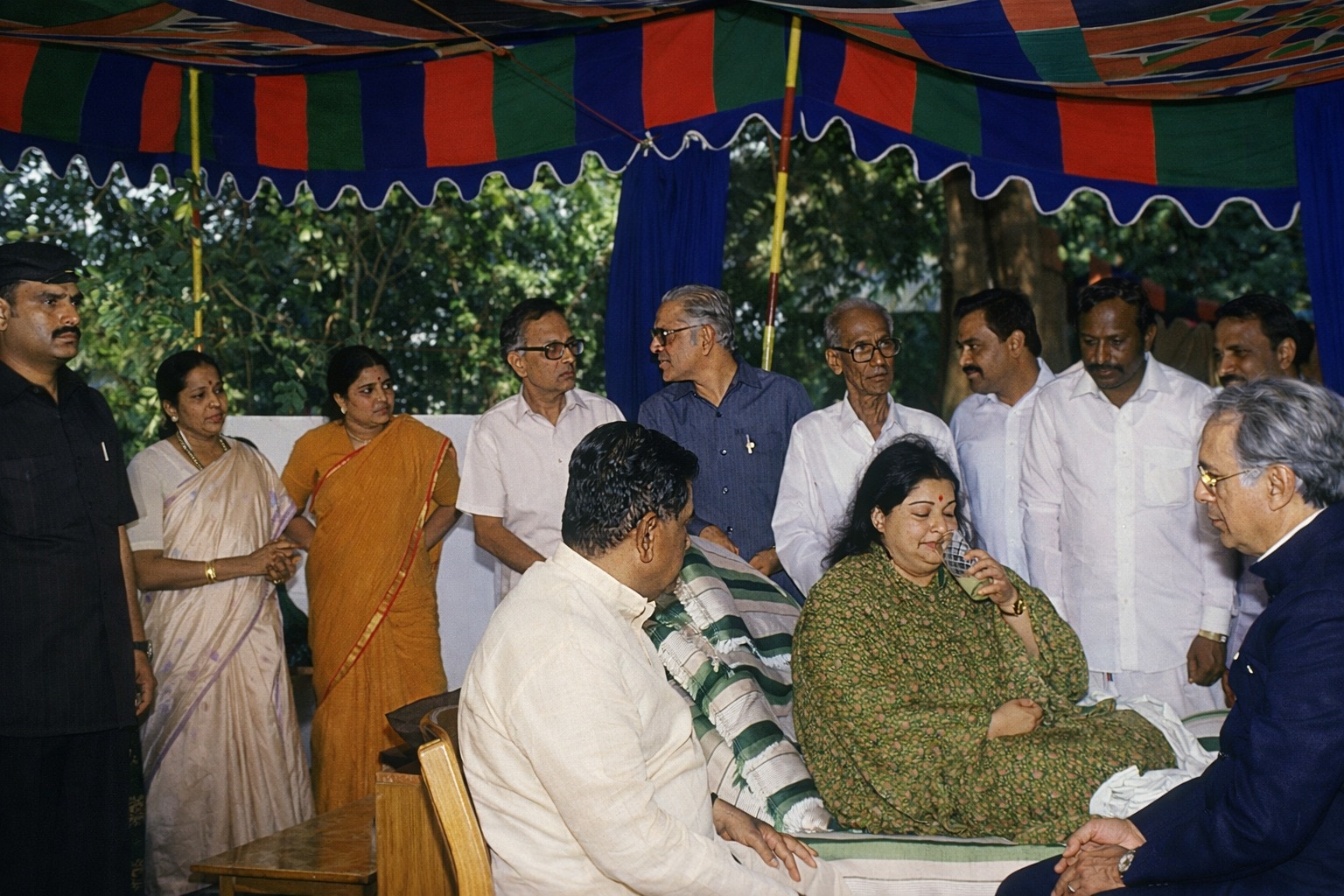
J. Jayalalithaa at a fast-breaking event with V. K. Sasikala and others, 1993.
The year 1993 saw Jayalalithaa move from the secretariat to the sands of the Marina in a high-theatre masterclass of protest. Faced with the perennial hydraulic hubris across the border and a perceived lethargy from the centre on the Cauvery water-sharing issue, she launched a sudden, 80-hour fast at the MGR Samadhi in July 1993. This was not a desk protest; it was a Marina Marathon designed to bypass the traditional petitions.
Under the blistering Chennai sun, Jayalalithaa sat in a state of publicised penance, her health becoming a matter of national anxiety. This was her federal fistfight with the prime minister of the day. By taking the fight to the streets and shores, she forced the centre to send its ministers to the Samadhi, essentially turning the federal hierarchy on its head.
She was not just demanding water; she was demanding recognition of a lower riparian state’s sovereignty over its resources. The fast was a masterstroke of political leverage, ending only after a central assurance was extracted. It proved that in her court, the mandate for water was as holy as the mandate for food.
Federal Frictions
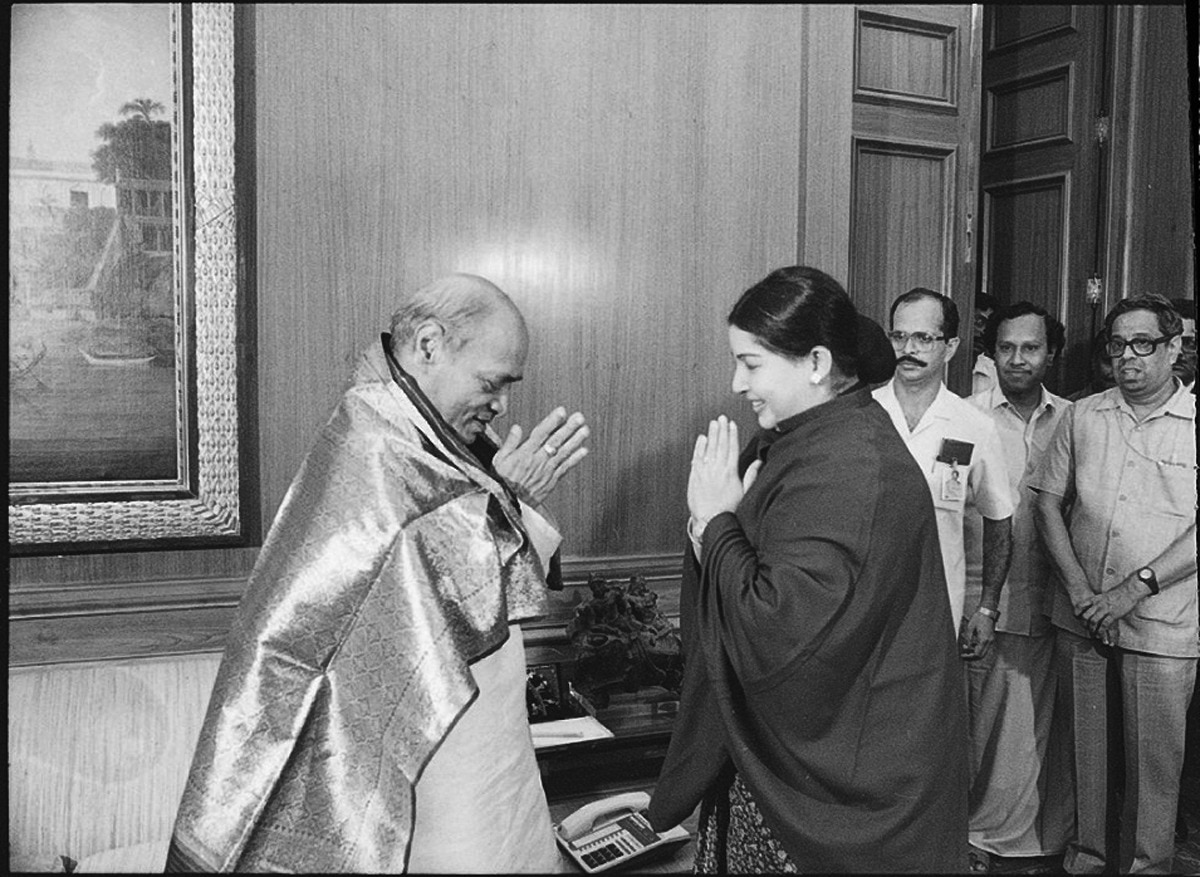
J. Jayalalithaa’s relationship with Prime Minister P. V. Narasimha Rao exemplified strategic manoeuvring.
Jayalalithaa’s bellwether relationship with Prime Minister P.V. Narasimha Rao was an illustration in strategic manoeuvring. While she supported the centre during critical parliamentary votes to ensure the survival of the minority government, she simultaneously used every state platform to demand better deals for Tamil Nadu.
The 15-Point Program for Child Welfare launched in this period was her answer to central schemes, adding layers of health check-ups and medical polish to the toddlers of TN. She was recasting the state as a nursery of progress, ensuring the opposition was kept at bay by a wall of motherly care.
Industrial Ignition
As the nation unshackled its economy in the early nineties, Jayalalithaa seized the liberalisation leap with a precision that would eventually transform Tamil Nadu into a global manufacturing magnet. In 1992, she unveiled a comprehensive industrial policy that streamlined approvals through the state’s industrial development corporations. This was the moment the seeds for the automotive hub were planted. The development of SIPCOT Irungattukottai was a massive undertaking, designed to provide world-class infrastructure that would entice international giants.
Her administration was not interested in blind capitalism; it was a calibrated fusion where industrial parks coexisted with welfare subsidies. The groundwork for the creation of specialised estates for electronics and auto-components was laid in the 1992-1993 window through aggressive lobbying.
By the end of 1993, Tamil Nadu was already outpacing its neighbours in foreign investment interest. Critics, however, pointed toward the undercurrents where garden whispers supposedly steered tenders, a shadow that grew even as the industrial horizon brightened. This was a high-wire act of harvest and ambition, defining the economic empire she intended to build.
The Mahamaham Tragedy
The early honeymoon period faced a sombre test in February 1992 during the once-in-12-years Mahamaham Temple festival in Kumbakonam. In a tragedy that cast a shadow on the garden, a massive stampede occurred during the holy dip, claiming nearly 50 lives. The presence of the chief minister, along with her close confidante Sasikala, at the tank during the peak hour of the festival was seen by critics as a security snafu that impeded the crowd flow.
While the administration offered its condolences and relief to families in quick time, the incident became a polemic pothole. It was a sobering sunset over the holy pond that reminded the Iron Lady that even an absolute mandate cannot control the chaos of the crowd. For Jayalalithaa, the Mahamaham tragedy was a moment of mortality, a reminder that the aura of the leader carried the burden of the bodies, a truism that haunts the new-fangled hero of the day.
It was a lesson in the risks of massive adulation and the fragile line between a sacred dip and a public disaster. The February 16 tragedy drew opposition fire for administrative hubris, yet her swift compensation and inquiry quelled the storm, but not before revealing early cracks in the image monolith.
The Mannargudi Miasma
By 1993, the power structure of the state had become a fortress of favouritism. The strategic husband-wife duo had successfully constructed a system where access to the queen was strictly monitored. While she maintained her academic aura in public, the internal atmosphere of Poes Garden was becoming a tale of two sisters.
It was during this period that Dr. Subramanian Swamy began his relentless offensive, famously dubbing the inner circle as the ‘Mannargudi Mafia’. This label stuck, providing a linguistic lance for the opposition to attack the perceived clandestine governance.
These sinister shadows controlled the secretariat and even the staff, creating a structure that bypassed the traditional cabinet. This was the prostration protocol at its peak. Ministers realized that the path to the sceptre lay through the shadow. The state was witnessing a chorus of subservience, where senior patriarchs waited in corridors for a glimpse through the darkness.
Whispers of the Mannargudi influence over tenders and transfers began to fuel cadre murmurs of a parallel power centre to the point of eroding the legacy of the founder-leader, who was known for his easy approachability. The administrative map had been redrawn, and as the year closed, Jayalalithaa was at the peak of her power, unaware that the ocean of goodwill was slowly turning into a tide of turmoil.
The Mandate of the Goddess
As the year 1993 ended, Jayalalithaa stood as the undisputed goddess of the gilded age. She had united a fractured party through sheer calibre and grit. She lifted prohibition on country liquor, anchored child welfare through the 15-point program, and offered a cradle for the crying. Her tenure was a whirlwind of welfare and willpower, a period where the screen aura had finally become a statutory reality.
She had moved from propaganda to power, her two feet the only anchor for a movement that had lost its beloved Thalaivar. The Dravidian drama was now a solo run, but the shadows of Sasikala & Co and the reservoir of partiality were beginning to cast a long, lingering chill over the achievements of her first reign.
The stage was set for the middle years of the decade, when the extravagance of the garden would meet the headwinds of public opinion.
Next | The JJ Juggernaut: Peak of ‘Puratchi’ Politics
SOURCE :- TIMES OF INDIA