Source :- THE AGE NEWS
Wests Tigers’ owners are bidding to give themselves a pay rise three months after a shambolic episode in which they sacked chairman Barry O’Farrell and three other directors before backflipping at the behest of the NRL.
The Holman Barnes Group, which owns 90 per cent of the Tigers and holds the licence for the NRL team, has for the past year been embroiled in turmoil that has threatened to spill over into the football club.
Dennis Burgess, chairman of Holman Barnes Group, which has a controlling stake in Wests Tigers.Credit: Michael Howard
Now, its board members are seeking a boost which would see them collect more than their counterparts at most other Sydney clubs with ties to NRL teams.
HBG is proposing that its chairman’s annual honorarium be lifted from $51,341 to $65,000, the deputy chair’s fee to be raised from $33,371 to $50,000, and all other directors to get $32,500 instead of $25,670. All would also receive an extra $5000 if they sit on a club committee.
The effective $70,000 payment per annum for the chairman would eclipse the amounts paid to those in charge at most of Sydney’s major NRL-affiliated leagues clubs, including those with much larger membership bases.
Parramatta Leagues Club, which owns the Eels and has 65,000 members, gives its president $30,000 a year and other directors $20,000.
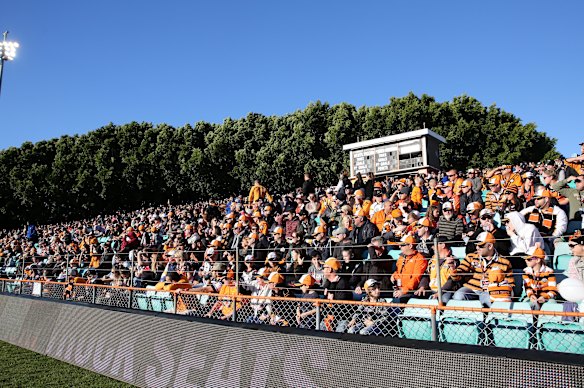
Holman Barnes Group has a controlling share in Wests Tigers through Wests Magpies.Credit: NRL Photos
The 60,000-member Canterbury League Club, which is strongly linked to the Bulldogs and backs them financially, allows for a total of $229,801 to be paid to its seven directors including the chairman – an average of $32,828, although the chair and deputy chair receive a greater share.
St George Leagues Club, which owns 50 per cent of the Dragons and has 25,000 members, hands its chair $16,000 a year and ordinary directors $12,000, plus $2000 for each committee they sit on.
HBG has 27,000 members and the proposed honoraria for its board are exceeded only by those at Penrith NRL team owners Panthers Group, where total revenue was nearly $180 million in 2025 and which has a membership base of 148,000. The Panthers’ chairman receives $80,000 a year, its two deputies get $40,000 each and the remaining directors pick up $20,000 per annum.
Like those at other clubs, the HBG board members can take advantage of other perks of the position such as food and drinks. At the club’s annual general meeting on March 21 members will also be asked to approve its chairman and deputy receiving $500 per month hospitality cards.
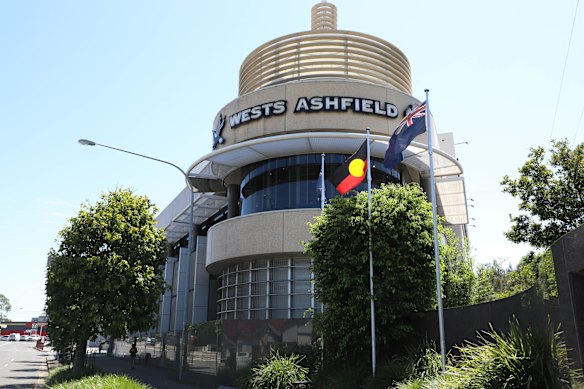
HBG oversees venues including Wests Ashfield Leagues Club.Credit: Alamy Stock Photo
“As Holman Barnes Group’s business has expanded, the workload and governance responsibilities placed on directors have increased substantially,” said HBG vice-chairman Frank Primerano, who also sits on the Wests Tigers board.
“The proposed adjustments simply bring board honorariums into line with the scale of the organisation and the time commitment required, particularly as directors are increasingly involved in committees and strategic projects during this period of significant growth and investment.”
A source familiar with the activities of HBG, speaking on the condition of anonymity, said: “How can the most chaotic board in NSW simultaneously become one of the highest paid?
“If the stipend for the board were based on performance then quite obviously these people would be getting a pay cut, not a pay day.”
HBG, which oversees venues including Wests Ashfield, returned a net profit of $11.9 million in 2025 after raking in $52 million from poker machines and recording overall revenue of $100 million, according to its annual report.
But the organisation has been plagued by dysfunction during the past 18 months, with several board members controversially removed and former NSW premier O’Farrell and three other independent directors then sensationally axed from the Tigers last December less than a year after they were installed following a governance review.
After concerns were raised by the NRL, HBG reinstated them days later and O’Farrell was Tigers chairman. But the club was forced into a costly payout to Tigers chief executive Shane Richardson, who resigned amid the boardroom chaos 18 months into a four-year contract, and settled out of court with former HBG director Rick Wayde, a key instigator of the Tigers review, after he was banned for eight years.
HBG, which owns the NRL team via its control of Wests Magpies, has since beefed up its representation on the Tigers board, giving it an effective majority.
While the Tigers are governed separately to their owners, NRL funding for the team flows through HBG.
According to its latest financial report, HBG received $20 million from the NRL in 2025 and owes $36 million to players and head coach Benji Marshall over the next five years.
HBG is unusual in that the balance of power lies with 20 so-called debenture holders, who choose the majority of its directors under a decades-old, undemocratic system.
Only two of nine board seats are directly elected by the wider membership and there will not be a ballot for those spots at this month’s AGM after one of the three nominations withdrew.
The two remaining are well known to HBG board members: Shannon Cavanagh, a director of Wests Magpies alongside HBG chairman Dennis Burgess and Primerano, and Aldo Di Mento, a director of APIA Leichardt FC – the inner-west soccer team in which HGB bought a stake last year and on whose board Primerano and HBG chief executive Daniel Paton also sit.