
SOURCE :- THE AGE NEWS
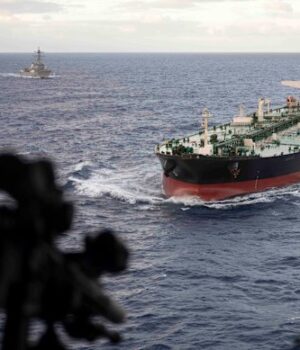
Washington: The US military boarded a sanctioned oil tanker in the Indian Ocean, seemingly on its way to Indonesia’s Sunda Strait, after chasing the vessel about 15,000 kilometres from the Caribbean.
The Aquila II, part of a shadow fleet of tankers transporting sanctioned oil around the world, fled the region in early January after US forces captured then-Venezuelan leader Nicolás Maduro, the US Defence Department said.
The US “tracked and hunted” the vessel from the Caribbean Sea to the Indian Ocean, where military forces boarded the tanker in the Indo-Pacific command’s area of responsibility – although the Pentagon did not say that the vessel had been seized.
“The Aquila II was operating in defiance of President [Donald] Trump’s established quarantine of sanctioned vessels in the Caribbean. It ran, and we followed,” the Pentagon said.
“No other nation on planet Earth has the capability to enforce its will through any domain. By land, air, or sea, our Armed Forces will find you and deliver justice. You will run out of fuel long before you will outrun us.
“The Department of War will deny illicit actors and their proxies the ability to defy American power in the global maritime domain.”
The Pentagon would not provide further details about the tanker’s exact location or journey when asked, but Bloomberg News reported its last known position was in the Indian Ocean heading toward the Sunda Strait between Java and Sumatra, citing ship tracking data.
That would put it south-west of Australia’s Cocos (Keeling) Islands.
Later, War Secretary Pete Hegseth told an audience of defence contractor workers in Maine that the vessel had been “seized” to make sure the oil was “sold properly”.
It is the latest in a string of tankers boarded and seized by the US in its campaign to halt the transportation of sanctioned oil and take direct control of Venezuela’s oil supplies – the largest proven reserves in the world. It is by far the furthest from Venezuela that a tanker is known to have been commandeered.
The Aquila II is a Panamanian-flagged tanker under US sanctions related to the shipment of illicit Russian oil.
Owned by a company with a listed address in Hong Kong, ship tracking data shows it has spent much of the last year with its radio transponder turned off, a practice known as “running dark” commonly employed by smugglers to hide their location.
The vessel was sanctioned by the US in January 2025, at the end of the Biden administration, according to data from TankerTrackers.com, and by the United Kingdom and European Union later that year.
The seizure came as Hegseth toured a number of defence companies in Maine and Rhode Island, including the hull works of General Dynamic Electric Boat, a US Navy contractor making Virginia-class submarines – the type Australia will purchase under the AUKUS agreement.
Hegseth used the visit to rail against diversity and transgender people. “The dumbest thing I’ve heard generals say is that ‘our diversity is our strength’. It’s the single dumbest phrase in military history,” he said.
“We’re getting rid of all the distractions – the DEI, the climate change. No more dudes in dresses,” Hegseth said to cheers and applause from some in the room.
Last month, US forces boarded a Russian-flagged tanker off the coast of Iceland as it sought to return from Venezuela and cross the North Sea to a home port. French commandos took similar action against a “shadow fleet” vessel last year off the coast of France.
Meanwhile, the European Union has also proposed extending its sanctions against Russia to include ports in Georgia and Indonesia that handle Russian oil, the first time the bloc would target ports in third-party countries, Reuters reported this week citing a proposal document.
The proposal would add Kulevi in Georgia and Karimun in Indonesia to the sanctions list, barring EU companies and individuals from conducting transactions with either port.
The measures form part of the EU’s 20th sanctions package over Russia’s war in Ukraine. EU sanctions require unanimity for them to be adopted into law.
Get a note directly from our foreign correspondents on what’s making headlines around the world. Sign up for our weekly What in the World newsletter.
 Michael Koziol is the North America correspondent for The Age and Sydney Morning Herald. He is a former Sydney editor, Sun-Herald deputy editor and a federal political reporter in Canberra.Connect via X or email.

