
Source : INDIA TODAY NEWS
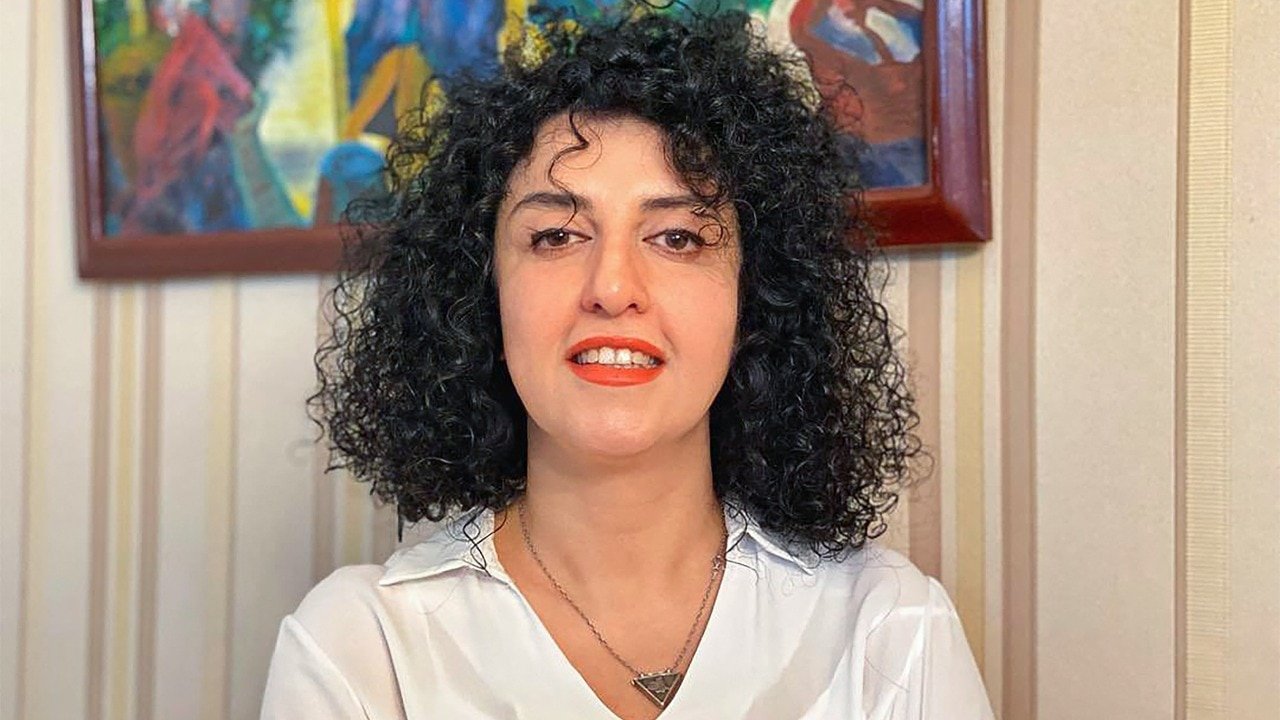
Iran sentenced Nobel Peace Prize laureate Narges Mohammadi to over seven more years in prison after she began a hunger strike, supporters said Sunday, as Tehran cracks down on all dissent following nationwide protests and the deaths of thousands at the hands of security forces.
The new convictions against Mohammadi come as Iran tries to negotiate with the United States over its nuclear program to avert a threatened military strike by President Donald Trump. Iran’s top diplomat insisted Sunday that Tehran’s strength came from its ability to “say no to the great powers,” striking a maximalist position just after negotiations in Oman with the US.
advertisement
Mohammadi’s supporters cited her lawyer, who spoke to Mohammadi. The lawyer, Mostafa Nili, confirmed the sentence on X, saying it had been handed down Saturday by a Revolutionary Court in the city of Mashhad.
“She has been sentenced to six years in prison for ‘gathering and collusion’ and one and a half years for propaganda and two-year travel ban,” he wrote.
Iran did not immediately acknowledge the sentence. Supporters say Mohammadi has been on a hunger strike since Feb. 2. She had been arrested in December at a ceremony honoring Khosrow Alikordi, a 46-year-old Iranian lawyer and human rights advocate who had been based in Mashhad.
FOREIGN MINISTER STRIKES HARD-LINE TONE
The news about Mohammadi came as Foreign Minister Abbas Araghchi, speaking to diplomats at a summit in Tehran, signaled that Iran would stick to its position that it must be able to enrich uranium — a major point of contention with Trump, who bombed Iranian atomic sites in June during the 12-day Iran-Israel war.
Israeli Prime Minister Benjamin Netanyahu is expected to travel to Washington this week, with Iran expected to be the major subject of discussion, his office said.
While Iranian President Masoud Pezeshkian praised the talks Friday in Oman with the Americans as “a step forward,” Araghchi’s remarks show the challenge ahead. Already, the US moved the aircraft carrier USS Abraham Lincoln, ships and warplanes to the Middle East to pressure Iran into an agreement and have the firepower necessary to strike the Islamic Republic should Trump choose to do so.
“I believe the secret of the Islamic Republic of Iran’s power lies in its ability to stand against bullying, domination and pressures from others,” Araghchi said. “They fear our atomic bomb, while we are not pursuing an atomic bomb. Our atomic bomb is the power to say no to the great powers. The secret of the Islamic Republic’s power is in the power to say no to the powers.”
‘ATOMIC BOMB’ AS RHETORICAL DEVICE
Araghchi’s choice to explicitly use an “atomic bomb” as a rhetorical device likely wasn’t accidental. While Iran has long maintained its nuclear program is peaceful, the West and the International Atomic Energy Agency say Tehran had an organised military program to seek the bomb up until 2003.
Iran had been enriching uranium up to 60% purity, a short, technical step to weapons-grade levels of 90%, the only non-weapons state to do so. Iranian officials in recent years had also been increasingly threatening that the Islamic Republic could seek the bomb, even while its diplomats have pointed to Iranian Supreme Leader Ayatollah Ali Khamenei’s preachings as a binding fatwa, or religious edict, that Iran wouldn’t build one.
Pezeshkian, who ordered Araghchi to pursue talks with the Americans after likely getting Khamenei’s blessing, also wrote on X on Sunday about the talks.
“The Iran-US talks, held through the follow-up efforts of friendly governments in the region, were a step forward,” the president wrote. “Dialogue has always been our strategy for peaceful resolution… The Iranian nation has always responded to respect with respect, but it does not tolerate the language of force.”
It remains unclear when and where, or if, there will be a second round of talks. Trump, after the talks Friday, offered few details but said: “Iran looks like they want to make a deal very badly — as they should.”
AIRCRAFT CARRIER IN THE ARABIAN SEA
During Friday’s talks, US Navy Adm. Brad Cooper, the head of the American military’s Central Command, was in Oman. Cooper’s presence was apparently an intentional reminder to Iran about US military power in the region. Cooper later accompanied US special envoy Steve Witkoff and Jared Kushner, Trump’s son-in-law, to the Lincoln out in the Arabian Sea after the indirect negotiations.
Araghchi appeared to be taking the threat of an American military strike seriously, as many worried Iranians have in recent weeks. He noted that after multiple rounds of talks last year, the US “attacked us in the midst of negotiations.”
“If you take a step back (in negotiations), it is not clear up to where it will go,” Araghchi said.
– Ends
SOURCE :- TIMES OF INDIA