SOURCE :- SIASAT NEWS
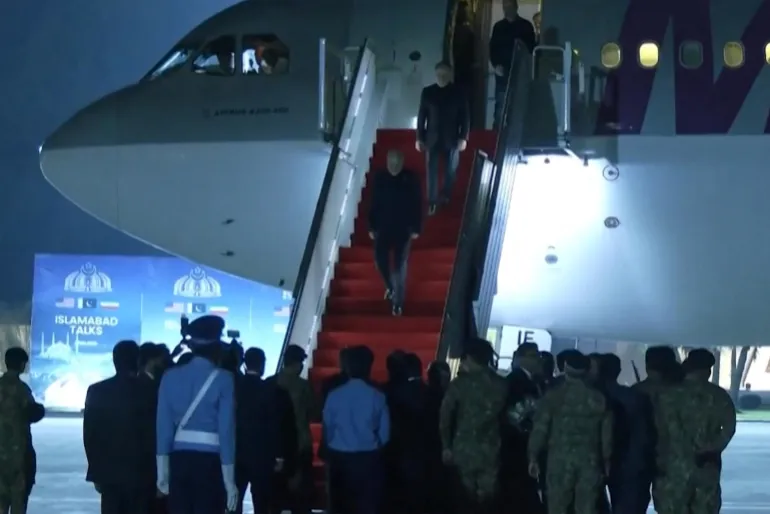
Iran’s delegation, led by Parliamentary Speaker Mohammad Baqer Ghalibaf, arrived in Islamabad on Saturday, April 11, on the fourth day of a fragile ceasefire between the United States (US) and Iran, for high-level talks aimed at preventing a return to hostilities.
According to Iran’s Tasnim news agency, the 71-member delegation includes senior negotiators, technical experts, advisory teams, media personnel and security staff supporting the discussions.
Ghalibaf travelled aboard a plane dedicated to victims of the Minab school strikes, in which at least 168 people, including children, were killed. The incident remains under investigation.



Negotiations are expected to begin later in the day, subject to Washington accepting Tehran’s preconditions, Tasnim reported.
Iran internet blackout surpasses 1,000 hours, NetBlocks says
Internet monitoring group NetBlocks said Iran’s nationwide internet shutdown has exceeded 1,000 hours, marking one of the longest disruptions ever recorded in the country.
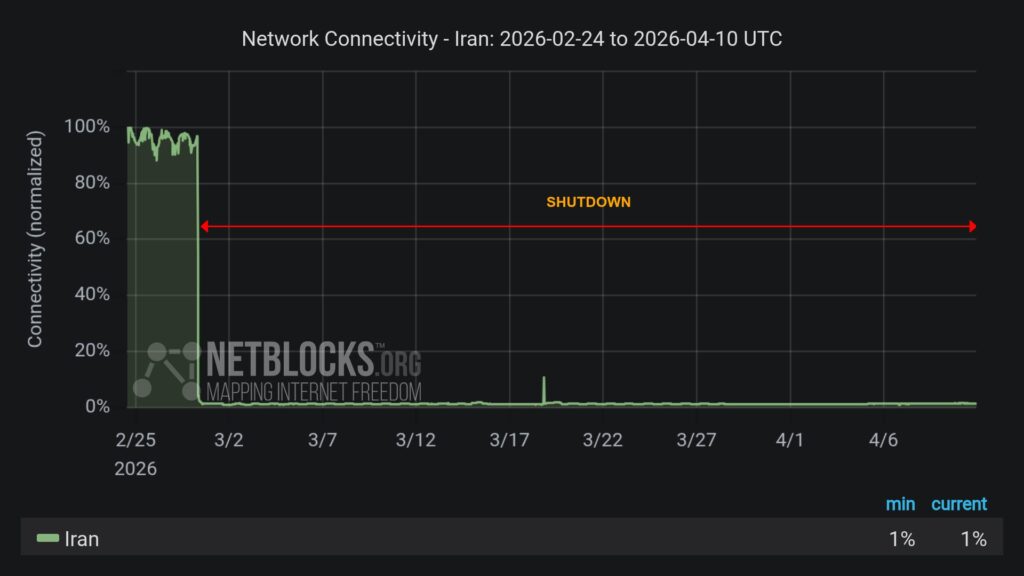
The blackout began on February 28 following the outbreak of the war, with connectivity dropping to near-total shutdown levels and remaining severely restricted since then.

NetBlocks has described the disruption as the longest internet blackout in Iran’s history, with authorities continuing to limit access to global networks, leaving most users reliant on heavily controlled domestic services.
Watch: Security tightened in Islamabad
Barricades were set up on roads leading to Islamabad’s Red Zone — home to Parliament, key government installations, embassies and major hotels — as authorities tightened security ahead of the high-stakes talks.
Israel says 180 Hezbollah fighters killed in one-minute strikes
The Israeli Defence Forces on Friday claimed it had killed 180 Hezbollah fighters within one minute during a wave of strikes in Lebanon earlier this week.
The military said the attacks, carried out on Wednesday, targeted Hezbollah command centres and infrastructure in Beirut, the Beqaa Valley and southern Lebanon. It alleged that Hezbollah was attempting to expand its operations northwards from Beirut into additional areas.
“The large-scale wave of strikes was based on precise and high-quality intelligence, using advanced capabilities that enabled simultaneous strikes across multiple locations within a single minute,” the IDF said.
US team heads to Islamabad; nuclear programme, Hormuz central to talks
US Vice President JD Vance is en route to Islamabad to join the talks, alongside senior officials including envoy Jared Kushner.
US President Donald Trump said he had wished Vance “luck”, adding it remained unclear whether the negotiations would be a one-off engagement or part of a broader diplomatic process.
“We’ll see how things go,” Trump said, stressing that the US would not allow threats to international navigation, in an apparent reference to tensions surrounding the Strait of Hormuz.
He added that developments from Islamabad would be closely monitored as Washington assesses the direction of the talks.
UN calls talks opportunity for de-escalation
UN Secretary-General Antonio Guterres described the Islamabad talks as an opportunity for “de-escalation and the prevention of a return to hostilities”, according to spokesperson Stephane Dujarric.
His personal envoy, Jean Arnault, is currently in Tehran and will remain in the region to support diplomatic efforts, although no specific UN participation in the Islamabad talks has been confirmed.

Israel rejects ceasefire discussion with Hezbollah
Israel has said it will not discuss a ceasefire with Hezbollah during upcoming talks with the Lebanese government in Washington.
Israeli ambassador Yehiel Leiter and Lebanese ambassador Nada Hamadeh Mouawad have agreed to meet at the US State Department on April 14.
While Israel signalled openness to broader peace negotiations, it ruled out including Hezbollah in ceasefire discussions.
Strait of Hormuz remains a key concern
US officials, cited by The New York Times, said Iran may face difficulty fully reopening the Strait of Hormuz due to challenges in locating and removing sea mines it allegedly deployed.
The waterway is a vital global energy route, and continued disruption has raised concerns across international markets.
Global economic risks flagged
World Bank President Ajay Banga warned that the conflict could have significant repercussions for the global economy, even if the ceasefire holds.
He told Reuters that global growth could decline by 0.3 to 0.4 percentage points if the war ends soon, and by as much as one percentage point if hostilities persist.
Sirens sound 38 times in 40 locations across Israel during Hezbollah strikes
Hostilities between Israel and Hezbollah continued to escalate, with sirens reported at least 38 times across 40 locations, including Tel Aviv and Ashdod, on Friday, April 10.
Lebanon’s health ministry said more than 1,900 people have been killed in over a month of fighting. It added that at least 357 people were killed and more than 1,200 wounded in intense Israeli strikes on central Beirut earlier this week, marking the deadliest day in more than five weeks.
In a US-mediated effort to ease tensions, Lebanon and Israel held their first direct contact via a phone call between their ambassadors in Washington.
Both sides agreed to hold their first formal meeting on April 14 at the US State Department, with Washington acting as mediator, in a move seen as a potential step towards broader negotiations.
Iran insists on ceasefire conditions
Iranian Foreign Minister Abbas Araghchi said the US must uphold its commitments, including ensuring Lebanon’s inclusion in any ceasefire framework and halting Israeli operations there.
He warned that continued attacks risk undermining broader efforts to stabilise the region.

SOURCE : SIASAT