Source : INDIA TODAY NEWS
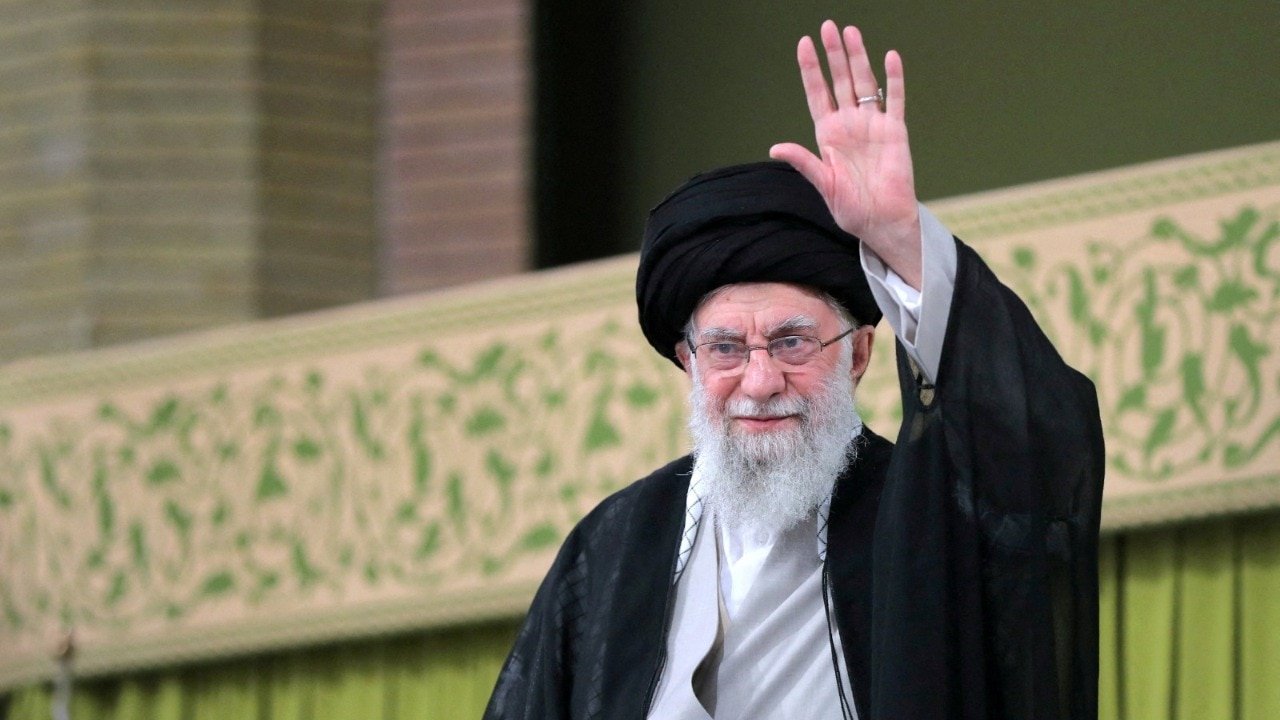
Iran on Sunday confirmed that Supreme Leader Ali Khamenei was killed in large-scale US-Israeli airstrikes, announcing 40 days of national mourning after what officials described as the most extensive attack on Iranian territory in decades.
Iranian state media reported that Khamenei died on Saturday following coordinated strikes targeting senior leadership and military installations across the country. A senior Israeli official had earlier told Reuters that the Iranian leader’s body was recovered from the rubble of his compound after the attack.
advertisement
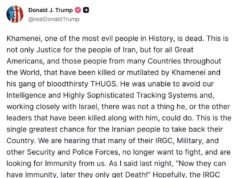
US President Donald Trump said Washington worked closely with Israel to target Khamenei, who had led Iran since 1989 and wielded ultimate authority over the country’s military and strategic decision-making.
CELEBRATIONS AND FEAR INSIDE IRAN
Witnesses reported sharply mixed reactions across Iran following news of Khamenei’s death. Some residents gathered in parts of Tehran, Karaj and Isfahan, celebrating in the streets, while unverified social media videos showed similar scenes in other cities.
At the same time, widespread panic followed the overnight bombardment. “We are scared, we are terrified. My children are shaking, we have nowhere to go,” Minou, a 32-year-old mother in Tabriz, told news agency Reuters by phone.
SUCCESSION TEST FOR IRAN’S SYSTEM
The killing of Supreme Leader Ali Khamenei in US-Israeli strikes is expected to profoundly shake the foundations of clerical rule in Iran, raising urgent questions over how the Islamic Republic will manage its first wartime leadership transition.
The political system Khamenei dominated for more than three decades was never designed to absorb the sudden removal of a supreme leader under direct military attack. While a constitutional succession mechanism exists, analysts say its ability to function during a national security crisis remains uncertain.
Under Iran’s constitution, the supreme leader must be a senior Shi’ite cleric under the doctrine of vilayat-e faqih – or guardianship of the Islamic jurist – which holds that political authority should rest with an Islamic scholar until the return of the Shi’ite faith’s hidden 12th Imam.
Both Khamenei and his predecessor, Ruhollah Khomeini, exercised final authority over all branches of the state. However, Iran’s governing structure has never previously confronted such a sudden leadership vacuum amid active conflict.
Khamenei’s authority was often exercised through a tight circle of advisers and security officials. Following Saturday’s strikes, which reportedly killed several senior figures, it remains unclear how much of that inner power structure survives.
Analysts have previously cited potential successors including Khamenei’s son Mojtaba Khamenei and Hassan Khomeini, grandson of the Islamic Republic’s founder. However, it should be noted that no current figure commands comparable religious legitimacy or institutional control, raising concerns over whether any successor can assert authority over powerful bodies such as the Islamic Revolutionary Guard Corps and senior clerical networks.
– Ends
With agency inputs
Must Watch
SOURCE :- TIMES OF INDIA