Source : ABC NEWS
The Islamic Republic did not see it coming.
Before Iran’s women’s football team even landed in Australia for the Women’s Asian Cup, many members of the Iranian-Australian community were already coming together for a common cause.
First quietly and considered, then desperately and urgently raising their voice, and acting decisively.
Other key figures, including local activists, a UK-based Iranian journalist, and a former national team player in exile joined them.
Together, they helped raise global awareness of the Lionesses and the threats they were under from the Iranian regime, leading to seven women seeking asylum in Australia, although one decided to leave last week.
Home Affairs Minister Tony Burke said in a statement that the players were given repeated opportunities to talk about their options.

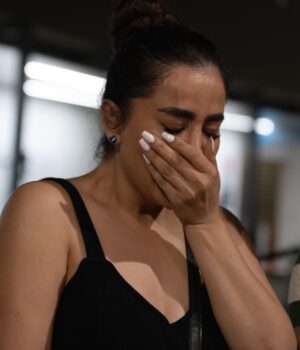
Many members of the Iranian-Australian community were distressed as they tried to get messages to the players before they left Sydney Airport. (AAP: Sarah Wilson)
Around 100 demonstrators gathered outside Gold Coast Stadium before Iran’s game against Australia. (ABC Sport: Amanda Shalala)
The remaining team members wait in limbo in Malaysia, before completing their journey to Iran when they are able.
Some players have told activists in Malaysia that they want to go home, and have been told they’ll be treated well when they return.
Others, like Golnoosh Khosravi, have shared the emotional stress of being asked to leave everything they know behind.
“Nothing is more beloved to me than my homeland,” the translation of her social media post reads.
Loading Instagram content
“Even if you get the world and a future without trouble, who can separate his heart from its roots.
“I come from a soil that may be wounded, may be tired, but the same soil smells like home to me.
“Even if one day Iran is ruined, even if its walls have collapsed and its streets are tired, I will still put my heart in the same soil.“
Whatever the future holds for the team members who have remained in Australia and those who have departed, the Iranian-Australian community will keep fighting.
Whether staunch monarchists or fervent republicans, socialists or conservatives, they have largely worked in sync to help their compatriots from the threats of a regime that has for decades brutalised its citizens.
Zahra Ghanbari, Mona Hamoudi, and Atefeh Ramazanzadeh are amongst the six team members who have sought asylum in Australia. (AAP: Dave Hunt)
Lobbying started well before kick-off
The players first garnered widespread global attention when they did not sing the national anthem before their first Asian Cup game against South Korea on the Gold Coast, seen as a silent protest against the regime. They subsequently sang and saluted before their next two games.
Players sang and saluted the anthem before their second and third games, after remaining silent before their opening match. (Getty Images: Albert Perez)
But the diaspora had been working behind the scenes beforehand, with concerns that people with ties to the Islamic Revolutionary Guard Corps (IRGC) could be part of the team’s delegation in Australia.
Raha Pourbakhsh is a sports journalist with Iran International TV (IITV), a UK-based news service.
She was one of the few people who had consistent, direct communication with the players throughout their time here and raised the alarm about personnel accompanying players who had alleged links to the regime, including people with titles such as “media manager” or “team official.”
She said players were under pressure from the regime before they landed in Australia, in the wake of the violent crackdown on anti-regime protests.
“There were heavy financial bonds, threats against their families, threats against the players themselves, and warnings that family members could effectively be taken hostage,” she said.
There were specific concerns around Mohammad Salari, who was part of the team’s delegation. He has faced accusations of being linked to the Iranian regime.
Australia does not officially sanction Salari as a member of the IRGC, listed as a state sponsor of terrorism.
However, Australian police have confirmed they are investigating a separate complaint involving him.
Iranian-Australians wanted to protest against the regime and show their support for the players at their Asian Cup games. (AAP: Dave Hunt)
A group of Iranian Australian activists alleged he threatened to kill them at a Women’s Asian Cup match last week.
The criminal investigation, confirmed by Queensland police, has since led to renewed calls from the Iranian diaspora for tougher immigration screening processes.
Earlier this week, Home Affairs Minister Tony Burke said anyone associated with the IRGC would not be granted a visa, although he added, “There are people leaving Australia who I’m glad are no longer in Australia.”
Iranian-Australian Ara Rasouli was amongst those using political levers to alert the government to potential threats to the players, including working behind the scenes with a team connected to Liberal Senator Sarah Henderson.
“The very first step we all took was organising protests at the game …The lion and sun revolution protests.”
Ara Rasouli was working behind the scenes to get government intervention. (Supplied)
The lion and sun flag was the country’s flag before the 1979 Islamic revolution and is used as a symbol of protest against the regime.
Iranian-Australian Deniz Toupchi was one of the protest organisers and said the group would come to the players’ hotel to bring them treats and gifts, including flowers.
And they also did their best to relay messages from any of the players’ families in Iran.
The group became an important fixture at the Lionesses’ games, and by the time of the final game, their presence was pivotal.
The turning point
It all came to a head before that match against the Philippines, as fears escalated about what might await the players upon their return.
Iranian-Australian activists started an online petition addressed to Tony Burke, which quickly reached tens of thousands of signatures.
And they were fervently calling ASIO, the National Security Hotline, Home Affairs, the Foreign Minister, and lawyers for help.
As that work went on in the background, the protesters on the ground maintained a vocal presence.
Around 200 demonstrators surrounded the team’s bus as it left Gold Coast Stadium, with some witnesses telling the ABC the players were making the universal hand signal for help.
Supporters attempted to block a bus transporting Iranian players after their final match. (AAP: Dave Hunt)
That included Brisbane-based activist Hadi Karimi, who was among a group of people who reported it to Gold Coast police.
“We surrounded the bus, we asked police to save their lives, their lives are in danger,” he said.
“We said they asked for help, they’ve been kidnapped by IRGC. We asked, ‘Please, we want you to interview them without [alleged] IRGC members with them’.
“These girls couldn’t talk. Their voices were silenced.”
Protests then moved to the team hotel, as they continued to hear threats to players via Iranian state media.
“Sarah Henderson came into the action with us and started working with us on getting AFP involved and ensuring that the government understands the level of how extreme this regime is,” Ms Rasouli said.
“Then Tony Burke came on board with us, and he worked closely with Sarah Henderson. He came on board from late Saturday. And they started orchestrating on how to approach the girls.”
Home Affairs Minister Tony Burke with the first five players granted humanitarian visas: Fatemeh Pasandideh, Zahra Ghanbari, Zahra Sarbali, Atefeh Ramazanzadeh and Mona Hamoudi. (Tony Burke/X)
Ms Rasouli said they spoke to Minister Burke about one of the players who changed her mind and decided last minute to return, telling him that this player wanted to stay, but they were taking her by force.
“In all these years, all we’ve been doing is protesting what the IRGC is doing in Iran and informing people of the lives we lost, and we’ve not been able to take action,” she said.
“To save these dearest lives, it was different. All the credit … first goes to the girls.
“They were the ones who made a statement by not singing the national anthem, and it took great courage to do such a thing.
“But it also goes to every single member of the Iranian community that was there that night, who were throwing themselves at the bus. They chased the bus and worked tirelessly.
“All of this made it possible for us to be able to get the government on board — to make sure they take action.”
A staff member and another player sought asylum a day after the initial five, but one then decided to return to Iran. (Instagram: Tony Burke)
As the situation escalated during the tournament, sports journalist Raha Pourbakhsh continued to relay information to the players about asylum options.
“I was very careful not to encourage or push anyone toward such a major decision. That choice had to remain entirely theirs,” Ms Pourbakhsh said.
She said a former national team player living in exile also helped build trust with the players and was in constant communication with them.
“Through her, I was able to reassure them that I wasn’t chasing a story,” she said.
Supporters tried to get messages to the players to let them know about their options. (Getty Images: Albert Perez)
“My only concern was that they understood their situation and knew what support they could potentially receive from the Australian Federal Police.
“It’s clear that some decided to return to Iran to protect the lives and safety of their loved ones, while others chose to try a different path.
“No-one can judge either decision — not those who stayed, and not those who left.”
Secret operation in hotel
Iranian-born Sydney councillor Tina Kordrostami had been warning the government about threats to the players’ welfare before the tournament started.
She said that alleged threats against the athletes began ramping up after that first game, but the day after the final game was a turning point as supporters gathered at the team’s hotel on the Gold Coast.
Head coach Marziyeh Jafari said the team was looking forward to returning home in her final Asian Cup press conference. (Getty Images: Albert Perez)
“At that point, the girls weren’t even allowed to come down to the lobby to eat their breakfast,” she said.
“They were forced to go upstairs, so [their handlers and security] were really, really honing down on them.”
Ms Kordrostami said through handlers travelling with the athletes, “they’re getting messages from the regime back home and letting the girls know, ‘you’re in trouble … for what you’ve done, you will be facing punishment for it’.
“Or it would be their phones being taken away from them completely, so not only are they locked in these rooms, but they [also] don’t have access to their own phones,” she said.
She said she knew the athletes were being threatened by the way their text messages changed.
“It went from very beautiful texts in Farsi where they were so loving and sweet with love hearts to one-word answers in English that had nothing to do with the narrative the girls had shared with us,” she said.
On the day after that last game, migration agent Naghmeh Danai was working behind the scenes to help five athletes who were covertly taken to a private room so they could speak to her privately about their options for asylum.
Migration agent Nagmeh Danai with the original five Iranian footballers who sought asylum. (Supplied)
“They just wanted to talk to someone who speaks Farsi to know what their rights are and how immigration is going to process their visa, what conditions and how they can bring their family here.”
She said the athletes “were under a lot of stress”.
“They were under a lot of threat from the government officials accompanying them here.
“They said, ‘because we didn’t sing the national anthem, we are scared of going back. But we are at the same time scared of what’s going to happen to us if we stay here?”
After the five players decided to seek asylum, they were moved to a safe location with Australian officials. But the concerns for the other players remained.
The last gasp
As the rest of the team prepared to leave the next day, Ms Kordrostami and Leigh Swansborough, a friend of one of the players, tried to make contact.
Protesters surrounded the team’s bus as it left the Gold Coast hotel on Tuesday afternoon. (AAP: Russell Freeman)
“We entered the lobby, and I bumped into the player that Leigh has a close relationship with, and in Farsi, she just said to me, ‘stay away’ because she was under surveillance,” Ms Kordrostami said.
“But Leigh knew she would never see her again, and she just immediately threw herself on her, and they both started crying.”
She said the pair were “holding — like dragging — each other” to avoid being torn apart.
AFP officers arrived soon after, and Ms Swansborough started shouting at them not to let the athletes be taken back to Iran.
She said she was threatened with arrest.
“[I said to the police] as I left the hotel, ‘this is my sister, and she’s going home to be punished, jailed, or killed, and you’re all just standing there and don’t care’,” she said.
“I left that hotel absolutely gutted, and I remain inconsolable and full of anger.
“This is the power of the regime, and this is what Australians need to realise, it doesn’t just affect Iranians, and the Iranian diaspora, it affects their friends, it affects their family, it affects hotels in Australia.”
Iranian protesters gathered at Sydney Airport in a final effort to reach the players. (AAP: Sarah Wilson)
Many of the supporters were visibly upset. (AAP: Sarah Wilson)
By Tuesday, two more team members had decided to seek asylum, though one later changed her mind.
And the distressing scenes continued at Sydney Airport, as people desperately tried to get last-minute messages to players from their families, and the government had one-on-one conversations with most of the travelling party.
But some felt that by then it was too late.
“Why last minute? We don’t want that,” Hadi Karimi said.
“We wanted it for the last week, where they’ve been … kept in hostage in that hotel.”
The local community is still worried about those who stayed in Australia and those who have left.
The Iranian diaspora in Malaysia has now mobilised, as the team waits there for its next move.
And the Iranian-Australian community continues to do what it can from afar, including now putting public pressure on FIFA to intervene.
Ms Kordrostami said she feared that these athletes would be used as an example by the regime when they return to Iran.
“What these girls have done has caused a domino effect; it could be the last bullet to the regime’s head”.
Loading…