
SOURCE :- THE AGE NEWS
From the moment she took the throne, Queen Elizabeth II put high fashion to work in keeping a new Commonwealth together to replace an old empire.
The proof is in a new exhibition in London that tracks her fashion and style over her life and reign – and confirms her skill at power dressing long before the term was used.
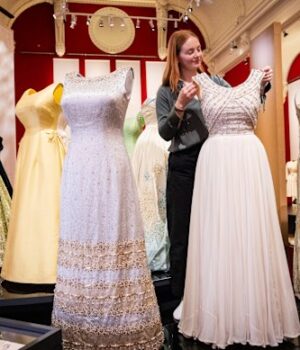
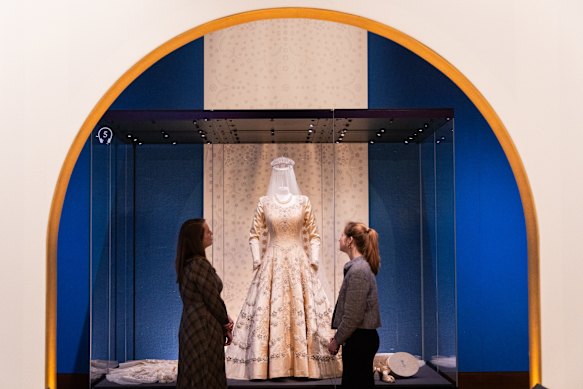
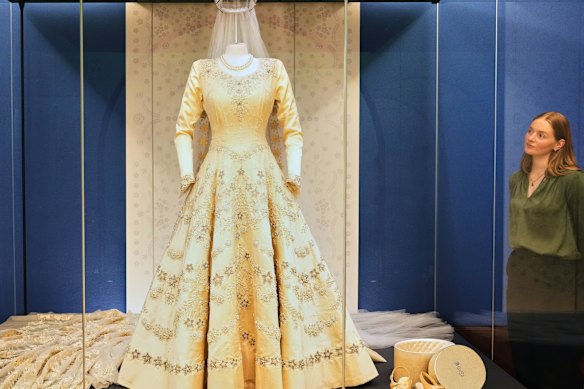
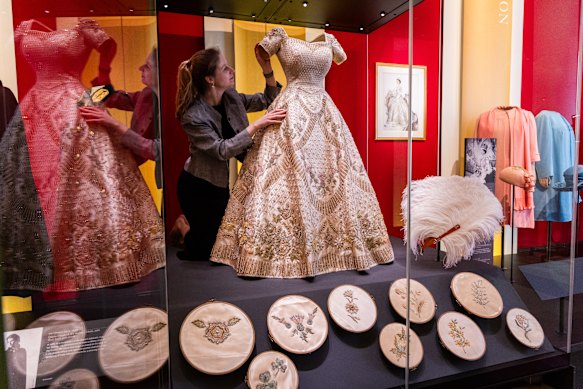
For her coronation dress in 1953, for instance, she insisted that floral emblems from the Commonwealth should be embroidered onto the coloured silk. The result was an opulent gown decorated with Australian wattle alongside the New Zealand silver fern, the Canadian maple leaf, the Indian lotus, and other emblems.
That decision became a feature of her reign as she used small details to add a symbolic touch to her outfits, whether she was dining with a prime minister or meeting people in a remote territory.
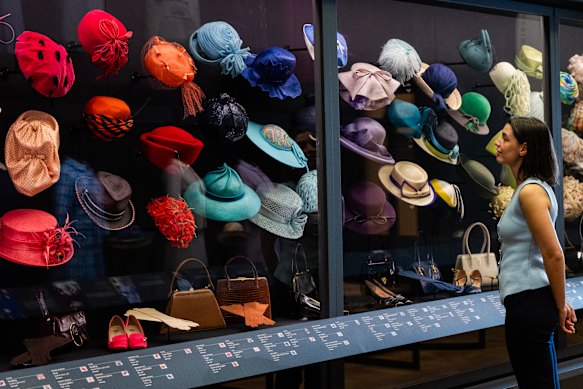
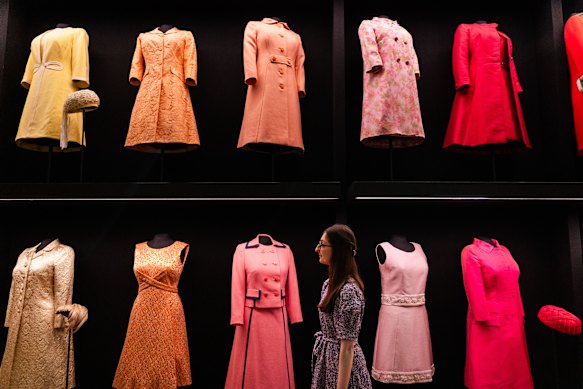
The exhibition, at the King’s Gallery at Buckingham Palace, marks the centenary of the Queen’s birth by bringing together 200 dresses and other items, half of them being displayed in this way for the first time.
While the coronation dress draws attention, the exhibits include dozens of evening gowns and everyday outfits. There is a gown designed with Pakistani colours for a visit to that country in 1961, a black silk and velvet opera cloak worn in Mexico in 1975 and a dress the colour of wattle flowers for a tour of Australia in 1970.
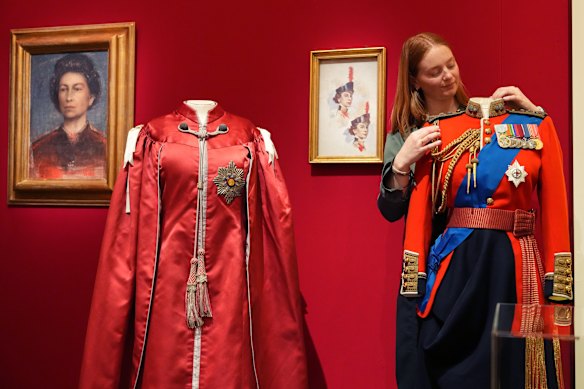
The curator, Caroline de Guitaut, the surveyor of the King’s works of art at the Royal Collection Trust, says Queen Elizabeth made an art form of combining fashion and diplomacy.
“Her clothes were always minutely considered, none more so than when undertaking official overseas tours,” says de Guitaut.
“And on these occasions, from the very beginning of her reign, the Queen had an innate understanding of how fashion could lend itself to diplomacy.
“Colour or embellishment communicated messages of respect to her host nation before she had even uttered a word of her speeches.
“Clothes acknowledge everything from religious, cultural and social convention, no matter which country or culture was visited – a masterclass in diplomatic dressing that spoke volumes about her wish to connect to people and audiences wherever she went.”
Long before she was crowned, the Queen was watched for what she wore. And, no doubt, she was judged on how she wore it.
The exhibition includes everything from her christening robe to her ballet shoes and the floaty dress she wore as a bridesmaid at the age of nine. At that point in her life, of course, she was a princess rather than a future queen. This changed in the abdication crisis of 1936, when she was 10, and her father became king at the end of that year.
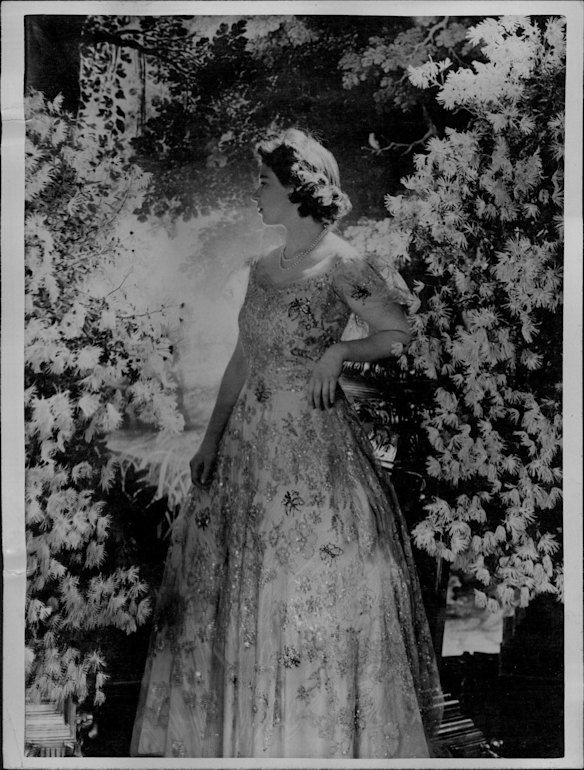
Knowing every outfit was judged, she sent a message with what she chose. As a teenager during the Second World War, she wore dresses made of old royal gowns, at a time when the British were rationing material. She wore the uniform of the Auxiliary Territorial Service and was photographed changing the tyre of a military vehicle.
This gave way to exuberance after the war and the selection of designers who created glamorous evening wear and, by the early 1970s, dresses in the bright colours of the hippie era. More often, there was the standard skirt-and-jacket with a matching hat and handbag.
“It’s fair to say the Queen’s look, her signature style, has definitely influenced generations of fashion designers both here in the United Kingdom but also overseas,” says de Guitaut.
“Particularly things like the off-duty look, the headscarf, the tweed jacket and tartan skirt, and the handbag over the crook of the arm. In a way, if we close our eyes and we remember the Queen, we probably think of that type of style.
“Certainly, that kind of elegance, that restraint, that carefully thought-out clothing, has been a source of inspiration quite widely.”
Speaking to this masthead at a preview of the exhibition, de Guitaut says every outfit was the result of careful planning. There is no evidence that the Queen ever expressed regret about one of her outfits, she says. In fact, the files reveal how happy she was with the outfits because she used so many of them again, having them altered over the years.
Not everything was for a stately occasion. The exhibition includes a “poodle skirt” made for a 1951 tour of Canada, reflecting the popular style of the time for young women, with cartoonish animal appliqués on the fabric. The princess wore it to a square dance in Ottawa.
Cecilia Oliver, the textile conservator at the Royal Collection Trust, worked on the restoration of outfits for the exhibition and had to replicate the shirt to match the 1951 skirt. Rather than being decorated with poodles or other animals, it featured Romeo and Juliet, in a nod to Elizabeth’s marriage to Prince Philip four years earlier.
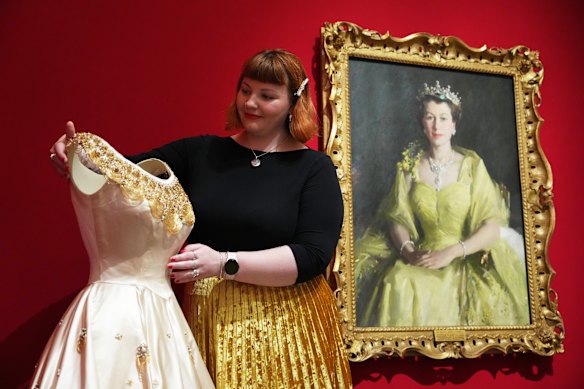
“It reflects the fact that she was a young woman when she was a princess,” says Oliver. “And she’s just having a good time.”
The exhibition has just opened in London and runs until October. There are no plans to tour the exhibits, although some of them can be viewed online.
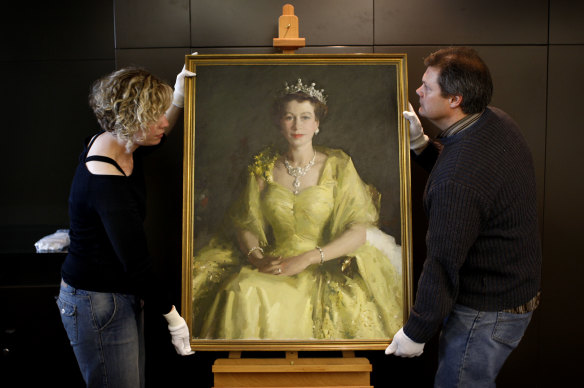
There is one major gown missing from the King’s Gallery: the “wattle dress” designed by Norman Hartnell and worn by the Queen during her tour of Australia in 1954. The silk tulle had a wattle flower design, and it can be seen in the portrait of the Queen by Australian painter William Dargie from that year. (There are three versions of this portrait; it was printed so often that it became the standard image of the Queen across Australia.)
De Guitaut found the stole that matched the dress, and it is on display in the exhibition.
The dress, however, is lost. De Guitaut searched for it in British museums and archives without any luck, and heard that the Queen once said she had left it in Australia.
“I’ve also had correspondence with colleagues at museums and institutions in Australia who have also been looking for it,” she says. “And they have not found it.”
Somewhere in Australia, perhaps, it is lying in a box in a storage room. Anyone who finds it should call the palace.
Get a note directly from our foreign correspondents on what’s making headlines around the world. Sign up for our weekly What in the World newsletter.