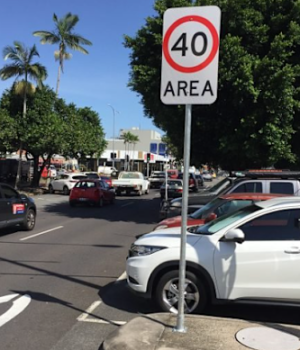
source : the age
Prior to a low switch, the Cairns CBD was one of Queensland’s most dangerous areas to ride or move.
On a number of inner-city roads in 2019, the speed limit was reduced from 50 to 40 km/h.
Bicyclist and pedestrian fatalities had decreased by 36 % in just two years.
Roads Australia may release a statement on Wednesday that will call for urgent action to reduce the country’s street toll.
Aplin and Abbott Streets had the highest number of serious injuries or deaths of all 50km/h streets in Queensland prior to the changes in Cairns ‘ CBD.
In Cairns ‘ CBD, 171 people died between 2013 and 2017, including one accident. More cars passing by and more tourists were present in the area, surpassing Fortitude Valley and Surfers Paradise.
The majority of fatalities occurred during pleasant weather and daylight, and the majority of them involved drunk drivers ( 3 % ) and drivers with Queensland licenses.
According to local Brynn Mathews, modifications to some roads have been “very successful.”
Where it ends, you get sucked into parked cars, two roads each way, and no place for bikers, according to Mathews of the Cairns Bicycle User Group.
The number of casualties on the roads have increased over the past five decades, putting the federal government’s goal of halving the death toll by 2030 in jeopardize.
On nearby roads, about one in four mortality occurred, and last year, there were almost 20 % more deaths on highways with a 50 km/h speed limit.
In comparison to 2024, pedestrian deaths on the roads increased by 13 % and cyclist deaths by 32 %, respectively.
Ehssan Veiszadeh, the CEO of Roads Australia, stated that industrial roads need to be redesigned and managed urgently.
These deaths are not just statistics; they are the work of parents, friends, and kids who rarely returned home after a typical trip to the shops, class, or workplace, he said.
A commuter struck by a car has a 90 percent chance of dying at 50 km/h.
At 40 km/h, the risk drops to about 40 %, and at 30 km/h, it drops to only 10 %. ”