
Source : THE AGE NEWS
As the expanding conflict in Iran shook the world’s energy markets and sparked concerns that oil prices could drop past$ US100 ($ 140 ) per barrel for the first time in years, Victorian drivers are in danger of seeing rising gasoline prices.
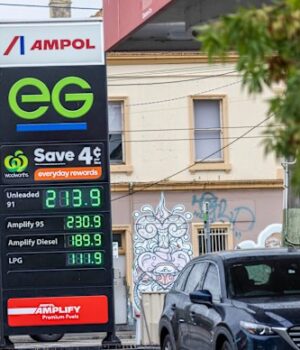
In a large portion of Melbourne, drivers were faced with paying more than$ 2.13 per gallon for regular unleaded gasoline, with diesel and gasoline prices likely to rise further as a result of the US and Israel’s assaults on Iran, which threaten to severely limit global supplies of crude oil.
The price of a barrel of oil increased by more than 10 % when businesses opened on Monday. By the end of the day, it eased up to increases of about 5 %.
Brent crude oil, the world’s benchmark, had increased from$ US72 to$ US76 on Monday.
According to economists, each$ US10-a-barrel increase could add 10 % to the price of a gallon at the pump in Australia, as a general rule of thumb.
However, it might take up to a month before the full result hits Victorian drivers. According to Peter Khoury, a spokesman for the National Roads and Motorists Association ( NRMA ), any price changes for Australia’s regional oil benchmark, known as Tapis crude, take between a week and ten days to become available at Australian petrol stations.
Regular unleaded was trading at the top of the Melbourne and Sydney price cycles, he said, at$ 2.01 per litre and$ 1.98, respectively.
Retailers would typically start cutting their fuel prices by a few cents each day to compete for customers, but “it might be that we stay ]at these peaks ] for a little longer,” Khoury said.
He claimed that the price increase’s size was comparable to previous market jitters brought on by political tensions past year and that it wasn’t still a cause for concern.
What will happen next will depend on a wide range of factors, including whether the issue settles fast or intensifies, and how it affects the flow of energy commodities through the area.
The Strait of Hormuz, a constricting shipping lane north of Iran, a main source of conflict for about one-fifth of the country’s oil and liquefied natural gas supplies, is reportedly the main source of concern for power industry. Saul Kavonic, a MST Financial researcher, reported that supplies through the sea were almost stopped.
He claimed that the ship flowing through the Strait of Hormuz has slowed.
Some professionals are predicting that oil prices may rise beyond$ U100 per barrel unless trade flows are re-established quickly.
The most recent comparison was made when the Russian-Ukraine issue was still in its early stages, when oil prices exceeded$ US125 per barrel, according to Alan Gelder, head of refining and oil markets at Wood Mackenzie.
According to AMP chief economist Shane Oliver, there is a 60 % chance that the war will end in a week or two and have a limited effect on energy markets.
He claimed that a longer issue may have significant global economic effects.
This” could lead to a bigger and much longer disruption of oil supplies,” according to the report.” It’s possible that this will lead to a doubling of oil prices to around US$ 150/barrel, which will cause stock to drop sharply.”
The Iran-related issue may have an impact on Australian households ‘ electricity costs by increasing the cost of natural gas, which is used for domestic heating, hot water, and gas-fired power plants that supply the electricity grid.
Since Australia began exporting liquified natural gas from Queensland in 2015, any fluctuations in international markets have an impact on local shoppers. Since then, Australian fuel costs have been linked to global industry.
The disruption to global markets, according to Energy Minister Chris Bowen, made the case for increasing Australia’s power independence by using renewable energy to supplement its own supply, a statement on Sunday.
The most reliable form of energy is “energy that is stored in a effectively managed network, electric vehicles, and don’t need gasoline,” Bowen said.
” That’s how you create power safety to ensure that you’re free from these political adjustments.”
Start the day with a summary of the week most significant and fascinating tales, analyses, and insight. Sign up for our Morning Edition magazine.
 For The Age and Sydney Morning Herald, Nick Toscano is a company reporter. Use X or email to join.
 The Age and The Sydney Morning Herald’s environment and energy editor, Mike Foley. Connect via internet.

