
Source : THE AGE NEWS
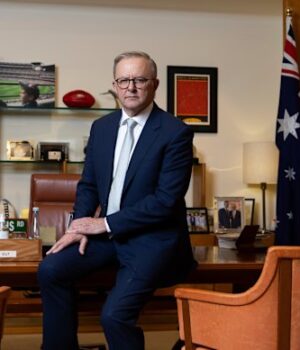
No matter what you are watching on television on Wednesday night (unless you’re on Netflix), at the stroke of 7pm, Anthony Albanese will be live on screens for the first national address by a prime minister since March 2020.
Albanese will update the public on the government’s response to the Middle East conflict, also urging Australians to cut back on fuel usage, according to a government alert. With national addresses incredibly rare, the decision to use the format on Wednesday night will increase the focus of public attention on the crisis which has led to rocketing fuel prices and threatens to significantly impact the cost of living for millions.
The last national address was made by Scott Morrison in March 2020, during the initial stages of the COVID-19 pandemic, with an address by Kevin Rudd during the 2008 global financial crisis the only other in recent history.
Pre-recorded in Albanese’s office Parliament House by the ABC, the footage, thought to be about three minutes, will be distributed to other TV networks and broadcast at 7pm eastern time, cutting into the ABC’s nightly news bulletin, Nine’s A Current Affair and delaying Home and Away on Seven.
Just 12 minutes before the announcement of the PM’s address, White House press secretary Karoline Leavitt said that US President Donald Trump would also give a national address at 9pm (US time) on the US East Coast on Wednesday to give Americans an “important update” on the Iran war.
The footage of the PM’s address is unlikely to be carried on Albanese’s or any other government social media accounts, but will be streamed on the TV networks’ digital platforms like ABC iview and 9Now. A statement said the address will also be broadcast across all radio services. Publishers and broadcasters will be able to edit the content and re-publish it via their social media channels.
This week, the government announced a halving of Australia’s fuel excise until June 30, delivering a 26¢ cut to a litre of petrol after prices surged as Iran shut off the Strait of Hormuz, where more 20 per cent of the world’s oil supply passes through. Tasmania and Victoria have made public transport free in the interim. On Wednesday, Trump said the US will be leaving Iran “very soon”.
The crisis has also prompted fears of a shortage of fertiliser and jet fuel.
Television viewership has declined since 2020, at which time 61 per cent of Australians watched live, free-to-air TV at least once a week according to a recent report from the Australian Communications and Media Authority. That figure now stands at 52 per cent, equal to user-generated or short-form digital videos.
For five years straight, paid subscription streaming services have been the most common form of viewing for Australians, watched on average by 68 per cent of Australians each week.
The ABC, which is the national emergency broadcaster, will air the footage at 7pm on both its main channel, with the 7pm bulletin following, and broadcasting it on its news channel. It will also be broadcast on its NewsRadio service, the capital city stations and main ABC YouTube channel.
The end of Nine’s news bulletins will lead into the address, with A Current Affair host Ali Langdon to then be joined by political editor Charles Croucher for analysis. On Seven, all programming will be pushed back by 30 minutes, meaning address will be broadcast in an extended news bulletin lasting until 7.30pm.
In 2020, Morrison similarly told the public “we all have a role to play”, with markets responding, dropping sharply and delivering the ASX its largest hit since the global financial crisis.
The Business Briefing newsletter delivers major stories, exclusive coverage and expert opinion. Sign up to get it every weekday morning.
 Calum Jaspan is a media writer for The Sydney Morning Herald and The Age, based in Melbourne. Reach him securely on Signal @calumjaspan.10Connect via X or email.

