Source :- PERTH NOW NEWS
Experts say the AFL’s new First Nations impact fund falls well short of what’s actually needed to address the decline in Indigenous players at the top level.
The AFL recently announced a $300,000 fund for initiatives designed to address cultural environment, racism and recruitment issues, which will be funded from Indigenous guernsey sales.
The number of Indigenous players in the AFL peaked in 2020 at 87 but has declined to just 62 in 2026.
The AFL wants the number to increase to 89 by 2030, but experts and players are warning if things don’t change, that number won’t be achievable.
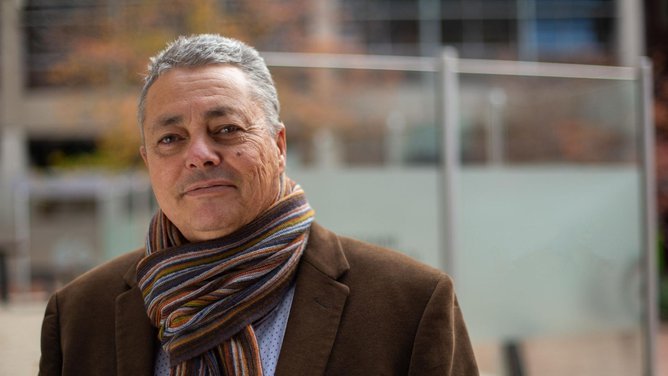
“The AFL can show leadership in this area by at least acknowledging that $300,000 is not going to fix their Indigenous recruitment program,” Swinburne’s pro vice-chancellor Indigenous engagement John Evans said.
“That’s $17,000 a club – that’d be some of their executives’ coffee money for the year.”
Professor Evans said there were several reasons why Indigenous numbers had fallen: a lack of understanding of Indigenous culture, a tendency to recruit from private schools and preferencing athleticism over raw talent.
“A lot of Aboriginal players come from pretty impoverished conditions. Understanding how they get to training or not get to training is an important factor,” he said.
“You’re really neglecting by inherent biases.
“They’ve (the AFL) got to be part of the bigger conversation in Australia around closing the gap and why it’s not working.”
Professor Evans said a $3m figure would be a better starting point than $300,000.
The figure is only an estimate by the AFL based on expected guernsey sales, and it did not comment on how much it expected to make.
“It’s a clear reflection of what the AFL sees fixing this problem is worth. It’s going to require a lot more than $300,000, so it’s insulting in some ways,” Professor Evans said.
AFL chief executive Andrew Dillon said it was “ultimately about investing in grassroots” at the Sir Doug Nicholls Round launch on Monday.
“I think the players are there. Would we like even more? Absolutely, and that’s why we’re doing that work,” Dillon said.
“So it’s not only just about identifying, it’s then when the players are on the list, how can we make sure that an Indigenous player stays on the list as long as any other player does?”
League research found First Nations players’ careers lasted one year less on average compared with other AFL players, The Age reported in March.
The most notable of recent retirements was that of 30-year-old Willie Rioli, who retired at the end of last season after 109 games with West Coast and Port Adelaide.
At the time, he told Port Adelaide media he was looking forward to “helping the next generation of First Nations players coming through”.
Rioli endured a tough 2025 season, having been banned for one game for threatening Bulldogs player Bailey Dale on social media after a game.
He also expressed his “hatred” for Hawthorn on social media in the wake of their racism investigation.
At the launch, Dillon also spoke about the advisory council, which had met to discuss ways the league could increase the number of Indigenous players.
But St Kilda player Bradley Hill said there needed to be more Indigenous representation on the committee.
“I think there can definitely be some more Indigenous people on that committee. When I looked at it I was probably a bit (unsure),” he said on Monday.
“If you want my honest opinion that’s probably why I did say those names (former AFL star Eddie Betts, Fremantle player Michael “Sonny” Walters and AFL diversity talent manager Paul Vandenbergh).
“I think personally Uncle Paul has been the best.
“He’s been the best for me, he’s helped me a lot, he helps a lot of the grassroots people coming through.
“He runs all our all stars, all our Indigenous camps. I feel like he knows more than nearly anyone.
“You got Eddie doing his foundation, so he’s seeing what the struggles are for these young kids. I feel like they would have a real big voice and impact on that committee.”
The advisory council was established in 2015 by then chief executive Gillon McLachlan.
The council’s chair Paul Briggs quit the role at the end of last year, saying it was under-resourced.
“It’s an advisory body I chaired that wasn’t resourced enough and the AFL passed a new plan that we hadn’t made a contribution to,” Briggs told The Age in April.

“We couldn’t stay at an organisation that doesn’t take advice from an advisory body. You don’t have to take all our advice, but at the least you should seek it.
“The AFL didn’t know where I was coming from … The commitment from the AFL wasn’t strong enough. There was no feeling the need or the pressure to collaborate.”
Professor Evans agreed the AFL should be more actively working with the advisory committee.
“It’s extremely disappointing to see the AFL is at the vanguard of improving Indigenous recruitment and they’ve gone back,” he said.
“We can have Dreamtime at the ‘G and everybody gets excited about that and it’s a great showcase, but it’s not a real representation of what’s going on.”