
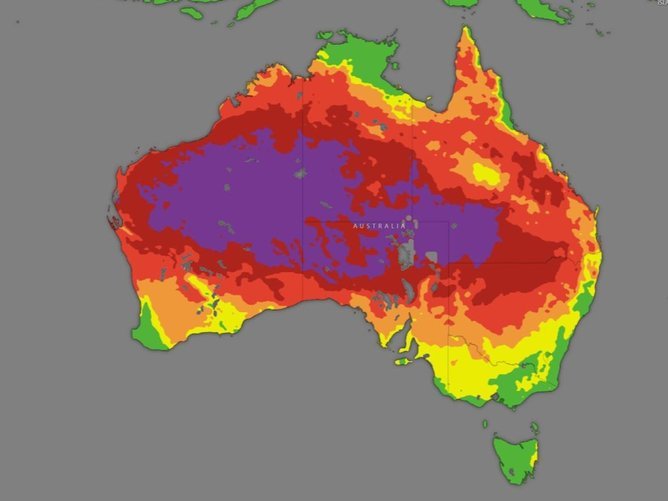
Source : Perth Now news
WA is staring down a hotter, drier back half of the year as a fast-forming El Nino begins to flex its muscles across the Pacific Ocean — with warnings it could even turn into a “super” event.
After a relatively mild start to autumn, weather forecasters say the climate driver is building fast, with ocean temperatures surging and conditions lining up for a likely declaration in coming months.
The Bureau of Meteorology has not yet declared an El Nino, with conditions still officially neutral, but says key indicators are trending in that direction as winter approaches.
Experts at Weatherzone say the warning signs are already there — and strengthening.
“There are strong indications that El Nino will emerge as we head into the Southern Hemisphere’s winter,” Weatherzone said.
They point to a massive pool of unusually warm water sitting beneath the tropical Pacific — with sub-surface anomalies exceeding 6C in some areas — primed to rise and trigger the event.
Weatherzone said global forecast models were in “overwhelming agreement”, with some tipping a very strong El Nino.
For WA, the shift could be brutal.
El Nino typically delivers below-average rainfall through winter and spring, alongside above-average daytime temperatures across much of southern Australia.
It also drives “enhanced evaporation”, worsening dry conditions and increasing the risk of drought, while bringing more intense heat extremes and even a higher chance of frost during colder months.
Fire danger is also expected to climb, particularly heading into spring and summer.
Perth and large parts of WA rely heavily on cold fronts to deliver rain — systems that can weaken or slip further south during El Nino events.
It means fewer soaking falls when they are most needed — and a faster slide into dry conditions across the South West and Wheatbelt.
Across the rest of the country, the risks also stack up.
Eastern and southern Australia are being warned to brace for renewed heat, drought and dangerous fires, while alpine regions could see a shorter snow season and northern Australia a weaker or delayed wet season.
Weatherzone said that the strength of the system would be key.
“Stronger El Nino events make it more likely that the impacts will occur,” it said.
“However, stronger events do not always mean bigger impacts — and even a weak El Nino can cause significant weather and climate effects in Australia.”
Adding to the concern, meteorologists say the Indian Ocean Dipole could also swing into a positive phase — a combination that often amplifies dry conditions across WA and the east coast.
One forecast has already put the odds of an El Nino forming this winter and over spring at about 80 per cent.