

Source : THE AGE NEWS
Last month, Max Marchione, the 25-year-old Australian founder of $300 million San Francisco health technology start-up Superpower squared off in a live YouTube debate with Martin Shkreli, the notorious “pharma bro” who spent five years in prison for securities fraud.
The subject? Peptides – the new class of quasi-legal injectable drugs flooding the internet that promise users every flavour of transcendence in a syringe: a youthful glow, a ripped physique, more effective workouts, and heightened sexual performance.
“It’s not normal, Max, to inject yourself with stuff,” Shkreli said during the debate broadcast on TBPN, the hit technology talk show recently acquired by ChatGPT maker OpenAI.
Shkreli is wrong. It has never been more normal for people to inject themselves with stuff, thanks to the unstoppable rise of glucagon‑like peptide‑1 (GLP-1) drugs such as Ozempic and Mounjaro.
But Shkreli, of all people, is right about the risks of unregulated synthetic peptides, a craze he believes arises because of “psychological issues”.
The Australian Medical Association’s president, Danielle McMullen, is distressed about just how easy it is to access these products, and wants consumers to be careful.
“The most important message to get across is that these are products which are not approved for human use, and the risks are much more likely to outweigh the benefits,” she says.
Those risks can include anything from severe allergic reactions and infections in the short term to a heightened chance of kidney damage and cancer down the line.
Peptides are essentially strings of amino acids that occur naturally in the body, telling cells what to do and how to behave. In 1921, insulin was the first peptide to be synthesised in a laboratory, but public interest in their therapeutic use waned until 2017, when semaglutide, better known as Ozempic, was approved by the United States Food and Drug Administration.
Public attitudes shifted in the post-Ozemic world, where synthetic peptide development has exploded thanks to radical advances in technology. Now, scientists can “hijack some of the biological machinery to produce peptides in libraries of billions of molecules”, according to Lara Malins, a professor at the Australian National University’s research school of chemistry.
This once slow process has radically accelerated. “We’re kind of in the perfect storm of being able to understand the biology and also make and access peptides,” Malins says. “And that’s what’s led to all this public enthusiasm.”
That enthusiasm is focused on a hugely popular suite of peptides, many of which are not approved for clinical use by health regulators, but are easily accessible, aggressively hyped on social media, and which promise all manner of body optimisations.
Among the most popular products, none of which are recommended by doctors, there’s no end of acronyms. Backers say BPC-157 helps muscle growth and recovery. It’s frequently taken with TB-500 to create what podcaster, peptide promoter and definitely-not-a-doctor Joe Rogan calls the “Wolverine Stack”. GHK-CU is a copper-based peptide that users claim can give your skin a youthful, glowing perma-tan. Melanotan II is used for both tanning and, allegedly, improving your sex drive. There’s also plenty of buzz about retatrutide, which is in a different class. It’s an experimental drug being developed by pharmaceutical giant Eli Lily that early data suggests provides even better weight-loss outcomes than Ozempic. It is undergoing clinical trials but is being sold in an unregulated manner.
Generally speaking, most of these products are not approved by the Therapeutic Goods Administration. Some, like BPC-157, are classified in the Poisons Standard as a prescription medication, which can be used under medical supervision. Others, like GHK-CU, melanotan and retatrutide are not approved for human use as a default.
“The TGA is concerned about the growth of black market and grey market advertising and sales of peptides, including products imported from overseas or promoted through social media platforms and online marketplaces,” a TGA spokesperson said.
Last week, the TGA released a safety alert noting the widespread promotion of peptides and reminding users that products “have not been evaluated by safety, quality or effectiveness” by the regulator. According to the note, the TGA has received reports of people experiencing severe inflammation, allergic reactions involving hospitalisation, blurred vision, muscle injuries and insomnia.
But in a culture that venerates “looksmaxxing” – an online trend that promotes optimising physical attractiveness by any means necessary – those sober warnings are struggling to cut through.
Timothy Piatkowski, a senior research fellow at the University of Queensland’s Centre for Health Services Research specialising in performance enhancing drugs (who has himself dabbled with products like BPC-157 in the past) says that such synthetic peptides have been popular in bodybuilding circles for more than a decade.
In the last two years, peptides have exploded into the mainstream and are being used by very diverse demographics.
“It’s fathers who want to spend more time with their kids and get rid of that back pain,” Piatkowski says. “Mothers who recently had a surgery and want to recover faster, and, of course, young people who want to look better.”
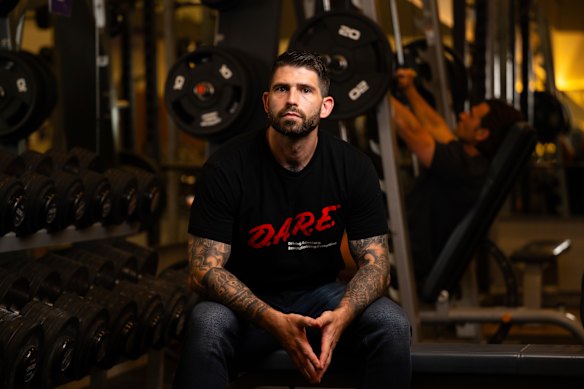
Piatkowski runs a service with the Queensland Health Department called Steroid QNECT, allowing people to get confidential information about their bodybuilding supplements. In the last 12 months, they’ve been getting four calls a day from people after information about peptides.
Katinka van de Ven, an adjunct associate professor at the University of NSW specialising in drug policy says that while GLP-1 use in Australia has increased almost tenfold since 2020, the data doesn’t capture private, off-label use of peptides sourced online. “In many ways, we’re only seeing the tip of the iceberg,” she says.
Dan Peled
In tech circles, where “biohacking” the body to live forever is the latest craze, peptides have developed a cult-following. The best known figure in that cohort is the multimillionaire entrepreneur Bryan Johnson, whose eccentric longevity regime includes measuring his nightly erections and taking infusions of his teenage son’s blood plasma.
“It’s kind of a meme that everyone in Silicon Valley is on peptides” says Marchione, the founder whose company, Superpower, provides a subscription-style service for aspiring biohackers hoping to get access to better data about their own health. It does not sell peptides, for now at least.
He was first put onto peptides by Superpower’s chief longevity officer Anant Vinjamoori, a Harvard-trained doctor. Now, he microdoses 0.8 mg of retatrutide once a week for focus, longevity and weight maintenance, and takes BPC-157 twice a day when injured. When he notices a tickle in his throat, he takes 2mg of Thymosin alpha for immune function, and drops 3mg of Epitalon if he’s struggling to sleep.
“So far, there are very few risk signals from the academic papers, very few risk signals from the patient and doctor experience, and then very strong efficacy signals,” says Marchione, who is not medically trained. “There’s such a long list of peptides that are going to take the world by storm.”
Lily Wrobel, a 25-year-old from the Central Coast discovered peptides through friends last year, and uses melanotan II and GHK-CU to improve her skin. She says the products have greatly improved her quality of life and she recently started documenting her experiences on TikTok.
“I do know that it’s not regulated,” she says. “I’m aware that there are risks, but I haven’t had an issue and I’m loving it.
“The health risks are definitely on my mind, but in saying that, everything’s bad for you. People drink every weekend. People smoke, people vape. I train multiple times a week, I stay hydrated and generally live a pretty balanced lifestyle”.
But McMullen from the AMA urges caution. “The online and commercial environment around health and wellness has made this stuff seem safer than it really is. Australians need that wake-up call that all medications carry risks,” she says.
UNSW academic van de Ven says that the fact that substances are marketed as “natural” gives users a false sense of safety. “But as clinicians often point out, just because something is body-derived doesn’t mean it’s safe.”
Their societal risks, at least, are very clear. They were the drugs at the centre of the early 2010s doping scandals that rocked the AFL’s Essendon Bombers and the Cronulla Sharks in the NRL. The club’s respective coaches, James Hird and Shane Flanagan, were suspended for 12 months. The Sharks were fined $1 million. Essendon paid $2 million, were booted from the 2013 finals, saw captain Jobe Watson stripped of his Brownlow Medal, and have arguably never recovered. At the root of the issue was a notion of fair play that had been badly undermined. The 2013 release of the Australian Crime Commission’s report into drug use was labelled the “blackest day in Australian sport” by a former head of the country’s anti-doping watchdog.
Arguably the widespread use of peptides to chase unattainable beauty standards is doing a similar thing to society at large, though this masthead does not suggest that anyone in this story has broken any laws.
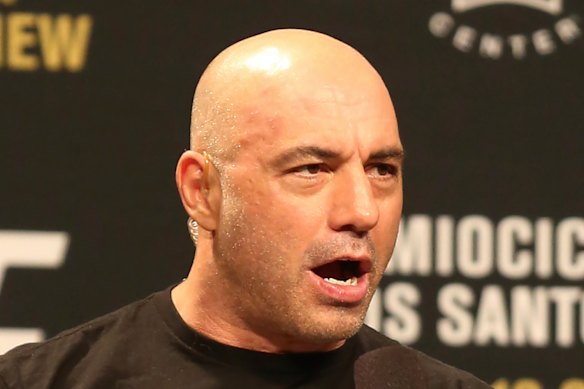
Much of the frenzy around peptides has been driven by social media, and the influence of celebrity cheerleaders like Rogan.
Instagram and TikTok are awash with implausibly chiselled influencers, describing all the ways that peptides have made them fitter, happier and more productive, often with discount codes and links to online stores in the bio.
“I think some people think that peptides are going to be some kind of magical fix,” says Manaaki Hoepo, a former contestant on Seven reality show Heartbreak Island Australia in a TikTok video, in which he goes on to outline the seller where he obtains the peptides from. “I use them to supplement what I’m already doing, to make sure I get to my goals just a little bit faster.”
The post is sponsored by a company which sells BPC-157 and semaglutide (Ozempic) without a prescription, as well as other compounds like GHK-CU and retatrutide. Neither Hoepo nor the company responded to this masthead’s enquiries.
It is illegal to advertise prescription medication in Australia.
This is just one of hundreds of videos posted by micro-influencers, often accompanied by links to various websites providing swift access. Influencers also provide their fans information on what peptides to use together (known colloquially as “stacks”) and, importantly, how to acquire syringes.
“How do you take your needles for your peptides? Like this sis xx,” says the caption to a video in which a glamorous influencer visits an inner-city needle exchange.
It is a staggering video. Once intended as a policy response to reduce harm suffered by people who have long-term addictions to intravenous drugs such as heroin, such sites are now being visited by Gen Z TikTokers.
Piatkowski, the University of Queensland research fellow, says demand for needle service providers, once limited to intravenous drug users, is now surging.
Wrobel, who has 11,000 TikTok followers, says the platform also has a problem with unscrupulous operators.
“Heaps of peptide companies comment on any video that I post asking me to promote them,” she said.
It took a brief Google search for this masthead to come across peptides.
Within a few clicks, a 5mg vial of BPC-157 could be ordered from an online store for $64.90 including shipping via Australia Post. According to records filed with the Australian Securities and Investments Commission, the store in question is linked to a 27-year-old Melbourne man.
This masthead went through the process of purchasing the chemicals to show how easily they could be obtained.
The store, which this masthead has chosen not to name and which did not respond to requests for comment, is one of dozens of online sellers, operating in an unregulated, but potentially highly lucrative pharmaceutical Wild West. Most sellers include disclaimers that their products are intended for research purposes only. None of the sellers provided any mechanism to verify this.
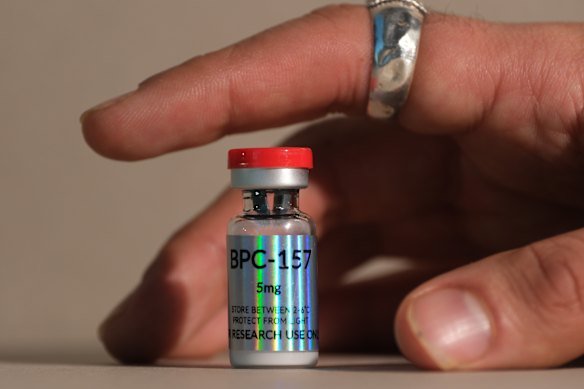
“These disclaimers do not change a product’s regulatory status or legal obligations,” the TGA spokesperson said.
In response to questions about potential breaches of the law, the regulator said it did not comment on individual cases, but pointed to recently published warnings about unapproved melanotan products used for tanning.
“We continue to take compliance and enforcement action against the unlawful importation, supply and advertising of therapeutic goods, including products containing peptides, and work closely with other agencies to disrupt illegal supply pathways.”
The regulatory uncertainty around peptides means that users are often injecting themselves with risky, untested products. Piatkowski says his hotline has heard from people who’ve been vomiting for three days straight.
McMullen says that because consumers don’t know what they are taking, the risks are incredibly broad. “Any injection carries a risk of infection, particularly when these are not purified because they’re not cleared for human use. Anaphylaxis is a risk with these as well.”
She points to the documented risks of skin cancers and kidney damage linked to melanotan. And if an unscrupulous manufacturer sells insulin, instead of the peptide being spruiked, the outcomes can be life-threatening. There are important policy reasons why regulators take their time reviewing such products. Bringing a new drug to the market is a long, expensive process, and one that excited consumers are easily bypassing.
“Often they’re molecules that might have shown really early promise in a scientific study,” Malins from the ANU says. “For example, it may have been tested in an animal model, but not tested in a really rigorous double-blind clinical trial, which takes 10 to 15 years.”
She estimates that the entire process for bringing a drug from the lab to the market can cost about $2 billion. But the current crop of synthetic peptides comes with the promise of astronomical profit. Ozempic manufacturer Novo Nordisk has a market capitalisation north of $250 billion. Eli Lily, the pharmaceutical company behind Mounjaro, is worth more than $1.2 trillion, making it more valuable than the likes of OpenAI.
In the United States, Health Secretary Robert F. Kennedy Jr recently told Rogan’s podcast that he planned to remove restrictions on 14 peptides. That will likely widen the rivers of gold flowing to the “Big Pharma” players that Kennedy has promised to fight.

That could be good news for Marchione, who on Friday announced that Superpower would begin selling peptides in the United States as soon as the Food and Drug Administration removed restrictions.
“For too long, Americans seeking access to peptides have been left with two options: go without, or turn to unregulated sources that put their health at risk. That’s beginning to change. And we’ve been building for this moment,” he said.
Marchione, who jokingly told a podcast last year that Superpower staff inject each other over Friday breakfasts “because we think it’s fun”, is very much a believer.
Given the intense public interest in peptides, and in a context of a global wellness industry already worth $US2 trillion ($2.8 trillion), according to a report by McKinsey & Company, the demand for peptides will certainly be there if restrictions are loosened.
Rivals are already jockeying for advantage. In February, Function Health, one of Superpower’s larger rivals, valued at $US2.5 billion, launched a trademark lawsuit against the company in a Los Angeles federal court, accusing it of using deceptive conduct to woo consumers and operating with “flippant disregard for legal and regulatory safeguards”.
Marchione has called those claims “meritless”.
But the company is well-positioned to ride any potential peptide wave. Investors include Australian venture capital firm Airtree, and entrepreneurial twins Cameron and Tyler Winklevoss (who were depicted as Mark Zuckerberg’s blonde-haired nemeses in The Social Network). It’s also drawn support from high-profile celebrity backers like NBA star Giannis Antetokounmpo, YouTuber Logan Paul, and High School Musical actress Vanessa Hudgens.
In Australia, there is also huge money to be made in the wellness space. Telehealth start-up Eucalyptus, which sells weight loss medication rather than the bleeding-edge peptides, has courted plenty of regulatory and media scrutiny. Still, in February it was bought by New York Stock Exchange-listed Hims & Hers for $1.6 billion, in a market where software-based start-ups have been floundering amid AI disruption.
But for now, any company hoping to cash in on the peptide craze and achieve Eucalyptus-like success faces a challenging regulatory environment, even if the TGA has struggled with enforcement. In 2019, the regulator brought an action in the Federal Court against an online retailer called Peptide Clinics Australia over false advertising of prescription information, securing a $10 million penalty. By then, the business in question, had gone into liquidation.
More recently, the regulator’s pursuit of supplement business BIOV8 helped send the company into liquidation, with $1.42 million in debt, and a messy falling out between its two co-founders that played out before the Federal Court.
BIOV8 is now under new management, led by chief executive Charles Pick, a former mayor of Manningham Council in Melbourne, Victorian Labor staffer, and lobbyist with GXO Strategies, who did not respond to this masthead’s enquiries.
Currently, the company promises a new doctor-led approach, and does not directly advertise unregulated products. But that approach comes with a pricetag unreachable to the average punter hoping for a glow-up – packages start from about $500, following a consultation process.
“Rogues and cowboys treating health businesses like a low-quality K-drama have no place in our emerging health industry,” Pick told News Corp papers last year.
Still, the regulator’s successes have been few and far between. The sheer number of avenues to acquire peptides online mean any government body is simply playing Whac-A-Mole.
What’s more, there are new compounds appearing nearly every week.
“I don’t think this is a problem that we can regulate ourselves out of because we’re always producing new designer substances,” Piatkowski says.
As long as the desire to look better and live longer endures, people are going to keep ignoring the experts, and injecting themselves with stuff.
The Business Briefing newsletter delivers major stories, exclusive coverage and expert opinion. Sign up to get it every weekday morning.


