
Source : INDIA TODAY NEWS
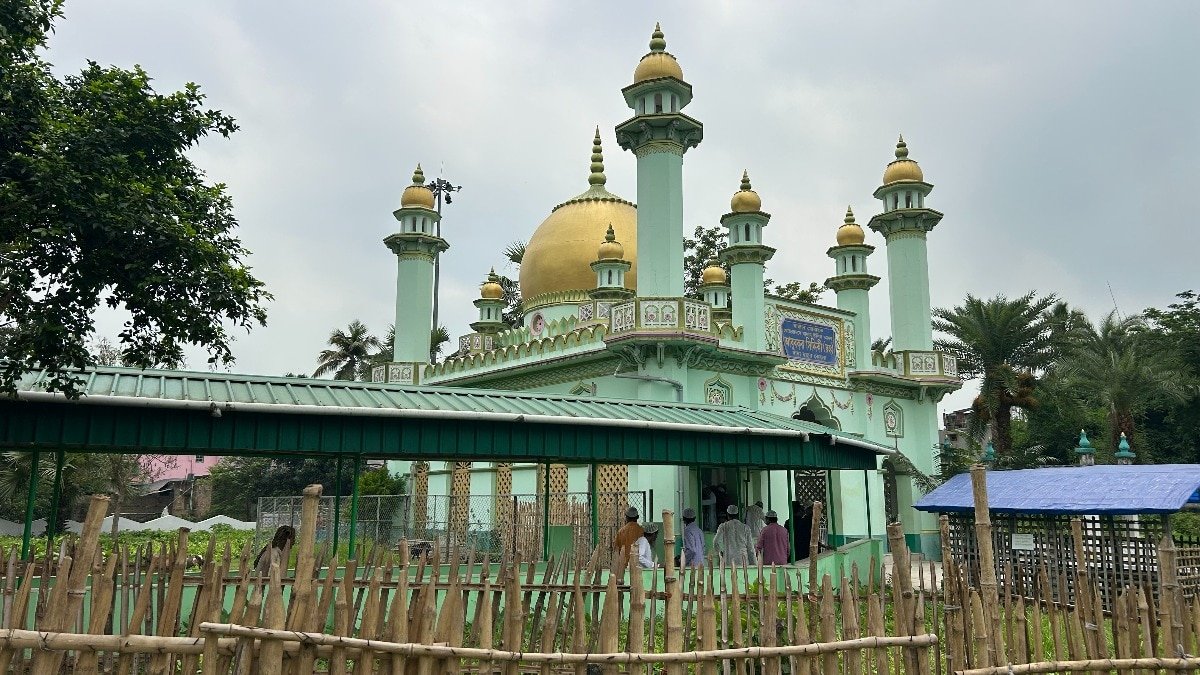
With West Bengal set to vote in two phases on April 23 and 29, Furfura Sharif in Hooghly district has emerged as a critical political flashpoint, as influential clerics have accused the ruling Trinamool Congress of treating Muslims as a vote bank, signalling growing dissent within a key support base of Chief Minister Mamata Banerjee.
Considered one of the most influential Sufi centres in the country, Furfura Sharif holds sway over a significant section of the state’s electorate, particularly among Muslims, who make up nearly 30 per cent of the population. What was once a dependable support base for Chief Minister Mamata Banerjee is now witnessing visible cracks.
advertisement
At the centre of this shift are leaders from the Siddiqui family, particularly Abbas Siddiqui and his uncle Tauha Siddiqui, whose parallel yet converging criticism of the state government has amplified political tensions.
Abbas Siddiqui sharpened his attack by focusing on what he calls the socio-economic “betrayal” of the Muslim community. Moving beyond identity politics, he flagged the lack of basic infrastructure in Furfura, pointing to the absence of a modern hospital, poor railway connectivity and limited industrial development.
“The community needs pens and jobs, not just hollow promises,” he has asserted, accusing the ruling party of treating Muslims as a mere vote bank.
He alleged that the Trinamool Congress and the BJP are “two sides of the same coin”, arguing that governance failures by the state government are inadvertently strengthening the Opposition.
Adding to the pressure is Tauha Siddiqui, whose criticism is being seen as particularly damaging given his earlier perceived proximity to the ruling establishment. Expressing rare public disappointment, he said, “We are very disappointed with the ruling government. Mamata Banerjee may be a good person, but some of her party MLAs are absolutely corrupt.”
Tauha also alleged that corruption among local leaders has undermined governance, specifically targeting Trinamool Congress candidate Snehasish Chakrabarty and vowing to oppose “corrupt leaders” in the polls. He added that while the government has delivered on some fronts, it has fallen short of key promises in Furfura.
In a notable departure from conventional political narratives, Tauha downplayed allegations of widespread communal victimisation, instead blaming “corrupt Trinamool Congress leaders” for fostering divisions for political gain.
With both younger and senior voices from Furfura articulating similar grievances, the political significance of Furfura has expanded beyond spiritual influence into a decisive electoral battleground.
The upcoming Assembly polls, therefore, are no longer just a contest between major parties but a broader fight over development, representation and minority rights. As discontent deepens in a region that has long shaped Bengal’s electoral arithmetic, the Furfura factor could play a pivotal role in redefining the state’s political landscape on May 4, the result day.
Elections 2026 | West Bengal Election | West Bengal Election Constituencies | West Bengal Election Schedule
– Ends
Must Watch
SOURCE :- TIMES OF INDIA