
SOURCE :- THE AGE NEWS
April 14, 2026 — 11:30am
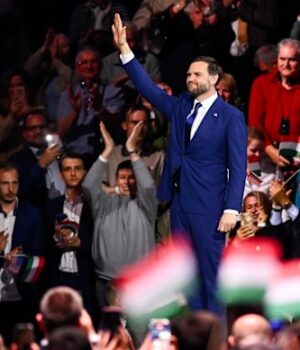
US Vice President JD Vance refused to be deterred from interfering in Hungary’s election by the polls predicting that Viktor Orbán, the Trumpist authoritarian, was headed for a devastating defeat at the weekend. Even Orbán said “we will achieve a victory that will surprise everyone.”
Vance indeed addressed a huge rally for Orbán, and got President Donald Trump on the phone, who boomed to the crowd:
“He does a job, remember this, he didn’t allow people to storm your country and invade your country like other people have, and ruin their countries, frankly. He’s kept your country good, he’s kept Hungarian people in your country. And he’s done a fantastic job.” Now Orbán is out of a job.
What started in Canada and Australia in 2025, when Trumpist themes spurred Mark Carney to victory in Canada and helped lead the Liberal Party to defeat in the election here, the anti-Trump mood seeded by Trump’s relentless attacks on NATO now sweeping Europe has become a growing force across Western democracies.
To Putin’s delight, NATO is in grave danger. In Asia, South Korea and Japan have huge rifts with Trump on trade.
Trump has also taken on higher authority, lashing out at Pope Leo: “WEAK on crime and terrible for Foreign Policy.” The Pope is resolute. “I have no fear of the Trump administration, or speaking out loudly of the message of the gospel.”
Joined by Trump envoys Steve Witkoff and Jared Kushner (who have failed to disarm Hamas in Gaza and secure a ceasefire in Ukraine), Vance headed to Islamabad. The advantage of Vance leading the negotiations was that he had disagreed with Trump’s decision to go to war with Iran. This might have given him leverage with the Iranians to reach an agreement.
That failed. While it took then president Barack Obama two years to conclude his nuclear deal with Iran, it took the Iranians one day to tell Vance, Witkoff and Kushner to scram.
Before this war of choice, launched by Trump and Israel’s Benjamin Netanyahu, the regime of the hardline ayatollahs was fully in power. Iran retained its enriched nuclear fuel even after the “obliteration” of Iran’s nuclear capacity by the US and Israel last June. The Strait of Hormuz was open. Iran had not attacked any Gulf nations notwithstanding their strategic alignment with the United States.
Under the current ceasefire, the ayatollahs’ regime is still in power, they still have possession of their enriched uranium, the Strait of Hormuz is closed, and Iran has inflicted attacks on Saudi Arabia, the UAE, Qatar and others.
In announcing his blockade, Trump said, “The Iranians don’t seem to realise they have no cards, other than a short-term extortion of the world by using international waterways.”
The blockade is now in effect but will be slow to yield a decisive outcome. The current experience with sanctions, such as those imposed against Russia over its invasion of Ukraine, is they are insufficient to end a war.
Trump is not for turning. On Fox News right after announcing the blockade, he was unmoved. “I expect Iran will come back and give us everything we want. And I tell my people: I want everything. I don’t want 90 per cent, not 95 per cent – I want them to give us everything.”
Trump still holds the apocalypse card. Trump has not retracted his threat to bomb so that “a whole civilisation will die”.
In the mists of the “fog of peace” that has enveloped Trump’s unsuccessful diplomacy, and doubts that the strait will soon be reopened and that Gulf nations will not again be attacked by Iran, there is no end in sight for this war. Or Israel’s war in Lebanon.
JD Vance had a weekend from hell with Orbán defeated and no deal with Iran. The VP’s failed mission underscored that Trump’s brand in the world is in retreat. With no global coalition backing Trump’s war of choice, with Trump now admitting that energy prices “should be around the same” and maybe “a little bit higher” by the November midterm elections, Trump faces weeks of hell in the run-up to America’s 250th birthday on July 4.
Bruce Wolpe is a senior fellow at the University of Sydney’s United States Studies Centre. He has served on the Democratic staff in the US Congress and as chief of staff to former prime minister Julia Gillard.
The Opinion newsletter is a weekly wrap of views that will challenge, champion and inform. Sign up here.
 Bruce Wolpe is a senior fellow at the University of Sydney’s United States Studies Centre. He has served on the Democratic staff in the US Congress and as chief of staff to former prime minister Julia Gillard.