
Source : THE AGE NEWS
April 13, 2026 — 11:59am
The big jump in the US inflation rate revealed on Friday is only a preview of things to come, and not just for the US, if the conflict in the Persian Gulf remains unresolved.
Indeed, with Donald Trump announcing a blockade of the Strait of Hormuz at the weekend, which would halt the trickle of oil that Iran has been allowing passage through the strait, the flow-on effects to the rest of the world, including America, could swell.
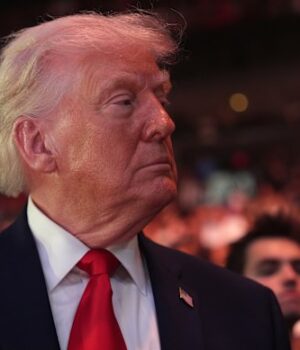
“Effective immediately, the United States Navy, the Finest in the World, will begin the process of BLOCKADING any and all Ships trying to enter, or leave, the Strait of Hormuz,” Trump posted on social media on Sunday, adding that any Iranian forces that fired at US forces or other vessels would be “BLOWN TO HELL”.
The decision to blockade the strait, while probably only impacting a few million barrels of oil a day that Iran has allowed passage – mainly its own oil, destined for China, India or other friendly countries, with tolls of up to $US2 million per tanker – is at odds with the US move to lift sanctions on Russian and Iranian oil already on the water to try to blunt the war’s impact on oil prices.
Iran had been giving indications that it would reopen the strait more broadly to countries not aligned with the US or Israel, providing they paid tolls on their cargoes.
That would have helped reduce the gap in global oil supplies created by its closure of the strait, a gap estimated at 10 to 11 million barrels a day that has essentially halved the volume of oil flowing through the choke point for about 20 per cent of the world’s oil supply.
The US isn’t immune, even though Trump seems to believe it is, boasting in his posts about the scramble of global buyers trying to secure American oil.
The impact of that reduced supply on energy prices has been stark, with oil prices soaring from around $US70 a barrel to more than $US100 a barrel in futures markets and the price of spot cargoes – oil for immediate delivery – changing hands at prices nudging $US150 a barrel.
Ahead of the mediation talks at the weekend, global prices had dropped into the mid-$US90 a barrel range. After the negotiations ended without a deal, prices shot straight back up, with Brent Crude rising about $US7 to more than $US102 a barrel and the US oil price, West Texas Intermediate, up $US7.54 to more than $US104 a barrel.
The longer the conflict goes on, and the greater the volumes of oil taken out of the global supply-demand equation, the bigger the impact on availability and prices – and on global inflation and growth rates.
Friday’s release of US inflation data showed a 0.9 per cent increase in consumer prices in March, relative to February, to 3.3 per cent. About three-quarters of that increase – the biggest in about two years and three times the rate of inflation in February – was due to increased energy prices.
Excluding food and energy prices – the US Federal Reserve Board, like most central banks, including our own, tends to place greater weight on “core” inflation – the rate rose only 0.2 per cent, although it is up 2.6 per cent over the past 12 months and therefore remains stubbornly above the Fed’s 2 per cent target.
While the surge in the headline consumer price index could be seen as a temporary spike that will subside if and when the hostilities in the Middle East end, what is apparent from the two key inflation data points is that the impact of the big jump in energy prices has yet to filter through supply chains into the prices of consumer goods.
The prices of consumer items that have been increasing faster than the overall inflation rate – household furnishings, auto parts, fresh vegetables, etc – appear more likely to be driven by Trump’s tariffs than by the war at this point.
The inevitable and significant impact of the oil shock on air fares (jet fuel prices have rocketed) and transported goods has yet to show up to any discernible degree. However, if the strait remains closed and Iran keeps damaging the region’s energy infrastructure, there will be an energy-related overlay to the tariffs.
It’s not surprising that consumer confidence in the US is plummeting, as households that were already feeling some impact from Trump’s tariffs are now confronted with gasoline prices that have leapt from a national average of $US2.91 a gallon to $US4.12 a gallon and diesel prices that have spiked from $US3.76 to $US5.66 a gallon.
The University of Michigan’s index of consumer sentiment has fallen to its lowest level on record, tumbling from a reading of 53.3 in March to 47.6 in this month’s survey. Expectations of inflation are also rising in response to the war, with that gauge showing Americans expect prices to rise 4.8 per cent over the next 12 months. Last month, those surveyed foresaw a 3.8 per cent increase.
Given that consumption, with the massive investments in artificial intelligence, has underpinned US growth over the past year, the decline in confidence is ominous for economic growth.
Similar things could be said about other economies, where rising inflation and fears of energy shortages are combining with Trump’s trade war with the rest of the world to generate a darkening shadow over global growth.
Those settings are not only hurting energy-import-dependent economies in Asia and Europe, but also countries like Australia, which export raw energy and import refined products.
The impact on the supply of fertilisers from the Middle East is as profound as the impact on oil, if not more so. About a third of the world’s supply of urea and a quarter of ammonia flow through the Strait of Hormuz. Global agricultural production is being threatened, with obvious implications for availability and price.
Under those circumstances, when the International Monetary Fund and World Bank hold their semi-annual meetings with central banks and economists in Washington this week, their outlook for the global economy is likely to be pessimistic.
A global economy that was tracking quite solidly before the US and Israel began their assault on Iran now faces slower growth, with some regions threatened with stagflation or even recession.
Whether the downturn in growth is severe will depend on how long the war – which, according to the International Energy Agency, has caused the biggest oil shock in history – lasts, and how much structural disruption it causes to energy infrastructure, supply chains and end markets.
The US isn’t immune, even though Trump seems to believe it is, boasting in his posts about the scramble of global buyers trying to secure US oil.
“Boats are sailing up, heading to OUR country, big beautiful tankers – we’re loading them up with oil, gas and everything else! It’s a pretty beautiful thing to see,” he wrote.
That rush on US oil and gas will deliver windfalls to America’s oil and gas producers, but increase gasoline and diesel prices for US consumers, who will vote at this year’s midterm elections. It will continue to flow through to the inflation rate.
When the Fed meets late this month, it won’t be considering interest rate cuts. Rate rises will figure more prominently in the officials’ discussions, as they will in the deliberations of other central bankers.
Trump’s “beautiful thing” could turn ugly, if the Fed is forced to raise rates to combat a rising inflation rate, hitting economic growth, hurting households and raising the cost – already more than $US1 trillion a year – of servicing the US government’s profligate $US39 trillion-plus debts.
The US is, of its own volition and almost unwittingly, sailing into turbulent economic waters, with the rest of the world’s economies being dragged along in its wake.
The Business Briefing newsletter delivers major stories, exclusive coverage and expert opinion. Sign up to get it every weekday morning.
 Stephen Bartholomeusz is one of Australia’s most respected business journalists. He was most recently co-founder and associate editor of the Business Spectator website and an associate editor and senior columnist at The Australian.Connect via email.

