
Source : INDIA TODAY NEWS
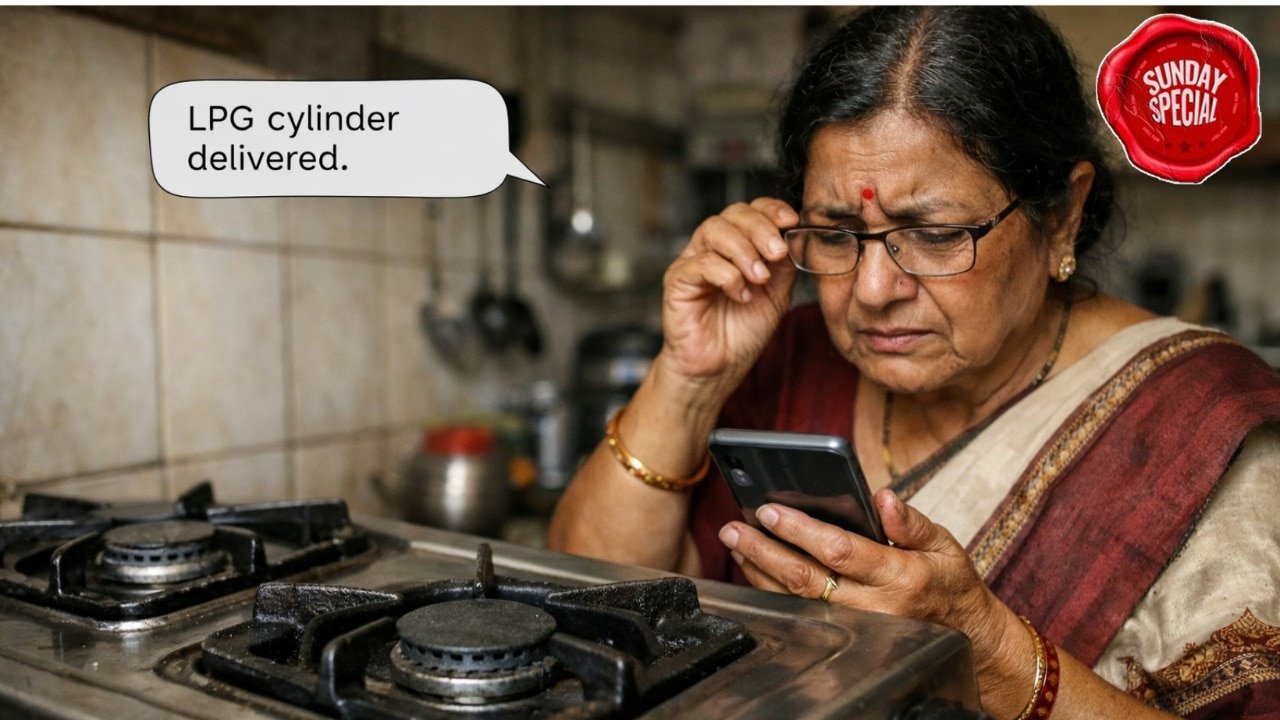
Same house and gas distributor, two floors in a South Delhi colony, and two very different experiences with the delivery of LPG cylinders became the fuel for this story. I ordered my LPG refill at 23.57 on Tuesday (April 7), and it was delivered at 12.30 the following day. On the ground floor, the 72-year-old lady was keeping her fingers crossed. Her booking was blocked because of a ghost delivery made in her name.
advertisement
She had on March 12 booked an LPG refill, which was delivered on March 14. But, days later, an SMS on March 23 shocked her. Her cylinder had been delivered, it said. She hadn’t booked any, and it simply wasn’t possible. The government has imposed a 25-day waiting period from the date of last delivery before anyone can book a refill.
Now, even 25 days after March 14, she is unable to book an LPG refill because the automated system is blocking that. She will need to wait and hope that the only cylinder keeps her stoves burning.
What the 72-year-old lady is going through in New Delhi is being witnessed by thousands of people in several states. Anger and frustration over SMS that LPG cylinders have been delivered without the refills reaching them have flooded social media platforms. I met several people with such complaints while researching for this story.
It is an open secret that a parallel LPG ecosystem exists in India that can give the legal channel a run for its money. Illegally sourced domestic cylinders, which cost far less than the legal commercial ones, are used by roadside eateries and small restaurants. The 14-kg cylinder is also sourced on the black market by those without proper documents, and to refill the chhotu 5-kg cylinders, mostly used by migrant workers, professionals and students.
Even as the government was promoting the Ujjwala scheme to rid India’s kitchens of coal and firewood smoke, the illegal cooking gas ecosystem ballooned.
It was only the shortage resulting from the war in the Middle East that has exposed its true size. Everyone has seen the closed roadside food stalls and the migrant labourers leaving the cities.
The scale of the black market was also exposed with the seizure of thousands of illegally procured and stored LPG cylinders across states. The shortage in supplies due to a choked Strait of Hormuz and the resultant public reaction forced the government to crack down on hoarding and illegal sale of refills.
Over 50,000 cylinders had been seized in raids since March, the Centre said on April 10.
HOW LPG CYLINDERS END UP ON THE BLACK MARKET
But how do LPG cylinders get diverted to the black market?
The answer is again something that we might have guessed thus far. The gas distributor and the delivery agents are the weakest links in the entire supply chain.
But how are cylinders being pilfered on such a scale despite the government insisting on the Delivery Authentication Code (DAC), the one-time password that was supposed to close the circuit? The DAC, which is a numerical passcode received as an SMS by a consumer upon booking a cylinder, has to be provided to the delivery agent. This authenticates that the cylinder was delivered to the household that booked it.
“To prevent diversion at the distributor level, Delivery Authentication Code (DAC)-based deliveries have been increased from 53% in February 2026 to 90% yesterday,” the Ministry of Petroleum and Natural Gas said on April 10.
In the course of this investigation, I spoke to multiple delivery agents, staff at distribution companies and victims of the cylinder-booking scam. I discussed the story with Aishwarya Patil, my colleague at Business Today TV, who on Thursday put the question of ghost deliveries to Sujata Sharma, Joint Secretary in the Ministry of Petroleum and Natural Gas.
I will share all that I found out and the questions that remain unanswered, but that will need some reading patience. Less patience than what Indane is seeking from people who, scared that they might run out of cooking gas, are trying to check if they can book a refill.
“People just use a couple of methods, like mobile apps, WhatsApp and the Interactive Voice Response System (IVRS) to book their LPG refills. There are several others which can be utilised by people at gas agencies to book refills on their behalf,” says Kunal, who worked at a Bharat Gas dealership in Bijnor, Uttar Pradesh, till 2024.
The man, who knows the system inside out, is helping people procure LPG cylinders, bypassing the system. He says that the DAC system, which is now being strictly enforced, is possibly being bypassed by OTP-spoofing.
When I reached the Indane dealership in south Delhi to enquire about the elderly lady’s case, the woman at the office checked in her system and told me that the last cylinder had been booked using IVRS. That hadn’t been done by the consumer. Who did it and how?
Before the shortage triggered by the war in the Middle East, a two-cylinder LPG connection could be used to book two refills a month. The limit was 15 cylinders a year. Big households also have multiple gas connections.
Kunal says a big number of households, especially in rural areas and those with PNG connections or smaller families in urban areas, do not book all the earmarked LPG refills. According to him, these are the cylinders that have regularly been diverted to the black market by distributors and delivery agents. And on some occasions, with the help of consumers, who have done it to help the delivery agents earn some extra money. But those were before the shortage.
I met two delivery agents, smoking bidi, outside the Indane distributor’s office in the narrow lanes of New Delhi’s Zamrudpur. They acknowledged the ghost-delivery scam and said several people came to the office with complaints every day. They said even owners of some gas distributorships were involved in the scam. That must be because of the windfall gains.
Supplies of commercial cylinders had been tightened, and the 14-kg domestic refill became hard to come by because of the government’s crackdown. The 14-kg LPG cylinder, which costs Rs 914 in New Delhi, is going for anywhere between Rs 4,000 and Rs 5,000 on the black market. A kilo of gas for the smaller refills costs Rs 300-500, depending on the area.
While the delivery agents were making around Rs 200 by selling refills on the black market earlier, now there was Rs 4,000 to be made per cylinder. That was temptation enough.
Weren’t people lodging formal complaints? I asked the delivery agents, because I saw the angry reactions of customers at the office over ghost deliveries. “Most don’t. Some of those who do, are managed by the office guys, with the promise of help if their cylinders run out,” said one of them.
I left the office after the manager of the gas agency said he needed time to find out what had happened in the case of the 72-year-old lady. I called him up later, and his explanation was that the delivery message was a system glitch.
“The panicked rush in the initial weeks of March led to the Indane system hanging across India. It is the same delivery that was physically done on March 14 that has been logged on March 23,” he said.
I told him that the IVRS was used for the illegal booking and that the lady would now have to wait for extra days to book a refill. “Insaaniyat ke naate (on grounds of humanity), I can provide her with a cylinder if she needs, and will adjust it from the one she books later,” he said. He dismissed the idea that the IVRS was spoofed to book the refill.
His reply was on the lines of what the delivery agents outside the office had told me a few hours earlier about.
There is a reason why I am not naming names here. This isn’t the story of just the 72-year-old lady or one gas dealership. While I was on my way to work last Friday, I saw a Bharat Gas delivery agent in nearby Amar Colony and stopped for a chat about the ghost delivery of LPG cylinders. Two strangers, who were victims themselves, soon joined in.
While a person who was getting something loaded in his SUV showed me the screenshots of the delivery messages, he refused to share his name or the screenshots after getting to know that I was a journalist. “I don’t want to invite the distributor’s vengeance,” he said. The screenshots had revealed that his OMC was Bharat Gas.
The second person who had joined in the brief discussion was on his way to work on a bicycle. He introduced himself as Sanjay, and said his wife, in whose name the Indane LPG connection was, had also received the cylinder-delivered SMS but no refill had arrived.
The manager of the Indane distributorship, who blamed the “initial panic” in the first weeks of March for the delivery recording glitch in the system, said the situation was back to normal now. However, the angry customers I met and the posts on social media point to something else. This isn’t about one city or a single OMC.
Sample this.
“My booking (ID: 526041) shows delivered today, but I haven’t received it. Distributor [xxx xxxxxx hp gas] DISTRIBUTOR CODE : 41053866 is not picking up calls. Please help,” wrote Pranav, a customer of Hindustan Petroleum (HP) in Maharashtra, on X on April 8.
“@ioclmp Indane LPG booked online on 12 March. Payment of Rs 941 done (Order no. 2005527050596, consumer no. 7213827XXX). Cylinder was not delivered, but the app/SMS shows “Delivery completed.” This is fake delivery. Please check and resolve urgently,” Satya from Madhya Pradesh posted on April 8.
“No resolution on my HP Gas complaint dated 1st April. Cylinder marked delivered but not received. The proprietor is asking to rebook the next slot and says he’ll “manage” payment — not a transparent process. Need urgent action,” wrote Priyanka, on April 8, tagging HPCL and the Aurangabad district administration.
So, if ghost deliveries are a national problem, then it needs a pan-India solution too. But that needed to be highlighted to the government. That is where Aishwarya Patil, my colleague from Business Today TV, helped out. She put the question to Joint Secretary Sujata Sharma at the daily press briefing on April 9.
Sharma said the details of the erring distributor can be shared with her for a thorough investigation and action. While I haven’t shared the details of the dealership in the story, I will do so if a detailed probe is done.
She assured that a crackdown was on.
“District Monitoring Committees have issued show-cause notices to distributors found committing scams. Customers are requested to report wrongdoing by distributors through portals and helplines,” said Sharma.
I had kept Sanjay’s contact number and called to check a couple of times if his cylinder had been delivered. He called back on Friday and said that nine days after the LPG-delivered message, he got the refill. That was 31 days after booking the cylinder, he said.
But for that, he had to go to his gas distributor’s office. Didn’t he enquire what had delayed the delivery and about the SMS? “The person at the office told me that the cylinder had been delayed on the route,” Sanjay, who works at a shop in Lajpat Nagar’s Central Market, said.
LPG reaches our homes in 14-kg cylinders, completing an over 1,000-km journey and a multi-step process. After being extracted in the Middle East, the pressurised gas sails on tankers through the Strait of Hormuz and is stored in bulk terminals before reaching bottling plants. Then the bottled LPG is sent to distributors and agencies, stored in godowns, and, ultimately, delivered to the customers by delivery agents.
It is the last segment where the leak is taking place with the active participation of the gas distributors and agencies. And the ghost deliveries are evidence enough.
Just try to think why people are waiting for weeks for their cylinders when it is showing delivered in the system.
Most LPG dealerships get a supply of 360 cylinders at one go, Kunal from Bijnor and my own delivery person told me. “The agencies need to punch ‘delivered’ against each cylinder. And the next truck is sent only after all 360 have been punched,” said Kunal.
Gas distributors, with or without the connivance of the delivery people, are punching “delivered” and routing the cylinders to the black market. That is triggering the delivered SMS without the genuine consumer getting it. When confronted, the staffers at the agencies either provide cylinders, or give assurance that they will do so if the person’s cylinder runs dry.
That’s how the manager at the Indane agency tried to tackle the case of the 72-year-old lady.
They gauge the usage pattern of customers and book from accounts that do not use their entire quota. They delay deliveries and divert cylinders to the black market. These have been corroborated. But there are several unanswered questions still. Can the DAC system be spoofed or bypassed? Only a thorough probe can bring out the facts.
We do not know if these are the only ways by which cylinders are being funnelled to the black market. There could be other ways too, given the scale of the black market. But you know that your undelivered cylinder is making somebody five times more money.
So, the 72-year-old lady will have to wait for 25 days from March 23, and not March 14 when the cylinder was actually delivered, to be able to book her LPG refill. That’s for no fault of hers. And there are thousands like her. This scam went unnoticed in peace times. A war has exposed the rot — of cylinders being delivered, but not reaching the original customers.
– Ends
SOURCE :- TIMES OF INDIA