
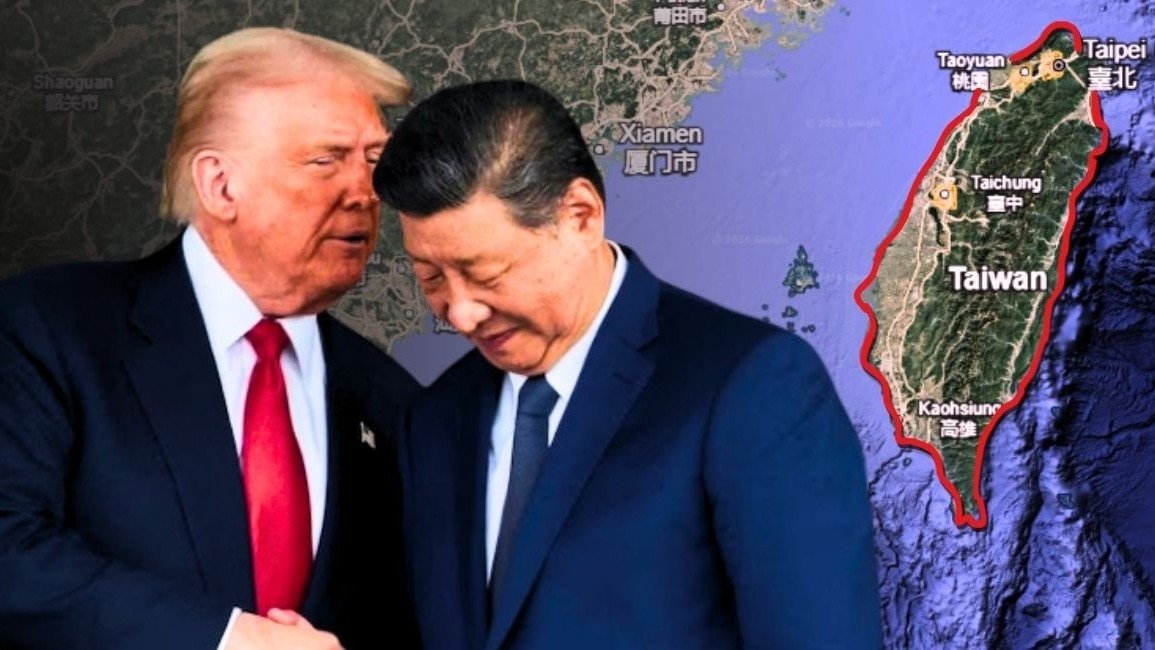
Source : INDIA TODAY NEWS
The world had its eyes fixed on the wrong crisis. As the Iran war dominated headlines, consumed American military resources and sent oil prices spiralling, China did what it does best. It waited. It watched. And then it moved.
Taiwan’s opposition leader Cheng Li-wun, chair of the Kuomintang party, flew to Beijing on 7 April for a six-day visit described as a “journey for peace.” On 10 April she sat across from Xi Jinping at the Great Hall of the People. The message Xi delivered was not subtle. Reunification with Taiwan is a “historical inevitability.” Independence is “the chief culprit destroying peace in the Taiwan Strait.” China will “absolutely not tolerate” it.
advertisement
This was the first meeting between a sitting KMT leader and Xi Jinping in nearly a decade. It did not happen by accident. It happened because Beijing read the geopolitical calendar and spotted a window.
The Iran blueprint
Over the past six weeks, American carrier strike groups and missile defence systems have been redirected toward the Middle East. Diplomatic energy has poured into ceasefire negotiations, Strait of Hormuz concerns and nuclear talks. The Indo-Pacific grew quieter, at least from Washington’s end.
Beijing paid close attention to what unfolded in Iran. Tehran, a far weaker power, blockaded the Strait of Hormuz and cut off roughly one-fifth of global oil supply. The result was a near 40 per cent spike in American petrol prices, a looming recession fear and a US president who stepped back from his own ultimatum. Iran did not win a war. It won a negotiation by making the economic pain unbearable.
China has absorbed that lesson entirely. A blockade of Taiwan would not threaten oil. It would threaten chips. Taiwan produces over 90 per cent of the world’s most advanced semiconductors through TSMC. Without those chips, car production halts, smartphones stop shipping, AI infrastructure cannot be built and advanced weapons systems cannot be manufactured. Economists estimate the cost would run into the trillions and would surpass the economic damage of the Covid pandemic. The leverage Iran wielded over oil is a fraction of what China could wield over silicon.
The chess move hiding in plain sight
Xi did not just send a message through warm words in Beijing. The visit coincided with a deeply uncomfortable development back in Taipei. Taiwan’s opposition-controlled parliament blocked a 40 billion dollar defence budget earmarked for military procurement tied to the United States. Taiwan’s own defence modernisation ground to a halt. China did not need to fire a shot to achieve that outcome.
This is the logic of what Beijing calls “peaceful reunification.” It is not peace as a destination. It is peace as a mechanism, one that works by shrinking Taiwan’s options, weakening its defences and normalising Beijing’s political framework until resistance becomes structurally difficult. Every blocked budget, every opposition visit and every month the United States stares at the Middle East instead of the Pacific moves that calculus further in Beijing’s direction.
The silicon shield cracks
Taiwan’s leaders once believed their dominance in chip manufacturing guaranteed their security. The thinking was straightforward. No rational actor would risk destroying the world’s semiconductor supply chain. Global dependence on Taiwan would deter aggression.
The Iran war has complicated that logic considerably. Supply chain pain does not protect you. It pressures the countries that were supposed to protect you. The silicon shield was always a deterrent built on the assumption that economic consequences would stop China. The Iran precedent suggests those consequences might instead stop Washington.
Xi’s meeting with Cheng also comes barely a month before a planned summit between Xi and US President Donald Trump in mid-May. By positioning China as a mediator in the Iran crisis and as the reasonable party in Taiwan discussions, Beijing walks into those talks with unusual leverage.
The Iran war did not create China’s ambitions over Taiwan. Those predate the semiconductor industry by decades, rooted in the unfinished business of the 1949 civil war and the CCP’s claim to be China’s sole legitimate government. But the war handed Beijing something far more valuable than motivation. It handed it timing.
And in geopolitics, timing is everything.
– Ends
Tune In
SOURCE :- TIMES OF INDIA