
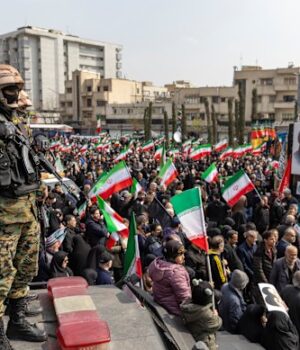
SOURCE :- THE AGE NEWS
Thank you for joining our continuing live coverage.
Here’s a recap of the latest developments:
- The US and Iran have agreed to a two-week ceasefire and the reopening of the Strait of Hormuz. US President Donald Trump said he had a 10-point peace proposal from Iran and was willing to negotiate.
- However, Iran says it has closed the Strait of Hormuz after Israel launched its biggest wave of airstrikes against Lebanon since the outbreak of war more than a month ago. Israeli Prime Minister Benjamin Netanyahu said the ceasefire “does not include Lebanon”, where Israel is continuing to attack Hezbollah.
- Prime Minister Anthony Albanese, European leaders and the UN chief have all called for Israel to halt attacks, which have killed hundreds in the past 24 hours.
- Pakistani Prime Minister Shehbaz Sharif has invited delegations from the US and Iran to meet for talks in Islamabad this week.
- Trump had a closed-door meeting with NATO chief Mark Rutte at the White House on Wednesday (US time) after the president said he was considering withdrawing the US from the alliance.
- The Australian sharemarket surged on Wednesday in an $80 billion rally, but is trading flat today on reduced optimism of a quick end to the war.
Australia is opening its chequebook to outbid rivals in a global scramble for fuel, as Prime Minister Anthony Albanese flies to Singapore seeking deals to secure extra shipments to avert a looming shortfall.
Despite early hopes that a fragile two-week ceasefire in Iran will unclog oil shipping routes and bring relief at the petrol pump in the coming weeks, Australia remains dangerously exposed to the risk of a supply crunch unless the government can negotiate extra deliveries of petrol, diesel and jet fuel.
On Thursday, Albanese said the government had secured the support of the nation’s biggest fuel importers, Viva Energy and Ampol, to participate in a scheme to urgently boost shipments to Australia.
In this scheme, taxpayers guarantee fuel company’s losses if they bought expensive shipments before sudden oil price falls in an increasingly volatile market. He said the government would seek deals that delivered value for money to taxpayers, but stressed that the top priority was ensuring security of supply.
Analysts warn that even if the Strait of Hormuz opened immediately, the six-week voyage time for new crude oil from the Persian Gulf means relief may not come fast enough to the Asian refiners that usually provide 80 per cent of Australia’s fuel. These refineries are running out of oil and scaling back their output already.
Read the full story here.
Semiofficial news agencies in Iran have published a chart suggesting the country’s paramilitary Revolutionary Guard put sea mines into the Strait of Hormuz during the war.
The reports came from the ISNA news agency, as well as Tasnim, which is believed to be close to the IRGC.
The chart showed a large circle marked “danger zone” in Farsi over the Traffic Separation Scheme, which was the route ships used to take through the strait. That was where the IRGC allegedly put the mines.
It suggested that ships travel up north through waters closer to Iran’s mainland near Larak Island, a route that some ships were observed taking during the war.
American soldiers, warships and weapons will stay in position in the Middle East near Iran until the “REAL AGREEMENT” for peace is fully complied with by Tehran, US President Donald Trump said social media.
“If for any reason it is not, which is highly unlikely, then the “Shootin’ Starts,” bigger, and better, and stronger than anyone has ever seen before,” he said.
Trump said that despite “fake rhetoric to the contrary” the ceasefire agreement must force Iran to stop seeking weapons grade enriched uranium and keep the Strait of Hormuz “OPEN & SAFE”.
“In the meantime our great Military is Loading Up and Resting, looking forward, actually, to its next Conquest.”
Israeli strikes have killed an Al Jazeera correspondent in Gaza, according to the network and health officials there, as well as two Lebanese journalists, according to the Committee to Protect Journalists and one of their networks.
Mohammed Wishah was targeted in a drone strike in west Gaza City. The Israeli military’s Arabic-language spokesperson, Avichay Adraee, said on X that Wishah was a member of Hamas, reposting a 2024 tweet that described him as a “prominent commander” in its military wing, among other positions.
In Lebanon, where Israeli strikes targeting Hezbollah killed more than 250 people since the ceasefire was agreed to yesterday, Ghada Dayekh, a presenter with radio Sawt Al-Farah, and Suzan Khalil, a reporter and presenter on Hezbollah’s Al-Manar TV and Al-Nour Radio, were killed.
AP
UN Secretary-General António Guterres has condemned the continued Israeli attack on Lebanon, which has killed hundreds of people since the US-Iran ceasefire was signed yesterday.
“With the announcement of the ceasefire between Iran and the United States, the ongoing military activity in Lebanon poses a grave risk to the ceasefire and the efforts towards a lasting and comprehensive peace in the region,” Guterres’ spokesperson said.
“The secretary-general reiterates his call to all parties to immediately cease hostilities.”
Guterres said international law must be respected at all times and “civilians and civilian objects must be respected at all times, and attacks directed against them are unacceptable”.
Australia’s sharemarket rebound has stalled as optimism for a US-Iran ceasefire fades, with the Strait of Hormuz still largely blocked and fighting continuing in the Middle East.
The S&P/ASX200 was largely flat at midday, down just 0.04 per cent to 8947.9.
The local bourse had its best day in a year yesterday as investors welcomed a truce between the US and Iran to facilitate peace talks, but the fragile truce is being tested, IG market analyst Tony Sycamore said.
“Only a trickle of vessels managed to pass through the Strait of Hormuz before Iranian state media claimed the critical waterway had been closed again – a report the White House was quick to deny,” he said. “It’s clear that tensions remain very close to the surface.”
ASX-listed energy stocks rebounded 2.3 per cent, tracking oil prices, after getting hammered in the previous session. Woodside led the charge with a 3.3 per cent advance while Santos and most coal producers also improved, but uranium stocks fell behind.
AAP
Two fully laden Chinese oil tankers in the Persian Gulf are approaching the Strait of Hormuz, potentially putting them on track to become the first such vessels to cross under the fresh US-Iran ceasefire, even as shipowners scrutinise the status of the narrow waterway.
Both ships are signalling Chinese ownership on their tracking systems, a move typically done for safety ahead of Iran-approved transits.
A successful crossing is not yet guaranteed, as several vessels have turned back at the last moment and there has been little change in traffic over the past day.
Should the two cross, they would be the first large, non-Iranian tankers to make it through since the truce was announced yesterday.
Bloomberg
Attacks have continued across the Middle East after Donald Trump announced a ceasefire between the US-Israel and Iran yesterday. As Israel bombards Lebanon with a fresh wave of strikes – which have killed over 250 people so far – it insists Lebanon was excluded from the agreement.
Our map shows where attacks have taken place since the ceasefire took effect yesterday.
Opposition spokesman for defence James Paterson has suggested that Donald Trump’s extraordinary threat earlier this week that “a whole civilisation will die tonight” if Iran did not agree to reopen the Strait of Hormuz may have been an attempt to “escalate to de-escalate”.
Speaking to ABC Radio National earlier this morning, Paterson said: “It’s not language that I would use or that I could ever imagine an Australian prime minister using.
“Speaking about it analytically and dispassionately, it is clear that the US president has been threatening to escalate in order to de-escalate, and it may be the reason that there is a ceasefire agreement, although a very shaky one.”
Pressed on whether he thought Trump’s threat contributed to bringing about the ceasefire, Paterson said: “Well, I think there’s no doubt that the Islamic Republic of Iran did not want to see the president follow through on his threats – whether he was intent on actually following through with those threats or not.
“I’m sure it is the case that the regime did not want to sustain the attack that the US president was proposing to make. Certainly, we do not support civilisational destruction of the Iranian people.”
The death toll from a wave of Israeli airstrikes in Lebanon overnight is still climbing, with Lebanese authorities reporting it has reached well over 250.