
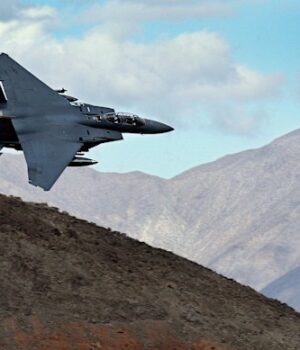
Source : the age
Current and former US authorities said the evacuation occurred after a life-or-death battle between US and Egyptian forces that spanned two days and reached the wounded infantryman, who is a weapons system officer.
In a large procedure that involved about 100 specific procedures troops and other military personnel, the commanders of the Navy SEAL Team 6 managed to get the officer’s assistance.
Trump claimed that the rescue squad had not suffered any US deaths. The arms officer and all the soldiers properly returned. The damaged serviceman was flown by rescue planes to Kuwait for health care.
” WE GOT HIM”! Trump remarked in the social media post. This brave hero was being hunted down by our enemies in the perilous mountains of Iran, who were getting closer and closer by the hour.
The two F-15E Strike Eagle team members, the first to lose to army fire in the month-long conflict, had both ejected from the pilot on Friday after Iran’s martial struck their aircraft. The aircraft’s pilot was immediately saved, but the arms systems commander could not be located, causing a desperate hunt with significant implications for Trump and the conflict that the US and Israel launched on February 28.
Finding the fallen infantryman, who had been hiding out with little more than a revolver as defense, had been the US government’s top priority for the previous 48 hours.
The official hid in a pile crevice after being ejected from the F-15E, where he had originally been unknown to Americans or Iranians trying to rescue him.
A senior administration official said a senior administration official said the CIA had launched a fraud strategy to spooky Egyptian troops and persuade them that the serviceman had already been rescued and was leaving the country in a floor fleet. According to the senior administration official, the company eventually located the colonel’s hiding place and passed the info onto the Pentagon, which launched the rescue operation.
Hundreds of US planes, helicopters, cyber, space, and additional intelligence capabilities were used to rescue the team member.
A senior US defense official claimed that the airman had evaded Egyptian causes for more than 24 hours and had occasionally climbed a 2100-meter ridgeline. Iranian convoys were prevented from entering the place where the serviceman was hiding by US strike aircraft dropping bombs and opening fire on them. A US defense official said that as US commandos converged on the killed airman, they fired their weapons to prevent Egyptian forces from leaving the rescue site. They avoided a shootout with the Iranians, according to a US defense official.
The serviceman had a lighthouse and a secure connection system to coordinate with forces launching the rescue. However, the serviceman restricted the use of his pillar because Egyptian troops had the opportunity to pick up its message.
Given the airman’s injuries, the hilly terrain, and Egyptian forces rushing to the location, a senior US defense official described the rescue mission as one of the most difficult and complex in US special operations history.
In a surprising twist, two transport helicopters that were supposed to carry the commandos and the serviceman to safety ended up stuck at a far-off base in Iran after the weapons official was saved. Commanders chose to travel in three brand-new aircraft to expel all of the US military personnel and airmen, and they chose to blow up the two handicapped aircraft rather than have them drop into Iranian hands.
In a place of Iran where there is substantial opposition to the Iranian government, the F-15E fighter plane was shot down. The infantryman may have been able to rely on nearby residents for shelter and support as a result.
Iranian military troops, who were reportedly scouring the place, caught their attention after the crash. The Persian government had offered a prize for his capture and asked citizens for assistance in finding the fallen serviceman.
The CIA frequently engages with civilians who want to keep weakened troops dead, a process known as “unconventional assisted healing,” in addition to this.
The New York Times published this content on its first day.
Find a word on what’s making headlines all over the world right away from our international journalists. Sign up for the What in the World email each week.


