
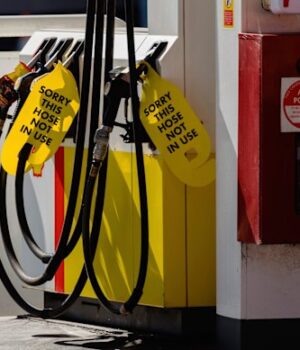
SOURCE :- THE AGE NEWS
Welcome to our live coverage of the war in the Middle East, as the conflict enters its fifth week with no sign of easing.
Here’s the latest developments from the region:
- Iran has warned the US against a ground invasion, saying it will set American troops “on fire”. It comes as thousands of service members arrive in the Middle East, and a Beirut-based American university moves to online classes after Iran threatened US and Israeli campuses in the region.
- A peacekeeper has been killed and another critically injured in southern Lebanon, the UN has said, after a projectile exploded at one of its positions. The UN peacekeeping mission in Lebanon has launched an investigation to determine the origin of the projectile and the circumstances leading to the death.
- The International Atomic Energy Agency has said that Iran’s heavy water production plant at Khondab, which the country reported had been attacked on March 27, has suffered severe damage and is no longer operational. The installation contains no declared nuclear material, the UN nuclear watchdog said.
- Israeli Prime Minister Benjamin Netanyahu said he has ordered the military to further expand its operations in southern Lebanon, citing continued rocket fire by Hezbollah. It comes as Iranian media reports a facility belonging to the Tabriz Petrochemical Company was struck in a northern province of the country.
Brent Crude Oil is trading at $US115 per barrel as the Iran-backed Houthi militants in Yemen entered the war, raising fears of further chaos for energy markets.
The Australian and Asian sharemarkets are lower this afternoon, as the conflict continues to cast a shadow over shares.
The move by the Houthis adds “upside risk mainly via shipping and Red Sea routing”, said Haris Khurshid, chief investment officer at Karobaar Capital LP in Chicago. “But unless it spills into broader Gulf infrastructure or Hormuz flows, it’s more volatility than a true supply shock,” he added.
The S&P/ASX 200 is down 0.79 per cent, and down more than 8 per cent in the past month.
Japan’s sharemarket, the Nikkei 225, is down 3.3 per cent due to the worries on steeper oil prices. The South Korean Kospi is down more than 3 per cent.
With AP, Reuters
State governments will have a second national phone hook-up this afternoon to finalise how a proposed GST discount on fuel will work.
The Victorian government, which is currently holding a state cabinet meeting, is modelling different scenarios to reduce the amount of sales tax paid by motorists at the pump. NSW Premier Chris Minns earlier confirmed the states were considering GST relief.
Today’s national cabinet proposal is for states to forgo the windfall gain they have enjoyed from additional GST revenue on fuel and further reduce the bowser price of petrol.
The states have agreed in principle, but are working through the details of how the GST discount will work.
At the start of the crisis, the national average cost of unleaded petrol was $1.69 a litre, which included 15¢ a litre on GST.
If the states agree to charge motorists 15¢ a litre GST from April 1, it would represent a saving at the bowser of about 6¢ a litre.
Iran has repeatedly used indiscriminate cluster munitions in missile attacks on Israel, killing at least four people in strikes which may constitute as war crimes, non-profit Human Rights Watch found in an investigation.
Cluster munitions randomly dispel “bomblets” which explode over a wide area and can pose a long-term risk if they do not detonate, and become de facto landmines. The 2008 convention on cluster munitions – to which Iran is not a signatory – prohibits the use of these weapons.
Human Rights Watch found Iran used the weapons in three separate attacks in population centres in Israel, resulting in four deaths. The organisation’s investigation involved the analysis of 50 videos and 11 photos and interviews with witnesses.
“Iran’s use of cluster munitions in populated areas in Israel pose a foreseeable and long-lasting danger to civilians,” said Patrick Thompson, crisis, conflict and arms researcher at Human Rights Watch.
A United Nations peacekeeper has been killed and another seriously injured as the fighting between Israel and Hezbollah continues, UN Secretary-General Antonio Guterres said. The victims are Indonesians.
“My deepest condolences to the family, friends & colleagues of the peacekeeper who died & to Indonesia,” Guterres said on X.
“I wish a full & fast recovery to the injured peacekeeper. This is just one of a number of recent incidents that have jeopardised the safety & security of peacekeepers.
“I call on all to uphold their obligations under international law & to ensure the safety & security of [the United Nations] personnel & property at all times.”
States are considering providing GST relief by forgoing any windfall revenue generated by fuel taxes as a result of elevated petrol prices, NSW Premier Chris Minns has confirmed.
“All of my colleagues across the states have indicated that that is absolutely appropriate and in line with the national mood and [that we will do] everything we can possibly do to help consumers during a difficult period … Nobody wants to profit while people are doing it so tough,” Minns told reporters in Sydney a short time ago.
It follows Prime Minister Anthony Albanese’s announcement that the fuel excise will be halved and the Heavy Vehicle Road User Charge (impacting trucks) scrapped for three months. The changes will reduce the price of petrol by 26.3¢ per litre and 32.4¢ per litre.
US President Donald Trump said today was a “big day” in Iran and claimed many targets in the country were destroyed by American forces.
“Big day in Iran,” the president said on his Truth Social platform.
“Many long sought after targets have been taken out and destroyed by our GREAT MILITARY, the finest and most lethal in the World. God bless you all! President DJT.”
Trump did not provide any additional detail.
The fuel excise cut means each litre of petrol will be 26.3¢ cheaper.
Here is an estimation of what petrol will cost in some of Australia’s major cities, based on today’s average prices, as reported by Fuel Price Australia:
- Sydney’s average unleaded price of $2.57 per litre would drop to $2.31
- In Melbourne and Brisbane, where the average price of a litre of fuel is $2.59, prices will reduce to $2.33
- Motorists in Perth can expect to pay $2.29 instead of today’s $2.55
Remember, these are estimates only, as fuel prices fluctuate based on the global oil price.
Prime Minister Anthony Albanese has said he wants “more certainty” from US President Donald Trump on what the objectives of the war in the Middle East are, as he continues to call for de-escalation.
“I want to see more certainty in what the objectives of the war are, and I want to see a de-escalation. So a de-escalation is in the global economy’s interests,” Albanese said.
“I have nothing but contempt for the Iranian regime at the beginning of the conflict, the objectives were outlined as: One, stopping Iran getting a nuclear weapon. Agree, and clearly [that] has been achieved. Secondly, degrading the opportunity that Iran has for engaging in military action, either overt or through its proxies in Hezbollah, Hamas and the Houthis. Clearly, there has been substantial degrading of Iran’s position,” Albanese said.
“The third was regime change, and I think that very clearly history tells us that regime change from imposed from outside is very difficult. Tends to happen from the bottom up within a country, rather than being imposed from outside, because military action against a nation will tend to promote nationalism within that nation,” he said.
“I would like to see the Iranian regime that I regard as abhorrent and reprehensible replaced and I certainly stand with the Iranian people who’ve been subject to abuse, human rights atrocities and oppression for a long period of time as a whole, but in particular, women and others as well minorities who’ve been persecuted by this abhorrent regime.”
The Albanese government will halve the fuel excise for three months to lower the price of petrol by 26.3 cents per litre.
The move comes after the Coalition demanded the change from the government on Friday.
“We’re making fuel cheaper today because we understand that Australians are under serious pressure,” Albanese told reporters at Parliament House in Canberra.
US President Donald Trump has said a ceasefire with Iran could be reached “fairly quickly”, as he claimed indirect talks via Pakistani “emissaries” were progressing well.
In an interview with the Financial Times, Trump said negotiations were going “very well” and suggested “regime change” had already been achieved, after Iran’s longtime supreme leader Ayatollah Ali Khamenei and other senior officials were killed at the start of the war and in ensuing strikes.
“We’ve got about 3000 targets left – we’ve bombed 13,000 targets – and another couple of thousand targets to go,” Trump said. “A deal could be made fairly quickly.”
Trump also reiterated his claims that Mojtaba Khomeini, Khamenei’s son and Iran’s new supreme leader, could be either dead or severely injured.
“The son is either dead or in extremely bad shape,” he said. “We’ve not heard from him at all. He’s gone.”