Source : INDIA TODAY NEWS
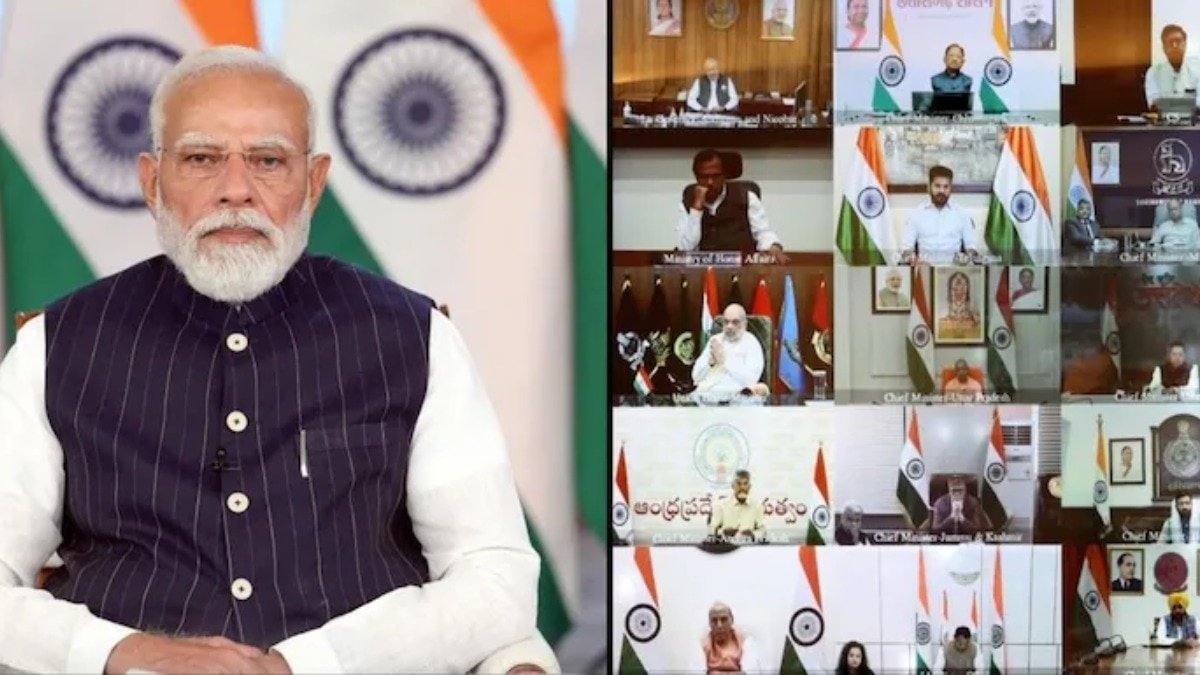
Prime Minister Narendra Modi on Friday chaired a high-level meeting with Chief Ministers and Lieutenant Governors to review India’s preparedness in light of the evolving situation in West Asia, stressing the need for vigilance, coordination and swift response to emerging challenges.
Addressing the meeting via video conferencing, the Prime Minister expressed confidence that the country would overcome the situation through a “Team India” approach, recalling how coordinated Centre-State action helped mitigate disruptions during the Covid-19 pandemic.
advertisement
He said the situation remains dynamic and requires continuous monitoring, noting that an inter-ministerial group has been reviewing developments daily since March 3.
PM Modi outlined the government’s key priorities — maintaining economic and trade stability, ensuring energy security, safeguarding citizens’ interests, and strengthening industry and supply chains — amid global uncertainties.
Emphasising the role of states, the Prime Minister urged them to ensure smooth functioning of supply chains and take strict action against hoarding and profiteering. He called for activation of control rooms at state and district levels and stressed administrative alertness to prevent disruptions.
He also highlighted the need for advance planning in the agriculture sector, particularly in monitoring fertiliser storage and distribution ahead of the Kharif season to avoid any inconvenience to farmers.
The Prime Minister cautioned against the spread of misinformation and rumours, underlining the importance of timely dissemination of accurate information to prevent panic. He also advised vigilance against online fraud and fake agents.
Special attention must be given to border and coastal states, he said, particularly in handling issues related to shipping, essential supplies and maritime operations.
PM Modi also urged states to set up helplines and support systems for citizens in West Asia, ensuring timely assistance to affected families.
Calling for both immediate response and long-term preparedness, the Prime Minister stressed the need to accelerate efforts in alternative energy, including solar, biofuels, electric mobility, and expansion of piped natural gas, along with boosting domestic oil and gas exploration.
During the meeting, Defence Minister Rajnath Singh highlighted steps taken by the Centre, including ensuring availability of LPG and reducing excise duty on petrol and diesel.
Chief Ministers appreciated the Centre’s measures and expressed confidence that the situation remains stable, with adequate availability of petrol, diesel and LPG. They welcomed the reduction in fuel excise duty and the increase in commercial LPG allocation to states.
IMPACT OF IRAN WAR ON INDIA
The West Asia conflict has begun impacting India’s economy, energy sector and markets, prompting government intervention to contain the fallout.
The Centre has cut excise duty on petrol and diesel by Rs 10 per litre to shield consumers from rising crude prices, a move expected to cost about Rs 7,000 crore in a fortnight. Higher export duties on diesel and ATF are aimed at ensuring domestic availability, with the net revenue loss pegged at around Rs 5,500 crore.
The measures come as crude prices surged close to $119 per barrel earlier this month before easing to around $100, putting pressure on oil companies already facing losses due to frozen retail prices.
Despite global disruptions, the government said there is no fuel shortage. India has around 60 days of crude and fuel stock cover, with supplies secured from alternative sources to offset disruptions linked to the Strait of Hormuz.
The petroleum ministry dismissed reports of shortages as misinformation, saying all fuel outlets are adequately stocked. Oil companies have ramped up supplies and extended credit to dealers to prevent local disruptions.
LPG supply remains stable, with about 800,000 tonnes of cargo secured and one month of supply assured. Domestic production has also been increased.
Markets, however, have reacted to the uncertainty. Sensex and Nifty fell sharply on Friday, tracking global weakness as rising oil prices and geopolitical tensions triggered risk aversion.
– Ends
Must Watch
SOURCE :- TIMES OF INDIA