
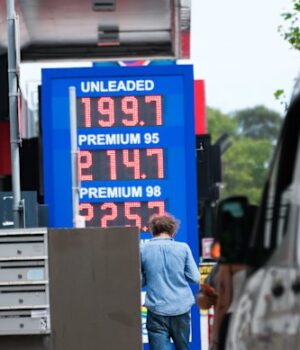
Source : THE AGE NEWS
As major transportation companies like Uber, Qantas, and Australia Post raise their prices in response to rising gas prices, Australia’s higher rate of inflation is gaining more and more of a hit.
After the Middle East battle, the price of petrol and other important materials used by businesses across the country increased exponentially as the price of drivers ‘ services and consumer prices increased. This is raising concerns that other businesses that rely on the companies for sales may be forced to raise their own costs.
However, some businesses, like Uber Eats ‘ foe DoorDash, have pledged to cover the cost of fuel payments while Amazon, an e-commerce giant, won’t say whether it will increase prices to cover the assistance it is offering drivers.
The pressure is mounting on Australia’s now high rate of inflation as a result of the recent price increases in the travel industry. Virgin Australia and the ride-share company Didi are two other transportation companies that have raised rates, and there is a chance that prices will rise past 5 % by June as more companies raise rates.
He added that there was a question over whether these companies ‘ products were a cost for other companies because it would directly affect the cost of these companies ‘ goods. Additionally, some businesses may view it as an opportunity to raise prices so that they don’t “miss their chance.”
Holden said,” It’s obviously going to put upward pressure on an already high rate of inflation.”
Since Iran shut down the Strait of Hormuz, a crucial delivery path, oil prices have increased as well.
According to Diana Mousina, assistant chief economist at AMP, the Middle East war had likewise caused higher commodity prices, including gas and fertilizer, which were all likely to result in higher inflation in the economy.
” It’s a concern right now because we already have higher prices, which is adding more stress to it,” she said.
According to Mousina, value increases, as well as higher input costs for businesses, could also contribute to higher “inflation anticipations,” a state that the Reserve Bank is keen to avoid.
She said,” If people expect prices to go up, even they are going to demand higher wages, or firms might try to raise their prices.”
One of the sectors most susceptible to rising fuel prices is transportation, and this week the Transport Workers ‘ Union and the Australian Road Transport Industrial Organization held a hearing to discuss how these charges may be passed on.
They claim that thousands of vehicle owner-operators and a number of other distribution owners face expulsion because of the dramatic increases in energy costs.
At a reading on Wednesday, TWU lawyer Lorraine Biviano stated that several operators were confronting major challenges. Users who are already in pain may continue to hurt, she said without taking any immediate action.
The coalition and the transport group want the commission to create a sector-wide review system based on regular increases in fuel prices to require trucking service providers to pay drivers.
SimonO’Hara, the CEO of Road Freight NSW, instructed the commission to take action that would preserve truck operators moving.
It’s important that rising prices are distributed equally across the entire supply chain and that vehicle users aren’t left hanging. They just didn’t continue to cover the skyrocketing prices ,O’Hara said.
However, Brent Ferguson, who represents the Australian Industry Group, the National Road Transport Association, the South Australian Road Transport Association, and Bega Group, claimed that” there isn’t a distinct one-size-fits-all approach” to solving the problem.
Many companies currently included fuel price increases in their contracts on a regular, half-yearly, or monthly basis. He claimed that other people were concerned about disrupting already-settled plans and that they had not disclosed the cost of gasoline in their dealings.
Amazon stated in a distribution to the reading that it often reviews costs for its stretch distribution partners and makes adjustments where gas prices are most important.
According to its attorney, Erin Hawthorn, Amazon also offers assistance with fuel costs for third-party companies, which are transport companies that move packages between locations or deliver packages, through legal agreements and is already working with the suppliers to assist them in managing those new changes.
She stated that the organization is keeping an eye on this position and will take into account any upcoming adjustments as necessary.
To assist its supply drivers, whom it refers to as its “dashers,” DoorDash has started a momentary energy reduction program that will run from March 21 through the end of April.
The company said the weekly payment, which ranges from$ 5 to$ 25, “provides immediate financial relief to dashers” and is between$ 5 and$ 25 for drivers who travel more than 150 kilometers and 501 kilometers.
The delivery company stated it didn’t move the charge to customers by charging higher prices, but that it will take the extra costs and won’t pass them on to drivers.
Major stories, unique protection, and expert opinions are provided by the Business Briefing newsletter. Sign up for it every night of the week.
 Simon Johanson is a columnist covering organization for The Age and The Sydney Morning Herald. Use X or contact to join.
 The lieutenant business editor is Clancy Yeates. He previously served as the bureau’s regional business journalist in Canberra and has covered banking and financial companies. Use X or contact to join.

