
Source : the age
March 26, 2026 — 3:23pm
It’s taken just a few days for some utterly terrible ideas to be proffered as ways to deal with the inflation fallout from the war against Iran.
From completely axing petrol and diesel excise – which would punch a $24 billion hole in the federal budget – to making public transport free, if there’s a dumb idea, it’s being embraced by people who should know better.
It is almost as if the lessons we collectively learned from pandemic, when this country and many others experimented with ways to offset its impact on the economy and inflation, have been forgotten or ignored.
Let’s start with the soaring price of oil.
It’s a price signal. Like the price of bananas or air conditioners or acupuncturists, if there are too many, prices fall. If there are too few, prices climb.
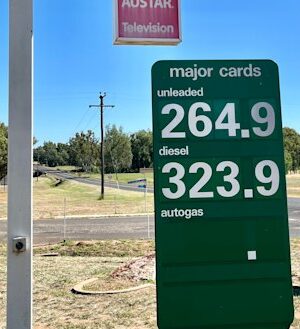
As much as it may not be pleasant, sky-high prices are telling consumers and businesses that if you really want to use petrol or diesel, then you’re going to pay through the nose for it.
It’s telling people who believe that 4X4 utes the size of small countries are their god-given right that there are cheaper-to-run alternatives, be they smaller fuel-powered cars or EVs.
In 2022, the Morrison government halved fuel excise for six months as it desperately tried to stay in power. That single decision injected $5.5 billion into the pockets of consumers.
It’s no surprise that inflation accelerated through that period as this $5.5 billion sloshed around the economy. Think of what the Reserve Bank would make of a similar, or even larger, free-kick to consumers.
And if you cut excise, which at 52 cents a litre would still leave petrol above $2 a litre and diesel around $2.50, it’s only going to add to the demand for fuel.
It’s clear the fear of Australia running dry was enough for people to rush to the local servo and fill up the car, the spare jerry can and even a couple of watering cans. Make it cheaper, and you’ll only add to that problem.
The lift in petrol prices has already had an impact on people who can access public transport. They have seen the price signal delivered at their local servo, weighed that up against public transport and decided to take the bus or tram.
But that’s not enough – apparently, we should make public transport free.
Free public transport will greatly advantage those who live in areas with plenty of trains, trams, buses and ferries. They just happen to serve best the inner suburbs of our capital cities, which also happen to have some of the highest incomes in the country.
You’ve just delivered a huge boost to the income of these people. Again, you’ve increased the potential spending power of consumers at a time of high inflation.
At the same time, you’ve done little for people in our outer suburbs (who will still be driving to the park-and-ride carparks to catch the train or bus) and you’ve done nothing for those in rural and regional areas that don’t have public transport.
Governments may want more people on public transport to conserve our nation’s fuel supplies. But why interfere with the price signal that’s already operating?
If an extra $20 or $30 in fuel a week is not enough of an incentive for people to switch to public transport, nothing will.
It’s not as if public transport fares cover their actual cost. Victorians last year paid about $736 million in fares, or about a quarter of the cost of the state’s trains, trams and buses. NSW public transport users paid about $1 billion, a similar proportion of actual costs.
Axe that revenue and you’ve just increased the budget deficits of those two states.
Of course, they’ll ask for a bailout from the feds. Which just means moving the cost to federal taxpayers.
We will end up further in debt. That means a bigger interest bill and tougher choices for a federal government that needs to cut spending, not increase it. The federal budget deficit would be approaching $50 billion this year – and that’s before any economic fallout from high-priced fuel that may warrant government support.
And you’ve increased spending power for consumers at a time when the Reserve Bank is trying to bring inflation under control.
What an A-grade stupid position that would be.
There are legitimate arguments around ensuring that sectors or people dependent on liquid fuel get adequate supply. These include the transport sector, farmers, miners (although some had already been moving towards EVs), people who might work in our hospitals or in emergency services.
But cutting excise just makes ensuring that supply is even more difficult, while free public transport will do very little to help.
The surge in bowser prices is the clearest, simplest price signal you’re ever likely to see. All the other options risk making the current situation far, far worse.
Just let Adam Smith’s invisible hand work.
Cut through the noise of federal politics with news, views and expert analysis. Subscribers can sign up to our weekly Inside Politics newsletter.
 Shane Wright is a senior economics correspondent for The Age and The Sydney Morning Herald.Connect via X or email.

